
Roger Joseph Boscovich: Croatian Jesuit Scientist and Early Atomic Theory Pioneer
Roger Joseph Boscovich (1711–1787), Croatian Jesuit polymath who proposed a 1758 model of point-like particles and force laws that anticipated atomic theory; astronomer and influential 18th-century scientist.
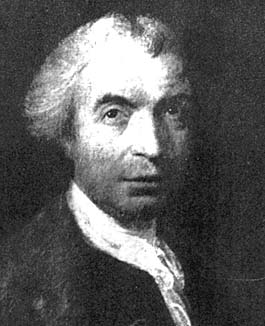
Roger Joseph Boscovich (18 May 1711 – 13 February 1787) was a Croatian Jesuit priest and polymath born in the city of Dubrovnik in the Republic of Ragusa (today's Croatia). He combined work in mathematics, physics, astronomy and natural philosophy over a long European career.
After his early education he spent extended periods working and publishing in Italy and France, where many of his scientific writings first appeared.
Image gallery
10 Images




Scientific contributions
Boscovich developed an early model of matter often described as a precursor to modern atomic theory, in which material bodies are represented by point-like entities whose interactions are governed by forces. He carried out theoretical and observational work in astronomy, and from careful study of eclipses and other lunar phenomena he argued in 1753 that the Moon lacks a significant atmosphere.
Main publication
His principal book, Philosophiæ naturalis theoria redacta ad unicam legem virium in natura existentium, was first published in 1758 in Vienna. The volume contains his formulation of an atomic theory-style picture and a systematic account of a general theory of forces acting between particles.
Subsequent editions followed: a second edition appeared in Venice (1763) and a third edition in Vienna (1764). The work was republished in the 20th century, including a 1922 printing in London, a 1966 edition in the United States, and a 1974 edition at Zagreb.
Legacy
Boscovich's ideas influenced later debates about the nature of matter and force, and his interdisciplinary approach—combining precise observation with mathematical argument—made him an important figure in the scientific culture of the 18th century. Modern historians of science continue to study his writings for their originality and their role in the development of physical theory.
Questions and answers
Q: Who was Roger Joseph Boscovich?
A: Roger Joseph Boscovich was a Croatian polymath and Jesuit from the city of Dubrovnik in the Republic of Ragusa (modern-day Croatia).
Q: Where did Boscovich study and live?
A: Boscovich studied and lived in Italy and France, where he published many of his works.
Q: What are some of Boscovich's contributions to science?
A: Boscovich produced a precursor of atomic theory and made many contributions to astronomy. In 1753 he discovered the absence of atmosphere on the Moon.
Q: What is Boscovich's most famous work?
A: Boscovich's most famous work is Philosophiæ naturalis theoria redacta ad unicam legem virium in natura existentium (Theory of natural philosophy derived to the single law of forces which exist in nature), which he published in Vienna in 1758.
Q: What topics did Boscovich cover in his famous work?
A: Boscovich's famous work included his atomic theory and his theory of forces.
Q: How many editions of Boscovich's famous work were published?
A: Three editions of Boscovich's famous work were published in Vienna in 1758, in Venice in 1763, and again in Vienna in 1764. It was later published in London in 1922 and in the United States in 1966. Another edition was published in Zagreb in 1974.
Q: Where and when did Boscovich die?
A: There is no information in the given text about where or when Boscovich died.
Related articles
Author
AlegsaOnline.com Roger Joseph Boscovich: Croatian Jesuit Scientist and Early Atomic Theory Pioneer Leandro Alegsa
URL: https://en.alegsaonline.com/art/83703
Sources
- books.google.com : Cohesion: a scientific history of intermolecular forces
- dpedtech.com : dpedtech.com
- chemteam.info : chemteam.info/Chem-History/Boscovich-1763.html
- wikidata.org : wikidata.org/wiki/Q310757
- authority.bibsys.no : 99013992
- catalogo.bne.es : XX1210741
- catalogue.bnf.fr : cb12054879x
- data.bnf.fr : (data)
- cantic.bnc.cat : a11809668
- ci.nii.ac.jp : DA03898802
- d-nb.info : 118662074
- isni.org : 0000 0000 8342 9208
- id.loc.gov : n80119415
- aleph.nkp.cz : ola2002153885
- nla.gov.au : 49513913