
Rockcrawling: Technical Off‑Road Driving Over Natural Obstacles
Rockcrawling is a low‑speed, technical form of off‑road driving in which modified four‑wheel‑drive vehicles overcome large rocks and challenging terrain using precise control, gearing, and spotters.
Rockcrawling is a specialized branch of off‑road driving focused on navigating large rocks, boulder fields and other natural obstacles at very low speeds. Drivers use purpose‑built or heavily modified vehicles—from near‑stock examples to extreme custom rigs—to climb, descend and traverse terrain that would defeat ordinary vehicles. The activity emphasizes traction, wheel articulation and driver skill rather than outright speed.
Image gallery
3 Images

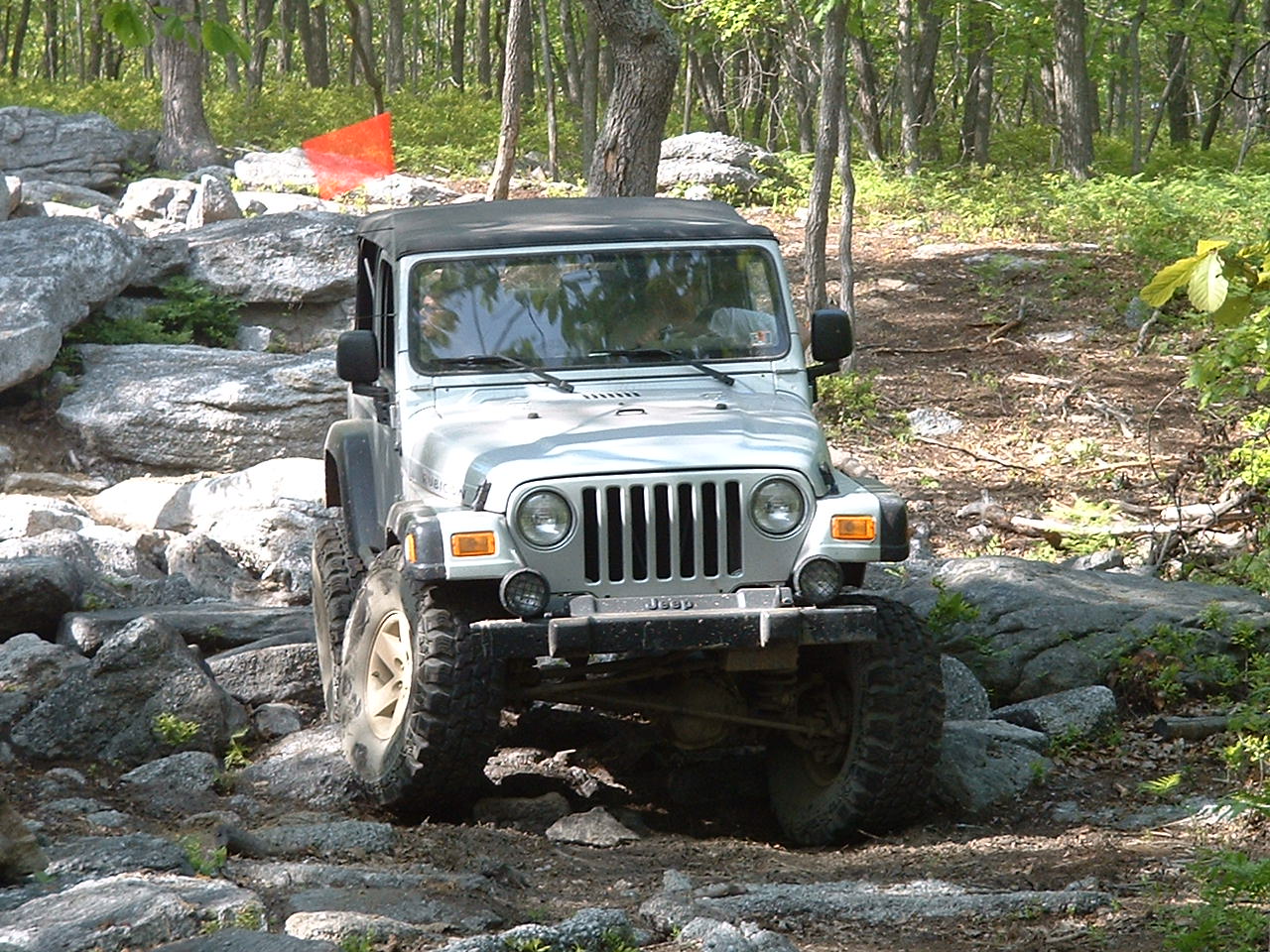
Characteristics and typical equipment
Most rockcrawlers are based on four‑wheel drive platforms such as trucks and Jeeps, or bespoke "buggy" designs. Common modifications include lower gear ratios and locking differentials to increase low‑end torque, heavy‑duty axles, long‑travel suspension and enhanced articulation to keep tires in contact with uneven ground, aggressive low‑pressure tires often mounted on beadlock wheels, reinforced frames and steel bumpers, and winches for recovery. These changes alter the vehicle's drivetrain and chassis so it can apply power precisely, sometimes using large gear reductions in the transfer case or axles.
Techniques, teamwork and safety
Rockcrawling is driven at walking pace; success depends on throttle control, careful line selection and momentum management. Drivers commonly rely on a spotter—a teammate who walks alongside and gives guidance—to place tires on safe footholds and to warn about hazards. Spotters may use hand signals, verbal cues, or tethering lines such as a rope or a winch to reduce the risk of tipping. Protective equipment, a working roll cage, good recovery gear and training in winch use and vehicle extraction are essential for safety in the steep and unstable environments where the sport takes place.
Typical venues and terrain
Rockcrawling events and recreational runs take place on natural features including boulder fields, canyon ledges, mountain foothills, rock piles and rugged trails. Drivers often encounter transitions that require climbing up, down or across obstacles that at first glance seem impassable. Terrain may combine exposed faces, loose rock and tight spaces that test a vehicle's clearance, approach and departure angles, and the crew’s ability to read the line.
Competitions, scoring and organization
Organized competitions range from informal club runs to national series. Events usually set marked obstacle courses—short sections of 100–200 yards—lined with gates or flags; drivers earn points based on clean runs, while penalties are applied for touching or moving markers, stalling, or requiring external assistance. Courses are designed to reward careful technique and mechanical preparation more than outright vehicle power. In many formats, a team can include a driver and one or more spotters to improve safety and performance.
History and distinctions
While the broader practice of driving over rocks has accompanied four‑wheel‑drive use since the mid‑20th century, rockcrawling emerged as a distinct competitive and recreational pursuit in the late 20th century as enthusiasts began modifying vehicles specifically for slow, technical obstacle negotiation. It differs from high‑speed off‑road disciplines (such as desert racing) by centering on precision rather than velocity, and from rock hopping or stunt driving by focusing on sustainable, repeatable technique and safety.
Further learning and community
Newcomers typically start by attending club runs, taking safety classes and practicing basic recovery and spotting. Local 4x4 clubs and forums are common entry points for advice about setup, technique and event rules. To read more about related topics and regional organizations, consult resources on vehicle preparation, trail etiquette and event regulations provided by clubs and sanctioning bodies.
- Rocks and boulder navigation
- Harsh terrain considerations
- Common vehicle platforms
- Truck‑based builds
- Vehicle modification overview
- Off‑road ethics and access
- Four‑wheel‑drive fundamentals
For further reading on technical aspects and local events, consult club pages, training providers and event organizers that list rules, safety checklists and recommended gear.
Questions and answers
Q: What is rock crawling?
A: Rock crawling is an extreme form of off-road driving where participants use vehicles ranging from stock to highly modified to overcome obstacles, usually rocks.
Q: What type of vehicles are used for rock crawling?
A: Vehicles used for rock crawling include trucks, Jeeps, and "buggies" that have been highly modified with four-wheel drive capabilities.
Q: Where do people typically go for rock crawling?
A: People typically go to boulders, mountain foothills, rock piles, and mountain trails for rock crawling.
Q: What does it take to be successful at rock climbing?
A: To be successful at rock climbing requires slow-speed, careful and precise driving as well as high torque generated through large gear reductions in the vehicle's drivetrain.
Q: How long are typical competitions?
A: Typical competitions range from 100 to 200 yards (91 to 183 m) long.
Q: Who helps the driver navigate difficult obstacles during a competition?
A: During a competition a spotter will help guide the driver through difficult obstacles. Spotters may also use a rope to help prevent a vehicle from tipping over.
Q: Are 4x4s the only vehicles used in these competitions?
A: Yes, most vehicles used in these competitions are primarily 4x4s.
Related articles
Author
AlegsaOnline.com Rockcrawling: Technical Off‑Road Driving Over Natural Obstacles Leandro Alegsa
URL: https://en.alegsaonline.com/art/83550
Sources
- proformance.com.au : "Portal Hubs Explained | Do I need them?"