
Rockabilly: Early Rock and Roll Style, Sound, and Culture
Rockabilly is a 1950s American music style blending country, blues and R&B into an energetic early rock sound. Known for slap bass, twang guitar, rebellious lyrics, distinctive fashion and later revival movements.
Overview
Rockabilly is an early form of rock and roll that emerged in the United States during the 1950s. It fused elements of country (often called "hillbilly" music at the time), rhythm and blues, and traditional popular song forms into a direct, rhythm-driven sound aimed largely at young listeners. Its energy, simple arrangements and lyrical focus on youthful concerns helped make it one of the defining popular styles of its era.
Image gallery
4 Images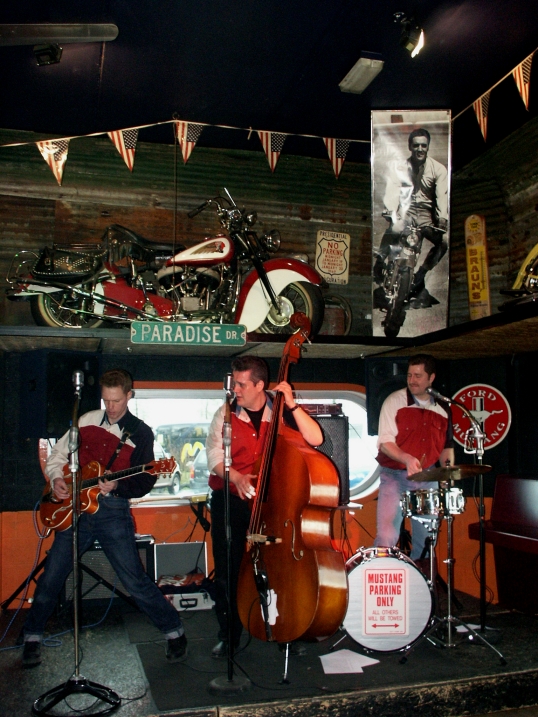


Characteristics
The typical rockabilly ensemble was small and loud in feel: acoustic or electric guitar with a bright, twangy tone, a percussive upright bass often played with a slap technique, and simple drumming or handclaps. Recordings frequently used a dry, echoing vocal style and studio effects such as slapback echo to give a live, urgent presence. Fashion and image were part of the appeal: slicked-back hair, rolled-up jeans, leather jackets and boots became visual shorthand for the music.
Social context and themes
Rockabilly appealed especially to teenagers and young adults and was often viewed with alarm by older generations. Lyrics commonly touched on themes of rebellion, romantic encounters, and nightlife; in some communities this prompted criticism about references to sex or drinking. Conservators feared the music encouraged rule-breaking, while fans saw it as an expression of freedom and youthful identity.
History and influence
Although its roots trace to earlier country, blues and gospel songs, rockabilly coalesced as recordings and radio play brought regional styles together. Independent labels and small studios played an outsized role in popularizing the sound. Early performers who became widely known helped spread the style and inspired subsequent rock musicians. The genre left a lasting legacy on popular music and spawned later revivals and related styles such as psychobilly and neo-rockabilly.
Examples and legacy
- Notable early practitioners combined country phrasing with R&B rhythms and energetic stage delivery.
- The look and sound influenced later rock, punk and roots-rock movements that borrowed its simplicity and attitude.
- Revival scenes in later decades preserved the style and adapted it for modern audiences.
For more context about the musical roots and cultural debates around rockabilly, see resources on early American popular music and youth culture. Contemporary perspectives often place the style as a key bridge between rural American traditions and mainstream rock and roll entertainment, while discussions of its social effects note both moral panic and creative innovation. Additional reading and audiovisual examples are available through popular music histories and archived recordings (audio) and interviews (oral histories). For visual and fashion studies, see materials discussing stage costumes and everyday wear like cuffed jeans and leather jackets.
Questions and answers
Q: What is Rockabilly?
A: Rockabilly is a type of early rock and roll music that developed in the United States in the 1950s.
Q: Who appreciated Rockabilly music the most?
A: Teenagers were the ones who appreciated Rockabilly music the most.
Q: Why did parents not like rockabilly music?
A: Parents did not like rockabilly music because it contained lyrics that were about rebelling against rules, sex, and drinking alcohol.
Q: What was the fashion sense of Rockabilly musicians?
A: Rockabilly musicians often wore slicked-back hair, jeans, and leather jackets.
Q: What was the timeframe of the development of Rockabilly music?
A: Rockabilly music developed in the 1950s.
Q: Was Rockabilly music mainstream during its time?
A: Yes, Rockabilly music was mainstream during its time and was very popular amongst teenagers.
Q: Why was Rockabilly music considered rebellious?
A: Rockabilly music was considered rebellious because it contained lyrics about rebelling against rules, sex, and drinking alcohol which was not accepted by the older generation.
Related articles
Author
AlegsaOnline.com Rockabilly: Early Rock and Roll Style, Sound, and Culture Leandro Alegsa
URL: https://en.alegsaonline.com/art/83548
Sources
- digital.library.unt.edu : Hear Rockabilly · web.archive.org