
Bailey bridge
A portable, prefabricated truss bridge developed by the British in World War II for rapid military and civil bridging; modular, strong enough for armoured vehicles and still used for temporary crossings today.
Overview
The Bailey bridge is a type of portable, prefabricated truss structure designed for rapid assembly and deployment. It uses standardized steel panels and simple components that can be joined together into spans of varying width and strength. The system was intended so that sections could be moved, lifted and assembled by hand or with light equipment, allowing crossing points to be recovered quickly after damage or to be established where conventional construction would be impractical.
Image gallery
9 Images




Design and components
At its core the Bailey bridge is a modular flat truss. Individual panels form the sides of the truss and are connected by transoms and deck units to create a roadway. Additional panels can be added side-by-side or layered to increase load capacity. Key characteristics include prefabricated parts, bolted or pinned connections, and the ability to adapt the same basic elements to longer spans or heavier loads.
- Primary parts: steel truss panels, transoms (cross beams), stringers and roadway decking.
- Modularity: panels can be stacked or paralleled to achieve desired strength.
- Transportability: components sized for carriage on standard military trucks and easy handling by crews.
History and development
The bridge was developed in Britain during World War II to meet urgent military needs for reliable, quickly erected crossings. It was the work of a British engineer, Donald Bailey, and was chosen over several competing concepts after trials and testing. Early wartime uses demonstrated the flexibility of the system, and it saw widespread employment by Allied forces following initial deployments in combat zones such as Tobruk.
Assembly, deployment and field use
The Bailey bridge was purposely engineered so that no heavy lifting machinery was required for most installations. Panels and other parts were light enough to be moved by small teams and stowed on vehicles. Typical field techniques include assembling the superstructure on one bank and then launching it across the gap using rollers, or building successive spans in place. Because of this straightforward logistics profile, the bridge could be reconfigured or repaired rapidly under combat or emergency conditions.
Uses, importance and legacy
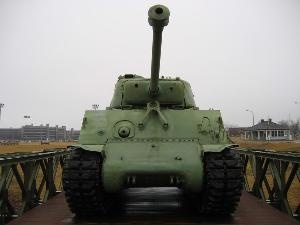
Originally a military expedient strong enough to support tanks, the Bailey bridge became a versatile solution for post‑war reconstruction and civilian engineering projects. It remains valuable for temporary road and rail crossings, emergency relief after floods or earthquakes, and in remote locations where permanent bridges are not yet feasible. Modern variations and inspired systems continue to draw on its modular principles.
Notable facts and distinctions
The Bailey is a factory-produced truss bridge system that contrasted with floating pontoons, suspension or large arch bridges by prioritizing rapid, incremental assembly. Its parts were deliberately sized to be truck-transportable and manually handled, so crews could move and erect spans without heavy cranes, relying instead on teamwork and simple mechanical aids. The success of the design during wartime led to production by several countries; for example, many units were produced and used by Allied forces transported on trucks during the liberation of occupied territories.
Surviving examples and restorations of early Bailey bridges can still be found in locations tied to its wartime testing and first deployments, serving as reminders of its practical and historical significance.
Questions and answers
Q: What is a Bailey bridge?
A: A Bailey bridge is a prefabricated truss bridge that can be easily installed on site.
Q: Who developed the Bailey bridge?
A: The Bailey bridge was developed by a British engineer named Donald Bailey during World War II.
Q: What makes the Bailey bridge unique?
A: The Bailey bridge is unique because it can be easily moved and put together on site without the need for special tools or heavy equipment.
Q: Why was the Bailey bridge developed?
A: The Bailey bridge was developed for military use during World War II.
Q: What was the most successful bridge design that was tested by the British army during World War II?
A: The flat truss bridge, which ultimately became the Bailey bridge, was the most successful bridge design tested by the British army during World War II.
Q: What types of vehicles could the Bailey bridge carry?
A: The Bailey bridge was strong enough to carry tanks.
Q: Is the Bailey bridge still used today?
A: Yes, Bailey bridges are still used in building projects and to provide temporary crossings for people and vehicles.
Related articles
Author
AlegsaOnline.com Bailey bridge Leandro Alegsa
URL: https://en.alegsaonline.com/art/8351
Sources
- hengistbury-head.co.uk : "Stanpit Marsh and Nature Reserve"
- lonesentry.com : "Launching the Bailey Bridge from Tactical and Technical Trends, No. 35, October 7, 1943"
- incredblindia.blogspot.com : "Incredible India: Bailey bridge - World's highest bridge"