
Rivet: a permanent mechanical fastener and its roles in metalwork
Rivets are permanent mechanical fasteners used to join metal parts. This article explains types, components, installation methods, historical development, testing and why riveting remains important in some industries.
Overview
A rivet is a permanent mechanical fastener that joins two or more pieces by deforming a worked end so that a head is formed on both sides of the assembly. In contrast to a bolt, which relies on a threaded connection and usually can be removed, a properly set rivet cannot be turned out. Riveted joints were once the dominant means of joining structural metalwork and are still used where dependable, vibration-resistant and lightweight connections are required.
Image gallery
10 Images


Parts and common types
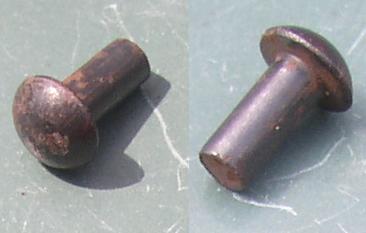
Most rivets share a simple geometry: a shaft (or shank) and a factory-formed head. After installation the shop head or worked end forms a second head, trapping the materials together. Variants include:
- Solid (or driven) rivets – simple, strong and commonly hot-driven in heavy structures.
- Blind (pop) rivets – can be installed where only one side of the join is accessible; common in sheet metal and repairs.
- Tubular and semi-tubular rivets – have a partial hollow to ease deformation and are used where less setting force is required.
- Flush or countersunk rivets – used where an even surface is needed, for example in aerodynamic panels.
How riveting works and installation methods
Traditional heavy riveting involved heating the rivet red-hot, inserting it through aligned holes, and then upsetting the protruding end so it formed a second head. As the hot metal cooled it contracted, drawing the assembly tight and producing a compressive clamp load across the joint. Riveting crews in the industrial era used hammers and hand-held bucking bars; later, pneumatic and hydraulic tools and automatic feeding systems sped the work and reduced labor.
History and development
Riveting evolved from early metalworking techniques and became widespread in the industrial revolution for ship hulls, railcars, bridges and buildings. Iconic iron and steel bridges and many early 20th-century ships were assembled with millions of rivets. Over time the process was mechanized: steam and pneumatic hammers replaced manual labor, and new rivet forms adapted to faster production.
Testing, performance and common applications
Quality checks include visual inspection and a simple acoustic test: a tight rivet often gives a clear ringing sound when tapped, whereas a loose or cracked rivet produces a dull note. Structurally, rivets primarily resist shear loads and provide good fatigue performance when properly installed. Riveting persists in areas where a combination of light weight, reliability and a smooth exterior matter—most notably in aerospace work where specialized fasteners are used to assemble metal airframe skins and structures (aircraft applications).
Modern alternatives and legacy
Riveting has been largely supplanted by welding and high-strength bolted connections for many industrial uses because those methods can be faster or cheaper for certain assemblies. Nevertheless, rivets remain preferable in repair work, in joinery where heat from welding would damage materials, and in heritage structures such as historic bridges and preserved ships where original construction methods are retained for authenticity. The choice between rivets, bolts and welds depends on materials, access, required strength, fatigue life and whether disassembly will be needed.
Notable distinctions and practical considerations
- Rivets create a permanent connection; bolts allow disassembly.
- Hot-driven solid rivets develop clamp by cooling contraction; blind rivets rely on mechanical deformation of an internal mandrel.
- Installation access matters: blind rivets are useful where only one side is reachable; solid rivets usually require two-sided access.
Because of their historical importance and continuing niche roles, rivets represent both a key chapter in the development of modern engineering and an ongoing practical solution where their specific benefits are needed. For comparison of fastener types and materials, see further references and technical resources linked in specialist literature and standards about bolts and fasteners.
Questions and answers
Q: What is a rivet?
A: A rivet is a type of bolt that fastens plates of metal together.
Q: What was the main method of building metal objects during the industrial revolution?
A: Riveting was the main method of building metal objects during the industrial revolution.
Q: How is a rivet hammered into place?
A: The slug of metal is red-hot when hammered into place which results in the slug of metal having a dumbbell shape which holds the two metal sheets together.
Q: What was used to force the metal into position during the riveting process?
A: An automatic jackhammer was used to force the metal into position during the riveting process.
Q: Why was being a riveter considered skilled work?
A: Being a riveter was considered skilled work because the process involved a team of four men: two to heat the rivet and pass it to the two fasteners.
Q: How can rivets be tested?
A: Rivets can be tested simply by tapping. A rivet tightly set in its hole gives a clear ring, while a loose rivet produces a different sound.
Q: Where is riveting still used today?
A: Riveting is still used today when light weight and high strength are critical, such as in aircraft.
Related articles
Author
AlegsaOnline.com Rivet: a permanent mechanical fastener and its roles in metalwork Leandro Alegsa
URL: https://en.alegsaonline.com/art/83173