
Riverside Stadium — home of Middlesbrough Football Club
Football stadium in Middlesbrough, England; opened in 1995. All-seated capacity about 34,742 with permission to expand to 42,000. Primary ground for Middlesbrough F.C. and a local sports venue.
The Riverside Stadium is a modern football ground on the banks of the River Tees in Middlesbrough, England. Since its opening in 1995 it has served as the principal home for Middlesbrough F.C.. The bowl is an all-seated arena with a current capacity of about 34,742 spectators; planning permission exists to enlarge the venue to roughly 42,000 if demand and finance permit.
Image gallery
8 Images
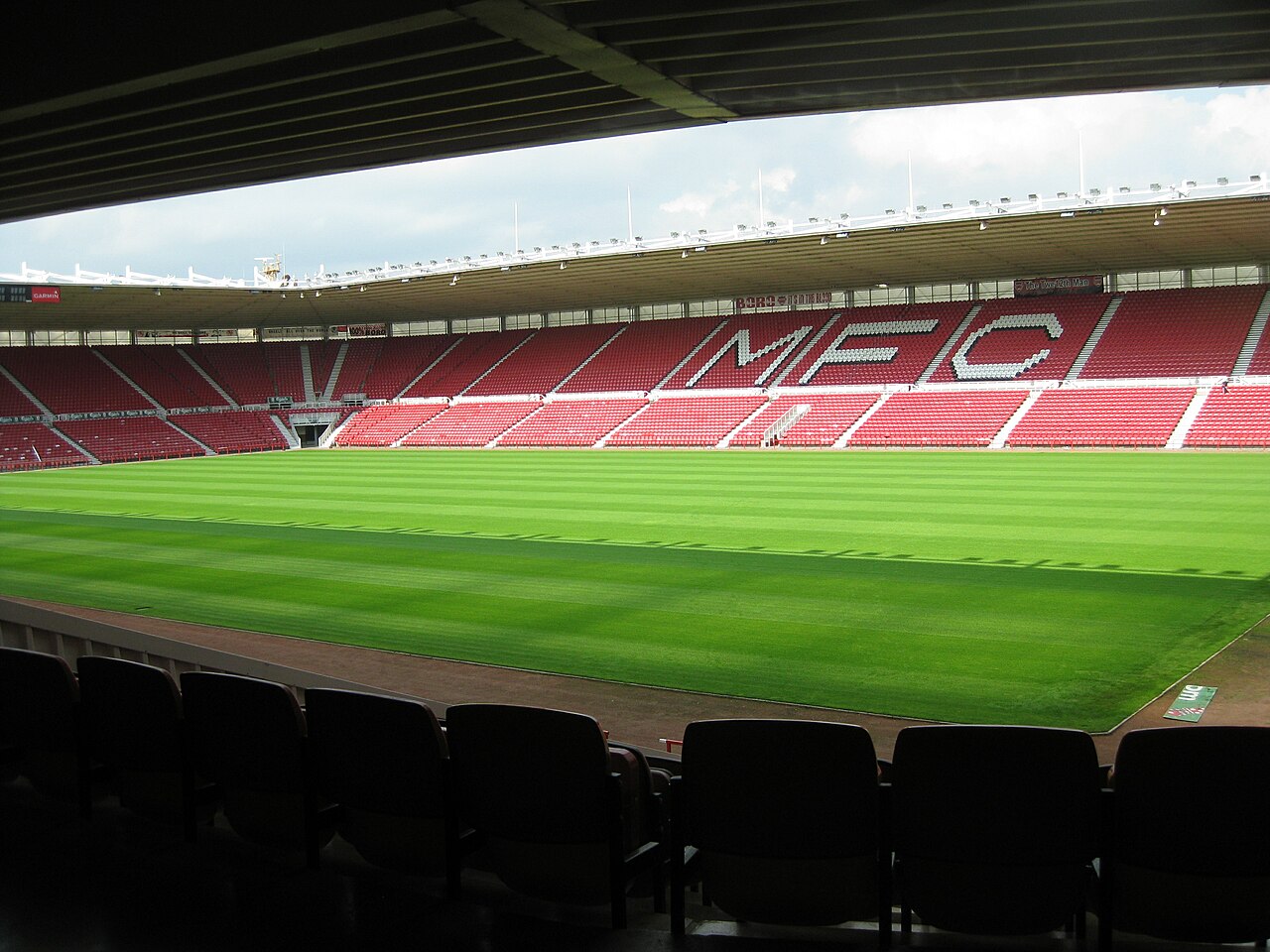



Layout and facilities
The stadium is arranged into four main stands forming a compact bowl close to the pitch, which creates a strong atmosphere on matchdays. It was constructed to contemporary all-seater standards with corporate hospitality suites, media facilities, private boxes and accessible seating. Around the ground there are typical club amenities such as retail outlets, a club museum and fan gathering areas.
History and development
Conceived as a replacement for the club's previous ground, the Riverside offered modern spectator facilities and improved sightlines. Its opening marked a move towards larger, more commercially viable stadia in English football during the 1990s. Over the years the venue has seen incremental upgrades to safety, seating and hospitality to meet changing regulations and fan expectations.
Beyond league fixtures, the Riverside has been used for a variety of events linked to football and the local community. It has hosted cup matches, club milestone fixtures and has been made available for conference use and community programmes during the off-season. The compact design allows good sightlines from most seats and supports an intense match atmosphere when filled.
Planned expansion remains a contingent feature: while official permissions allow an increase in capacity to about 42,000, any enlargement would depend on sustained spectator demand, financial planning and wider club strategy. Improvements to access, hospitality and corporate areas have been pursued incrementally rather than by wholesale redevelopment.
Location and transport links make the Riverside easily reachable from the town centre and surrounding areas by road and public transport, and it remains a landmark in the town's sporting and cultural life. For visitors and fans the stadium combines modern matchday convenience with close proximity to the club's history and community activities.
Questions and answers
Q: Where is the Riverside Stadium located?
A: The Riverside Stadium is located in Middlesbrough, England.
Q: What is the function of the Riverside Stadium?
A: The Riverside Stadium is a football stadium.
Q: Which team considers the Riverside Stadium as its home ground?
A: Middlesbrough F.C. considers the Riverside Stadium as its home ground.
Q: What is the current seating capacity of the Riverside Stadium?
A: The current seating capacity of the Riverside Stadium is 34,742.
Q: Is there a possibility to expand the seating capacity of the Riverside Stadium?
A: Yes, there is provisional permission to expand the seating capacity of the Riverside Stadium to 42,000 if it is needed.
Q: How long has the Riverside Stadium been the home ground of Middlesbrough F.C.?
A: The Riverside Stadium has been the home ground of Middlesbrough F.C. since its opening.
Q: What type of seating does the Riverside Stadium have?
A: The Riverside Stadium has all-seated seating.
Related articles
Author
AlegsaOnline.com Riverside Stadium — home of Middlesbrough Football Club Leandro Alegsa
URL: https://en.alegsaonline.com/art/83166