
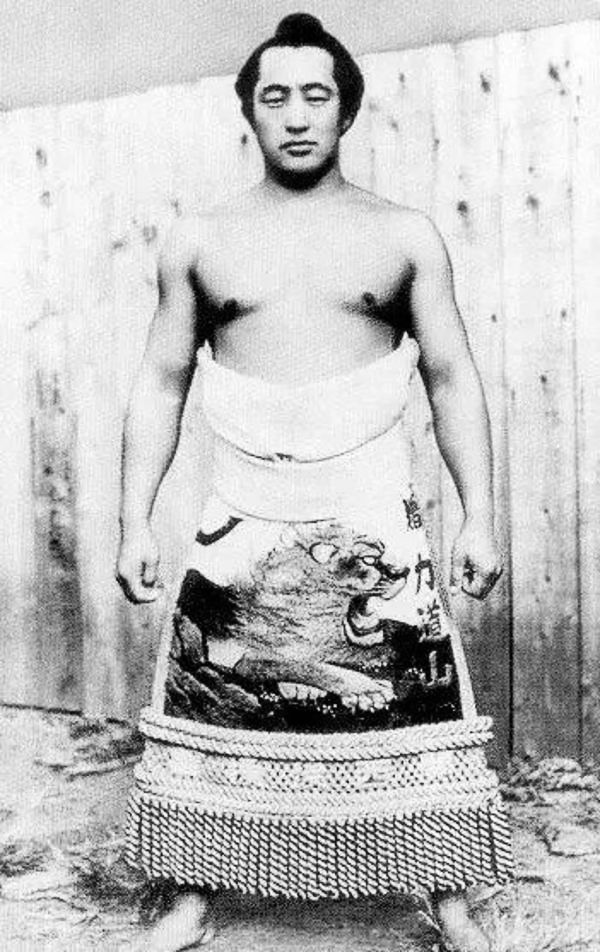
Rikidōzan — founder of modern Japanese professional wrestling
Rikidōzan, an ethnic Korean wrestler active in postwar Japan, popularized puroresu, trained future stars such as Giant Baba and Antonio Inoki, and helped make televised wrestling a national phenomenon.
Overview
Rikidōzan is widely regarded as the founding figure of modern Japanese professional wrestling (puroresu). Rising to prominence in the 1950s, he developed a charismatic, nationalist ring persona that resonated with Japanese audiences recovering from the devastation of World War II. Through regular live television appearances and highly publicized bouts with foreign opponents, he transformed professional wrestling from a niche attraction into a mass spectator sport and a staple of commercial broadcasting.
Image gallery
6 Images



Early life and identity
Rikidōzan was born an ethnic Korean at a time when Koreans in Japan often faced social discrimination. For many years aspects of his birth name, origin and personal history were obscured in public accounts; he was publicly presented under a Japanese name and identity. Biographical details have long been discussed in the context of mid-20th-century Japan, where questions of ethnicity, national identity and assimilation affected entertainers and athletes as well as everyday life.
Career, promotion and style
In the early 1950s Rikidōzan helped organize shows, promoted matches and trained younger wrestlers. He led the Japan Pro Wrestling Alliance (JWA), which dominated the domestic scene through the 1950s and early 1960s. In the ring he combined elements of catch-as-catch-can grappling, strong strikes and showmanship. His dramatic open-handed chop, often described as a karate-style strike, became his signature move and a recurring theatrical element that excited television audiences.
Television, landmark matches and cultural impact
Television played a decisive role in Rikidōzan’s popularity. His televised encounters with foreign stars were framed as symbolic contests and drew enormous audiences, boosting the visibility of professional wrestling across Japan. Notable televised matches from his career are frequently cited in accounts of early Japanese TV sports: one sixty-minute title match against Lou Thesz in the late 1950s and another high-profile draw with The Destroyer in the early 1960s attracted exceptionally large viewing figures and are remembered as cultural milestones that helped normalize televised sports entertainment.
Students and lasting influence
Rikidōzan trained and influenced a generation of performers who became pillars of Japanese wrestling. Among his best-known pupils were Shohei "Giant" Baba and Antonio Inoki, both of whom later founded major promotions and helped shape distinct styles and business practices within puroresu. Other wrestlers who rose under his tutelage included stars known across East Asia. His emphasis on crowd psychology, disciplined training and television-friendly presentation left a lasting imprint on how professional wrestling in Japan developed for decades.
Death and legacy
Rikidōzan’s career ended abruptly in the early 1960s after he was seriously injured in a violent altercation and subsequently died. His death coincided with the decline of the JWA and the emergence of new promotional structures, as former students set up rival companies and diversified the sport. Historically, Rikidōzan is remembered both for his direct contributions to the technique and business of professional wrestling and for his broader cultural role in postwar Japan.
Further reading and context
- For an introduction to the style and history he helped establish, see discussions of puroresu.
- Useful themes for further study include the rise of television in 1950s Japan, the social position of ethnic Koreans in Japanese society, and the development of sports promotion and celebrity in the postwar period.
Questions and answers
Q: Who is Rikidozan?
A: Rikidozan is the father of puroresu and established it as a popular professional sport in Japan.
Q: How did Rikidozan become a hero for the Japanese people?
A: Rikidozan continuously defeated Americans with his famous karate chop, and this made him a hero for the Japanese people who were still depressed from the war.
Q: Who were some of Rikidozan's notable students?
A: Some of Rikidozan's notable students include Shohei "Giant" Baba and Antonio Inoki, who are two of the greatest wrestlers in the history of puroresu, and Kintaro Ohki (Kim Il), who was also a superstar in his home country South Korea.
Q: Why was Kintaro Ohki's real identity kept secret?
A: Kintaro Ohki's real identity was kept secret for many years even after his death, because the Koreans were discriminated against in Japan.
Q: What was Rikidozan's highest rated match and with whom?
A: Rikidozan's 1957/10/6 sixty-minute draw with Lou Thesz for the NWA World Heavyweight Championship drew an 87.0 rating.
Q: What was the viewing audience of Rikidozan's 1963/5/24 match with The Destroyer?
A: The viewing audience of Rikidozan's 1963/5/24 sixty-minute draw with The Destroyer drew a 67.0 rating, which was the 4th largest viewing audience in Japanese history.
Q: How did Rikidozan's popularity impact television ownership in Japan?
A: Rikidozan's popularity led to more people owning television sets, and by 1963, more people had television sets thanks to Rikidozan's popularity.
Related articles
Author
AlegsaOnline.com Rikidōzan — founder of modern Japanese professional wrestling Leandro Alegsa
URL: https://en.alegsaonline.com/art/82928
Sources
- commons.wikimedia.org : Rikidōzan
- puroresu.wiki : "Race, Ethnicity and Migration in Modern Japan"
- wikidata.org : wikidata.org/wiki/Q484173
- ci.nii.ac.jp : DA07368083
- isni.org : 0000 0000 8475 9022
- id.loc.gov : nr90020790
- id.ndl.go.jp : 00064401
- nla.gov.au : 47753475
- nl.go.kr : KAC2018F4526
- trove.nla.gov.au : 1489139
- viaf.org : 115091159
- worldcat.org : lccn-nr90020790