
Rigging (sailing): ropes, wires and systems for supporting and controlling sails
Rigging is the system of ropes, wires and chains that support a vessel's masts and control its sails. It includes standing and running rigging, materials, common rig types and maintenance.
Rigging refers to the network of lines, wires and fittings used to support a sailing vessel's spars and to control the shape and position of its sails. On a traditional sailing ship the rigging is essential both for structural support and for sail handling: some elements remain fixed while others are adjusted continuously when sailing.
Image gallery
6 Images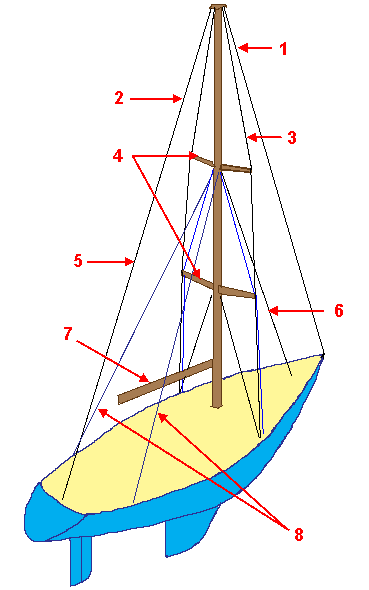



Components and basic distinction
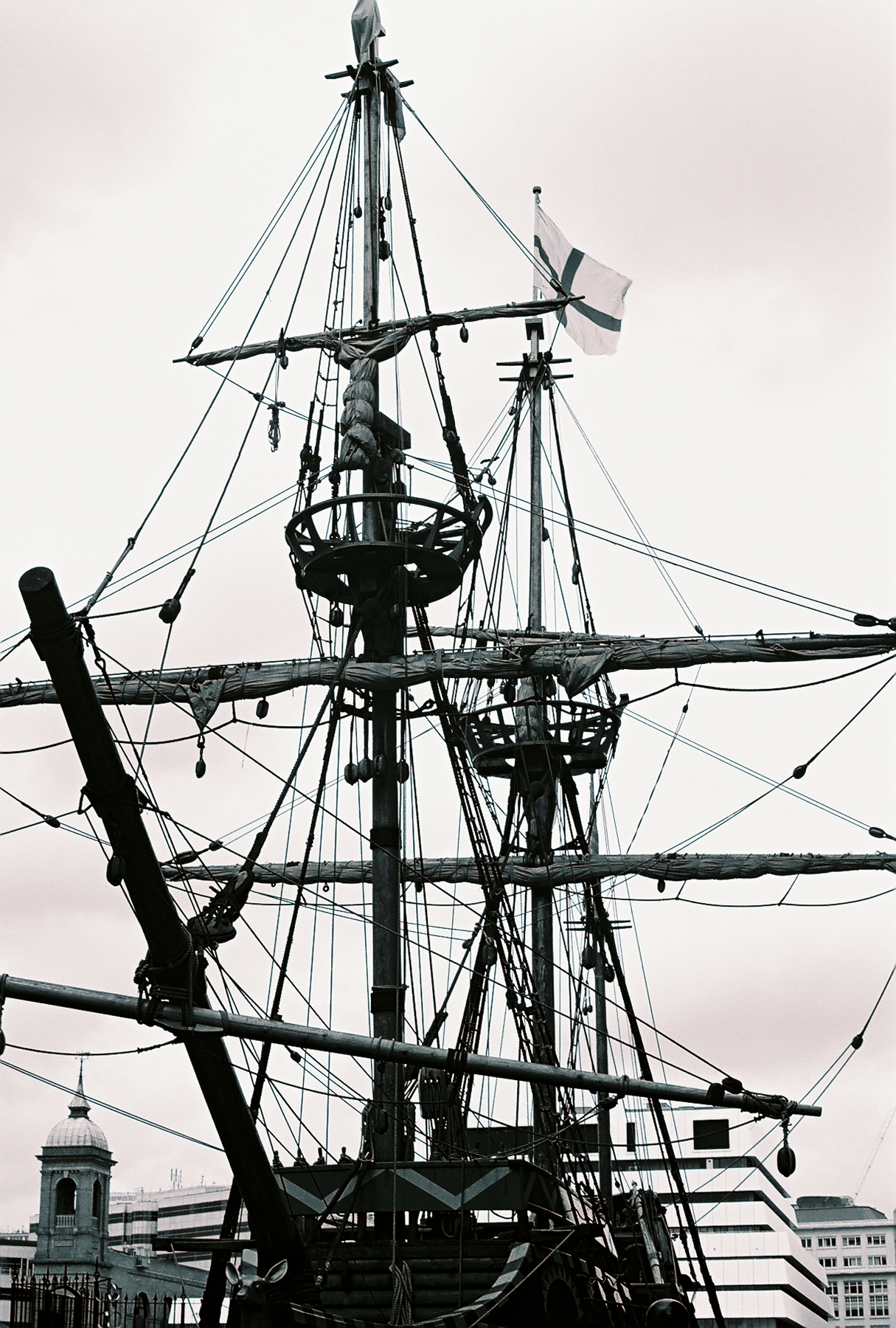
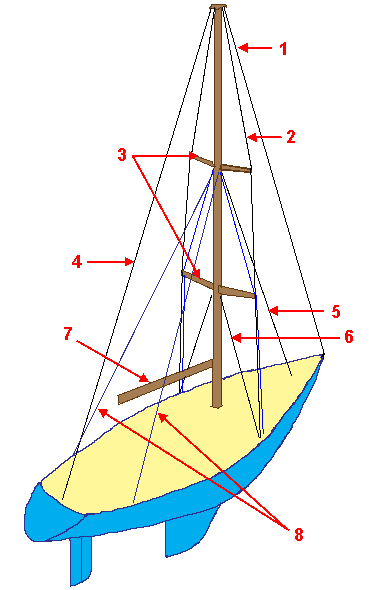
Rigging is commonly divided into two functional groups. Standing rigging comprises the fixed stays and shrouds that stabilize the masts fore-and-aft and athwartships. Running rigging consists of the movable lines used to hoist, lower and trim the sails and yards. Typical items include:
- Shrouds and stays (standing)
- Halyards, sheets and braces (running)
- Blocks, cleats, winches and fairleads (hardware)
- Turnbuckles, chainplates and spreaders that attach rigging to hull
Materials and historical development
Traditionally rigging was made from natural fibers such as hemp and manila. From the 19th century onward steel wire and stainless-steel rod became common for standing rigging because of their strength and low stretch. In the late 20th and 21st centuries synthetic fibers (polyester, Dyneema and others) have become popular for running lines and, in some designs, for standing rigging. Chains and metal fittings remain important where high tensile strength or corrosion resistance is required; some boats use chains for lower stays or forestays.
Types of rigs and examples
Different sail plans create very different rigging layouts. Small single-masted boats such as Bermuda sloops have relatively simple arrangements with a forestay and a set of shrouds. Multi-masted vessels like schooners and ketches have more complex systems of stays and running lines. Some designs purposefully avoid conventional standing rigging: for example a junk rig or certain catboat rigs use unstayed masts supported by their own construction rather than by shrouds and stays. A typical modern cruising boat will have a mix of wire standing rigging and synthetic running lines.
Function, operation and maintenance
Rigging performs two main roles: to keep masts upright and to allow sailors to control sail shape and angle to the wind. Proper tuning of standing rigging (tensioning shrouds and stays) affects sail performance and safety. Regular inspection for chafe, corrosion, loose fittings and UV degradation is important; worn lines and damaged turnbuckles are common service items. Hardware like winches and blocks also require periodic servicing.
For more detailed diagrams, terminology and rigging plans consult general references or guides specific to a sail plan: beginners often find it helpful to compare a simple sloop layout with the more involved plans of cutters, schooners or square-rigged ships. See also entries on ropes, masts and sails for related topics and equipment lists.
Questions and answers
Q: What is rigging?
A: Rigging is the system of ropes and/or chains used to support a sailing ship's masts, yards, and sails.
Q: What is the function of standing rigging in a sailing ship?
A: The standing rigging is used to support the masts of the sailing ship.
Q: What is the function of running rigging in a sailing ship?
A: Running rigging is used to support the yards and sails of the sailing ship.
Q: Do all types of sailboats have rigging?
A: No, some types of sailboats, such as junk rig and catboat rigs, do not have any rigging.
Q: What types of sailboats have fairly simple rigging?
A: Bermuda sloops with a single mast and one headsail use fairly simple rigging.
Q: Which types of sailboats have the most complex rigging?
A: Cutter-rigged ketches and schooners have the most complex rigging in a sailing ship.
Q: What is the role of ropes and/or chains in sailboat rigging?
A: The ropes and/or chains used in sailboat rigging play a crucial role in supporting the mast, yards, and sails to help steer the sailboat.
Tags
Related articles
Author
AlegsaOnline.com Rigging (sailing): ropes, wires and systems for supporting and controlling sails Leandro Alegsa
URL: https://en.alegsaonline.com/art/82886
Sources
- en.oxforddictionaries.com : "rigging"
- sailboat-cruising.com : "Sailboat Rigging: Part 1 - Standing Rigging"
- hnsa.org : "Standing Rigging"
- thecoastalpassage.com : "Rigging Made Simple"
- catalina22experiment.com : "101 Basics for Sailors"