
Rickets: childhood bone-softening due to vitamin D and mineral deficiency
Rickets is a childhood disorder of impaired bone mineralization caused by vitamin D, calcium or phosphate deficiency. It produces bone pain, deformities and growth delay; treatment is supplementation and correction.
Overview
Rickets is a pediatric disorder in which growing bones fail to mineralize properly. The condition weakens the structural framework of bone at the growth plates, producing softness, deformity and delayed linear growth. In adults the comparable disorder of defective bone mineralization is called osteomalacia; both share similar metabolic causes but differ in clinical presentation because children have active growth plates.
Image gallery
7 Images



Causes and risk factors
The most common underlying problem is inadequate vitamin D, which impairs intestinal absorption of minerals. Insufficient calcium or phosphate intake, disorders of renal handling of phosphate, fat malabsorption, and certain medications can also lead to rickets. Limited sunlight exposure, exclusively breastfed infants without supplementation, darker skin, prematurity and severe malnutrition increase risk.
Signs and symptoms
Clinical features reflect weakened growth plates and soft bones. Typical findings include:
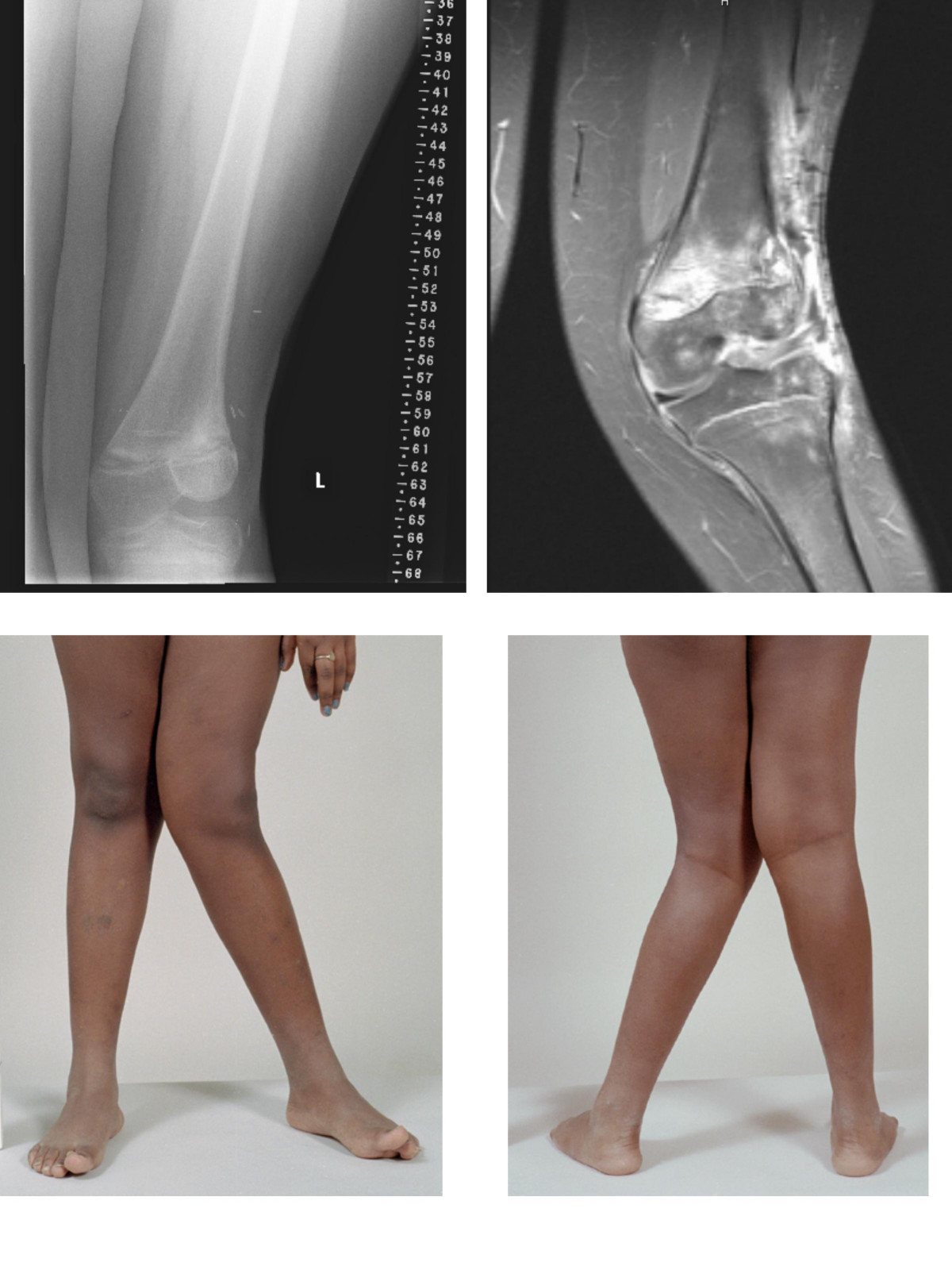
- Bowlegged or knock-kneed appearance as weight-bearing bones bend; in bowed legs the knees may angle inward or outward.
- Delayed growth and short stature compared with peers.
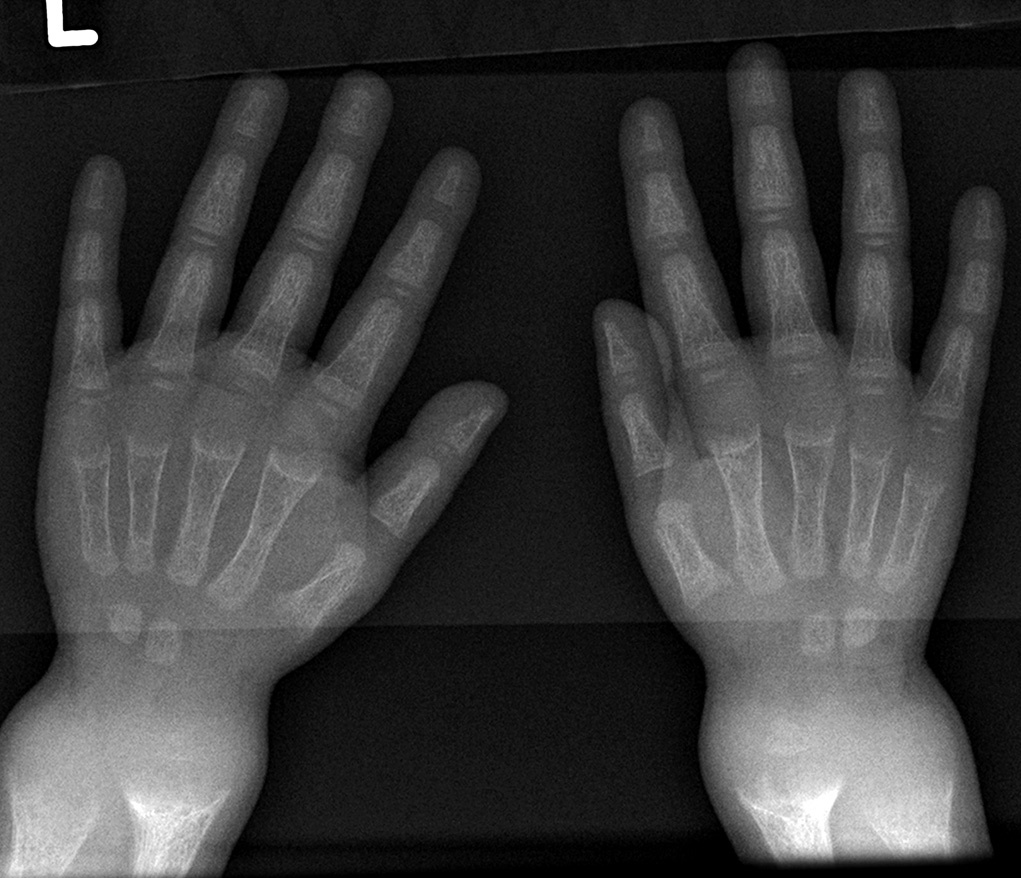
- Enlarged wrists and ankles, a prominent rib margin called a "rachitic rosary," and soft skull bones (craniotabes).
- Dental problems, bone pain and increased fracture risk.
Pathophysiology, diagnosis and imaging
Rickets results from defective mineral deposition in the cartilage of the growth plate and in newly formed bone, producing characteristic radiographic changes such as widened, irregular growth plates and cortical thinning. These bone changes can be seen on X-ray. Laboratory tests often show low 25-hydroxyvitamin D, low or low-normal calcium and phosphate, and elevated alkaline phosphatase. Diagnosis integrates clinical examination, biochemical testing and imaging; other causes of limb deformity must be considered in the differential.
Treatment and prevention
Management focuses on correcting the underlying deficiency and supporting normal growth. Oral vitamin D and calcium supplementation are the mainstays; severe or unusual causes may require specialized therapies (phosphate or activated vitamin D analogues, treatment of malabsorption or renal disorders). Prevention strategies include maternal and infant supplementation where appropriate, safe sun exposure, and food fortification programs that have reduced disease in many regions.
History, terminology and public health
The term derives from a Greek root associated with the spine, reflecting historical anatomical descriptions. Rickets was a common disorder in industrializing cities with poor sunlight and nutrition; use of cod liver oil and later vitamin D fortification of foods became effective public-health measures. Today rickets persists in areas with malnutrition, limited sun exposure or barriers to supplementation, and it remains an important preventable cause of childhood disability.
Questions and answers
Q: What is rickets?
A: Rickets is a disease that affects young children when they don't get enough vitamin D and calcium.
Q: What happens to bones affected by rickets?
A: Rickets causes larger spaces inside bones and makes them dry and sponge-like.
Q: What are some physical manifestations of rickets in children?
A: Rickets can cause the legs to curve inward toward each other or outward away from each other.
Q: What is osteomalacia?
A: Osteomalacia is the term used for rickets in adults.
Q: What is the origin of the word rickets?
A: The word "rickets" comes from the Greek word rhakhis, which means "spine."
Q: What causes rickets in children?
A: Rickets in children is caused by a lack of vitamin D and calcium.
Q: Can rickets be treated?
A: Yes, rickets can be treated with an increase in vitamin D and calcium intake.
Related articles
Author
AlegsaOnline.com Rickets: childhood bone-softening due to vitamin D and mineral deficiency Leandro Alegsa
URL: https://en.alegsaonline.com/art/82803
Sources
- nof.org : "Calcium and Vitamin D: What You Need to Know"
- mayoclinic.org : "Rickets: Risk Factors"