
Richard Arkwright: inventor and architect of the early factory system
Overview of Richard Arkwright (1733–1792), inventor of the spinning frame (water frame), his role in early industrialization, the factory system, and his lasting influence on textile manufacture.
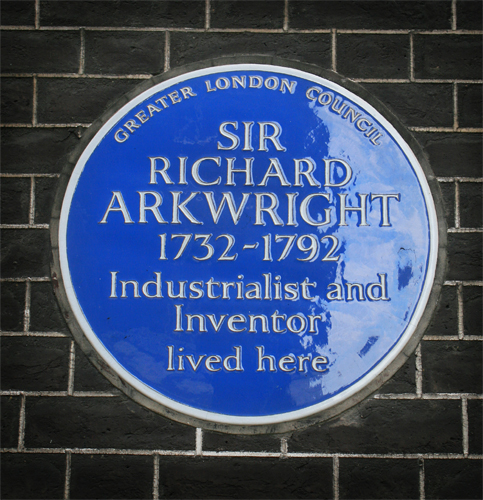
Sir Richard Arkwright (3 January 1733 – 3 August 1792) was an English inventor and leading entrepreneur active during the formative decades of the Industrial Revolution. He is best known for developing the spinning frame—later adapted to run by water and commonly called the water frame—and for organising production in a way that helped transform cotton manufacture from a domestic craft into factory-based mass production. He was born in Preston, in Lancashire, and died at his works in Cromford, Derbyshire.
Image gallery
8 Images



Inventions and technical contributions
Arkwright developed a water-powered spinning machine that mechanised the drawing and twisting of cotton roving into stronger yarn. He secured legal protection for his method in the 1760s when he patented the technology in 1767. The device combined rollers to draw out the fibres and spindles to twist them, producing yarn at a steadier gauge and higher speed than many manual methods then in wide use. The machine itself and the idea of grouping multiple machines under a single power source became central features of later textile machinery.
Organisation and the factory model
Where Arkwright made his most lasting contribution was not only in machinery but in organisation. He brought together centralized power (initially water wheels), mechanised equipment, and a largely semi-skilled workforce to operate the machines in purpose-built mills. This arrangement reduced reliance on skilled hand spinners, increased output, and made it easier to coordinate large-scale production schedules. Many historians regard his mills as among the earliest examples of a modern factory system.
Practical features of Arkwright's mills
- Location chosen for access to reliable water power and transport.
- Clear separation of tasks: processes such as carding, drawing, and spinning were performed in sequence.
- Use of semi-skilled labour supervised by foremen to maintain speed and quality.
- Systematic maintenance and control of raw cotton supply and finished yarn.
Impact, controversies and legacy
Arkwright's methods accelerated the mechanisation of textiles and influenced other industries that adopted centralised power and machine-based production. He accumulated substantial wealth and social standing during his lifetime and his mills became models for later industrial development. Some aspects of his career were contested in court—patent rights and business practices drew legal challenge—but his broader legacy is widely acknowledged: he helped shift textile manufacture from dispersed domestic workshops to concentrated factory production. His name is frequently cited in discussions of mass-production precursors to later industrial systems, including those associated with figures such as Henry Ford, who popularised assembly-line methods in the 20th century.
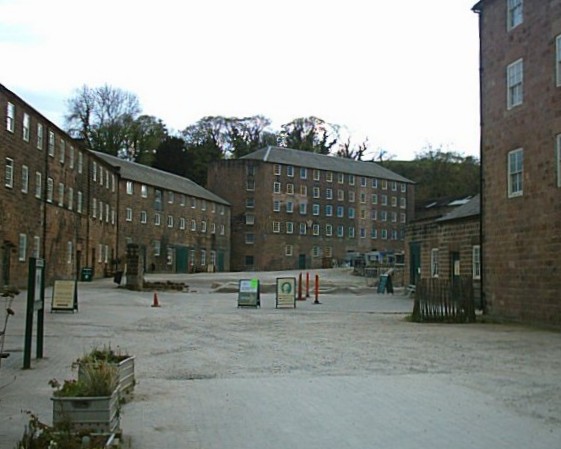
For further reading and primary sources on Arkwright's life, inventions, and mills see specialized histories and collections that document early textile technology and the social changes of the late 18th century. Many contemporary museums and industrial heritage sites preserve fragments of the physical and documentary record of his enterprises and the communities they shaped. More context can be found in curated archives and museum descriptions that treat both the machines and the human labour that ran them.
Questions and answers
Q: Who was Sir Richard Arkwright?
A: Sir Richard Arkwright was an English inventor and a leading entrepreneur during the early Industrial Revolution.
Q: What did Arkwright invent?
A: Arkwright invented the spinning frame, which was later called the water frame after the change to water power.
Q: When did Arkwright patent his technology?
A: Arkwright patented his technology in 1767.
Q: What was Arkwright's achievement?
A: Arkwright's achievement was to combine power, machinery, and semi-skilled labour in the new cotton industry, creating mass production more than a century before Henry Ford.
Q: What was Arkwright's contribution to the modern factory system?
A: More than anyone else, Arkwright's great mechanical abilities and a genius for organisation made him the creator of the modern factory system.
Q: Is the water frame still in use today?
A: Yes, the water frame is still used today.
Q: Where was Arkwright born and where did he die?
A: Arkwright was born in Preston, Lancashire, England and died in Cromford, Derbyshire, at the age of 59.
Related articles
Author
AlegsaOnline.com Richard Arkwright: inventor and architect of the early factory system Leandro Alegsa
URL: https://en.alegsaonline.com/art/82636