
Rhizaria: diverse amoeboid eukaryotes including foraminifera and radiolaria
Rhizaria are a major eukaryotic supergroup of mostly single-celled organisms—many with filamentous pseudopods and mineral shells—important in marine ecosystems, paleontology and soil food webs.
Overview
Rhizaria is a broad eukaryotic lineage that unites many mostly unicellular organisms characterized by amoeboid movement and fine, thread-like pseudopods. The group was first proposed in the early 21st century and is recognized today on the basis of molecular phylogenetic evidence and shared cellular features. Most rhizarians are microscopic, but collectively they have a large ecological and geological footprint.
Image gallery
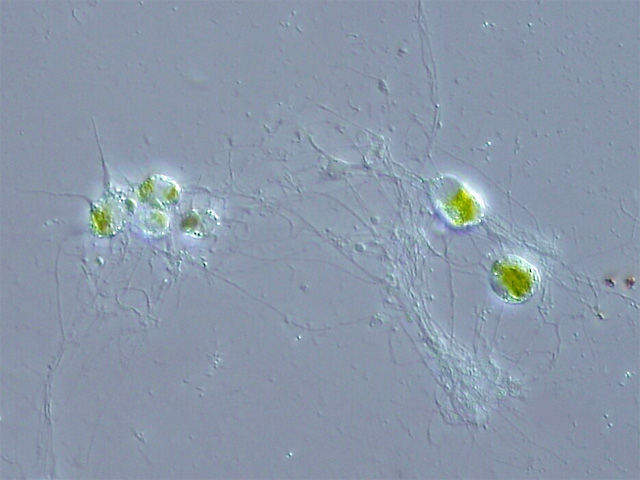
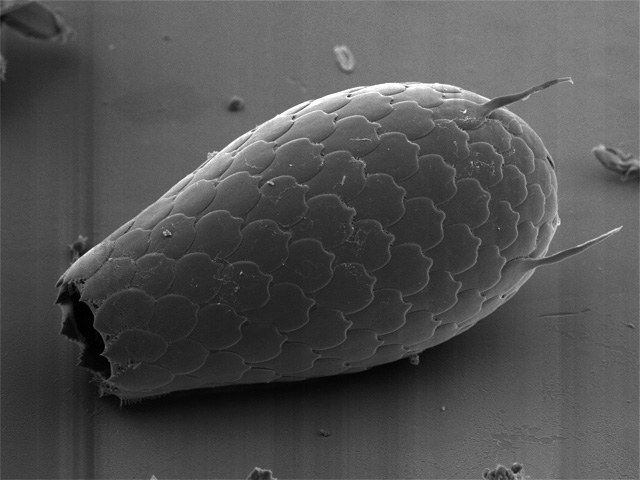
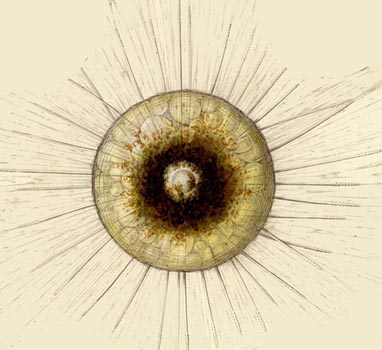
7 Images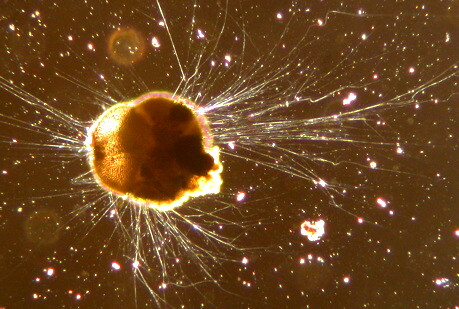



Major groups and distinguishing features
Rhizaria include several well-known lineages, each with distinctive forms and life habits:
- Foraminifera — typically produce multi-chambered calcareous tests (shells); many are benthic or planktonic and leave a rich fossil record used in biostratigraphy and paleoceanography.
- Radiolaria — mostly planktonic marine protists often with intricate silica skeletons that contribute to siliceous sediments when they die.
- Cercozoa — a diverse assemblage found in soils, freshwater and marine habitats; includes predators, parasites and amoeboflagellates with filose pseudopods.
Cell biology and morphology
Rhizarians are generally amoeba-like and extend pseudopods that are thin (filose) or form net-like (reticulose) networks, distinguishing them from the broad, lobed pseudopods of other amoeboid groups. Many build external tests or internal skeletons of calcium carbonate, silica, or organic material. At the cellular level they possess mitochondria with folded internal membranes (cristae) and other eukaryotic organelles. While most are unicellular, occasional reports describe multicellular or multinucleate forms within or near this assemblage.
Ecological and geological importance
Rhizarians play key roles in marine food webs as grazers, prey and contributors to particulate organic matter. Foraminifera and radiolaria are major contributors to marine sediments; their mineralized remains form chalks, limestones and siliceous ooze that record past climates and ocean conditions. Some cercozoans regulate bacterial and algal populations in soils and freshwater systems.
History and classification
The concept of Rhizaria emerged from molecular studies that resolved relationships among diverse protists. Taxonomists combine genetic data with morphology to refine internal classification. Because traits like shell composition and pseudopod structure vary widely, rhizarian diversity continues to reveal new forms and ecological niches as microscopy and sequencing advance. For more general context on eukaryotic supergroups see supergroup summaries and for comparisons with other amoeboid protists consult resources on amoeboid organisms.
Notable facts and distinctions
- Rhizaria are a major source of protozoan fossils, especially foraminifera, used in geology and climate studies.
- Their pseudopod types (filose, reticulose) are important diagnostic characters.
- They span habitats from deep sea sediments to soil microhabitats and planktonic zones, reflecting broad ecological diversity.
Questions and answers
Q: What are Rhizaria?
A: Rhizaria are a supergroup of mostly unicellular eukaryotes.
Q: Who proposed the Rhizaria as a supergroup and in what year?
A: The Rhizaria were proposed as a supergroup by Cavalier-Smith in 2002.
Q: Do all species of Rhizaria have amoeba-like pseudopods?
A: For the most part, all species of Rhizaria are amoeba-like with pseudopods, but they vary considerably in form.
Q: Do many species of Rhizaria produce shells or skeletons?
A: Yes, many species of Rhizaria produce shells or skeletons, which can be quite complex in structure.
Q: What is the significance of Rhizaria in protozoan fossils?
A: Rhizaria make up the vast majority of protozoan fossils.
Q: Do all Rhizaria have mitochondria?
A: Yes, nearly all Rhizaria have mitochondria with folds.
Q: Are multicellular forms of Rhizaria common?
A: No, multicellular forms of Rhizaria are rare, but a recent discovery has been made.
Related articles
Author
AlegsaOnline.com Rhizaria: diverse amoeboid eukaryotes including foraminifera and radiolaria Leandro Alegsa
URL: https://en.alegsaonline.com/art/82518
Sources
- palaeos.com : "Rhizaria"
- pnas.org : "The twilight of Heliozoa and rise of Rhizaria, an emerging supergroup of amoeboid eukaryotes"
- doi.org : 10.1073/pnas.0308602101
- ncbi.nlm.nih.gov : 419558
- pubmed.ncbi.nlm.nih.gov : 15148395
- cell.com : "Aggregative multicellularity evolved independently in the Eukaryotic Supergroup Rhizaria"
- ijs.sgmjournals.org : "The phagotrophic origin of eukaryotes and phylogenetic classification of Protozoa"
- worldcat.org : 1466-5026
- pubmed.ncbi.nlm.nih.gov : 11931142
- linkinghub.elsevier.com : "Global eukaryote phylogeny: combined small- and large-subunit ribosomal DNA trees support monophyly of Rhizaria, Retaria and Excavata"
- doi.org : 10.1016/j.ympev.2006.11.001
- pubmed.ncbi.nlm.nih.gov : 17174576