
Rhine–Main–Danube Canal
A 171 km inland waterway completed in 1992 that links the Rhine and Danube river systems across Bavaria, creating a navigable route from the North Sea to the Black Sea and reshaping European inland shipping.
Overview
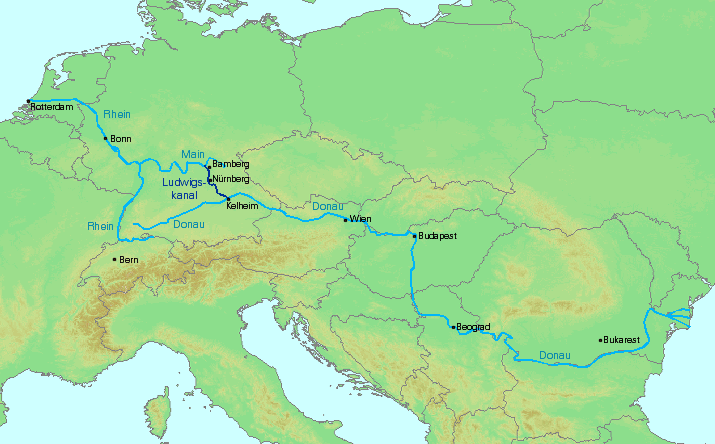
The Rhine–Main–Danube Canal, also commonly called the Main–Danube Canal, is a major European inland waterway that connects the river systems of the Rhine and the Danube through southern Germany. Completed in 1992, the artificial channel established a continuous navigable link between the North Sea and the Black Sea, enabling commercial and recreational navigation across a large portion of central and eastern Europe. The waterway runs through the state of Bavaria and integrates existing rivers and newly constructed canal sections to overcome the continental watershed.
Image gallery
7 Images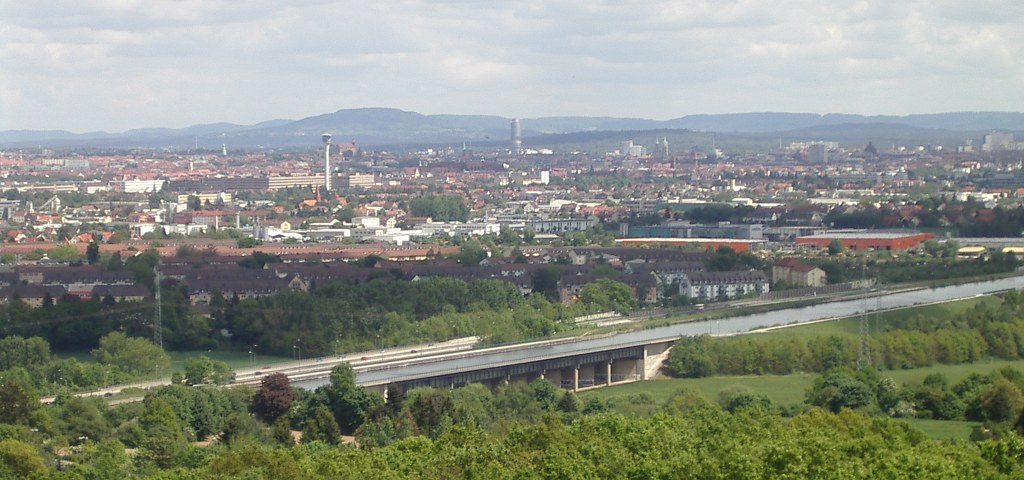


Route and physical characteristics
The canal is about 171 km long and runs roughly from the Main at Bamberg past the Nürnberg region to the Danube near Regensburg. On its western end it connects to the Main river and thereby to the Rhine system; to the east it joins the Danube. Along its course the canal follows river valleys where possible, including stretches near Bamberg and Fürth, and crosses higher ground by means of engineered cuts, locks and reservoirs. To manage changes in elevation and allow passage of oceangoing-sized inland vessels, the canal uses a sequence of locks and regulated water supply structures; numerous bridges, viaducts and ecological passages were constructed to reconcile transport needs with landscape and habitat continuity.
History and development
Ambitions to join the Rhine and Danube date back centuries and were pursued in various forms. In the 19th century an earlier waterway — the Ludwig Canal — linked the Main and Danube but was gradually abandoned after sustaining wartime damage and becoming economically obsolete. The modern canal project reflected late 20th‑century priorities for integrated European transport; after decades of planning and construction the Rhine–Main–Danube Canal opened in 1992, completing the inland route from the Netherlands to the Black Sea and changing freight and passenger patterns in the region.
Uses, importance and impacts
The canal carries freight barges, river cruise vessels and recreational traffic. For inland shipping it shortened and simplified transport between northwest Europe and southeastern destinations, offering an alternative to road and rail for bulk cargo and heavy goods. The waterway also boosted tourism in Bavaria, enabling river cruises that link historic cities and scenic landscapes. Construction and operation of the canal raised environmental and cultural concerns: building the connection altered hydrology, required compensatory habitats and promoted archaeological surveys where the channel crossed ancient landscapes.
Notable details and distinctions
The Rhine–Main–Danube Canal is notable as a transcontinental inland link that crosses a European watershed, allowing vessels to travel between northern and southeastern Europe without sea passages. Its completion was an engineering achievement for late 20th‑century inland navigation, combining river improvements, new canal sections and modern lock technology. The project also stimulated debates about environmental mitigation, water management and the balance between transport infrastructure and regional conservation.
Quick references
- Main (western connection)
- Danube (eastern connection)
- Region: Bavaria, Germany
- Key cities along the route: Bamberg, Nuremberg, Regensburg
- Official opening year: 1992
- Creates navigation from Rotterdam and the Netherlands to the Black Sea
- 19th‑century predecessor: Ludwig Canal, damaged in World War II
- Local places and rivers referenced: Fürth, the Regnitz valley and its tributary systems
The Rhine–Main–Danube Canal remains an important piece of Europe’s inland transport network and a prominent example of modern canal engineering that intersects economic, cultural and environmental interests.
Questions and answers
Q: What is the Rhine-Main-Danube Canal?
A: The Rhine-Main-Danube Canal is a canal that connects the three rivers Rhine, Main, and Danube in Bavaria, Germany.
Q: Where does the Rhine-Main-Danube Canal go?
A: The canal goes from Bamberg to Regensburg in Bavaria, Germany.
Q: When was the Rhine-Main-Danube Canal finished?
A: The canal was finished in 1992.
Q: What is the length of the Rhine-Main-Danube Canal?
A: The canal is 171km (106 miles) long.
Q: What is the previous canal that connected the Danube to the Main before the Rhine-Main-Danube Canal?
A: The previous canal that connected the Danube to the Main was the Ludwig Canal.
Q: What is the route that the Rhine-Main-Danube Canal follows from Bamberg to Fürth?
A: From Bamberg to Fürth, the canal follows the valley of the Regnitz, which is a tributary of the Main.
Q: What is the route that the Rhine-Main-Danube Canal follows from Dietfurt to Kelheim?
A: From Dietfurt to Kelheim, the canal follows the valley of the Altmuehl, which eventually meets the Danube.
Related articles
Author
AlegsaOnline.com Rhine–Main–Danube Canal Leandro Alegsa
URL: https://en.alegsaonline.com/art/82504