
Rhind Mathematical Papyrus: Egypt’s Principal Mathematical Manuscript
Overview of the Rhind Mathematical Papyrus: its content, physical form, dating, authorship, discovery, and importance for the history of mathematics in ancient Egypt.
The Rhind Mathematical Papyrus is the most extensive surviving handbook of Egyptian mathematical practice. Now conserved in the British Museum, the roll provides an unusually detailed record of problems, worked examples and procedures used by scribes for practical calculation. It is one of the principal documentary sources for the study of Egyptian mathematics and is frequently studied alongside the Moscow Mathematical Papyrus to reconstruct numerical techniques and pedagogic methods used in antiquity.
Image gallery
6 Images


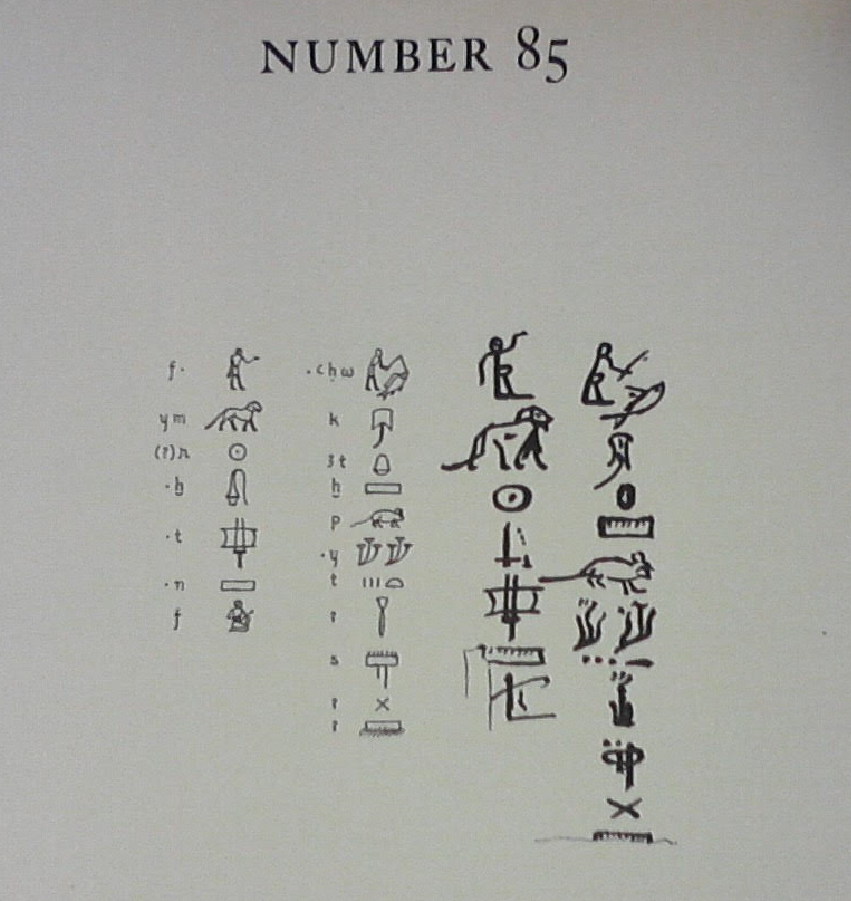
Physical description and format
The manuscript is a long papyrus roll written in hieratic script. The preserved sections are formed of several columns and, when joined, exceed five metres in length; each column is roughly 33 centimetres tall. The visible sheets show the routine layout used for problems and solutions: numbered or titled items followed by computational steps and brief explanatory notes. The document is a copy produced by a scribe rather than an original composition, and its form suggests it was intended as a working manual or school text rather than a purely ceremonial inscription.
Contents and mathematical topics
The papyrus collects a sequence of practical problems with worked solutions. Major topics include elementary arithmetic operations and methods of division, procedures that modern historians call rudimentary algebra (for example, techniques equivalent to solving linear problems by a method of false position), and rules for finding areas and volumes that fall within applied geometry. A large portion of the text is devoted to the representation and manipulation of unit fractions, which were central to Egyptian computation. Some entries treat proportional relationships and rates, and several passages have been interpreted as showing concern with slopes and inclinations in construction—matters sometimes described in older literature with the informal term trigonometry, although the mathematical content and aims differ from later classical trigonometric systems.
Typical problems and procedures
Problems in the papyrus range from everyday administrative tasks to measures used in building and agriculture. Examples include distribution problems (dividing quantities of bread or beer among workers), calculations of grain and rations, computation of volumes for storage and construction, and methods for partitioning land or combining fractional parts. The solutions demonstrate standard Egyptian practices: expressing results as sums of unit fractions, using doubling and halving tables to simplify multiplication and division, and employing algorithmic steps that allowed scribes to reproduce calculations reliably.
Authorship, dating and provenance
The surviving copy names the scribe Ahmose as the person who produced the roll, and internal notes indicate the text is a New Kingdom copy of older material. Egyptological study traces the exemplar to an earlier tradition and associates some portions with the reign of Amenemhat III in the Middle Kingdom, suggesting the work preserves problems that circulated for generations. The extant manuscript itself is usually dated to the Second Intermediate Period or the early New Kingdom era (roughly the sixteenth century BCE), and specific regnal notations in the papyrus have been linked to Hyksos rulers in Egyptian chronology.
Discovery and modern history
The document is named after Alexander Henry Rhind, a Scottish antiquarian who acquired the roll in 1858 in or near Luxor, Egypt. It appears to have been recovered from an area near the Ramesseum and passed into European collections before being obtained by the museum that now displays it. Since its arrival in the 19th century the papyrus has been the subject of repeated transliteration, photographic reproduction and mathematical analysis, and it has played a central role in establishing an evidence-based picture of numerical practice in ancient Egyptian administration, surveying and craft.
Scholarly editions and study
From the late nineteenth century onward scholars prepared transliterations and translations accompanied by commentary on the arithmetic and procedural content. Early critical editions and photographic publications set a foundation that later work has refined: specialists have re-examined the hand, the sequence of problems, and the arithmetic methods to clarify ambiguities and to place the text in its social and pedagogical context. Notable treatments of the papyrus appear in museum catalogues and in specialist monographs and articles that discuss the interpretations of particular problems and the overall significance for the history of mathematics.
Significance and legacy
The Rhind Mathematical Papyrus is indispensable for understanding how numbers and calculations were used outside the literary and philosophical traditions of later classical antiquity. It preserves a practical mathematical culture oriented to administration, engineering and daily economic life in ancient Egypt. For historians of mathematics and Egyptologists alike the papyrus offers direct evidence of algorithmic thinking, the organisation of numerical knowledge, and the transmission of computational techniques between generations of scribes.
Resources and further reading
- For the museum display and object history consult the curatorial description at the repository of the British Museum.
- General surveys of the Egyptian mathematical tradition situate the papyrus among other documentary sources on Egyptian mathematics.
- Biographical and acquisition details appear in accounts of Alexander Henry Rhind and nineteenth-century collections from Luxor and broader Egypt.
- Textual studies discuss the papyrus’ treatment of arithmetic, algebra-like techniques, and practical geometry.
- Specialist analyses consider the uses of unit fractions and proportional methods sometimes compared to early notions labeled as trigonometry in antiquarian descriptions.
- Comprehensive references to the manuscript and its transliteration are available in editions and catalogues that provide a line-by-line transliteration and commentary; further critical notes and facsimiles can be found in scholarly literature and museum publications. See also consolidated treatments and modern overviews for readers seeking stage-by-stage analyses and pedagogical interpretation here.
Questions and answers
Q: Who discovered the Rhind papyrus?
A: Alexander Henry Rhind, a Scottish antiquarian, discovered the Rhind papyrus in 1858 in Luxor, Egypt.
Q: What is the main source of knowledge about mathematics in Ancient Egypt?
A: The Rhind papyrus and the Moscow Mathematical Papyrus are the main sources of knowledge about mathematics in Ancient Egypt.
Q: How long is the Rhind papyrus?
A: The Rhind papyrus is over 5 metres (16 ft) long.
Q: When was it written?
A: It was written about 1650 BC.
Q: Who wrote it?
A: The scribe Ahmose wrote it.
Q: What topics does it cover?
A: The topics covered by the Rhind papyrus include arithmetic, algebra, geometry, trigonometry and fractions.
Q: What year did Alexander Henry Rhind buy it from Luxor, Egypt?
A: Alexander Henry Rhind bought the papyrus from Luxor, Egypt in 1858.
Related articles
Author
AlegsaOnline.com Rhind Mathematical Papyrus: Egypt’s Principal Mathematical Manuscript Leandro Alegsa
URL: https://en.alegsaonline.com/art/82502