
Reutte District (Außerfern) — geography, history and highlights
Reutte District (Außerfern) in Tyrol, Austria: an alpine district bordering Bavaria and Vorarlberg, known for mountain landscapes, the Lech valley, border routes and historic sites around the market town of Reutte.
Overview
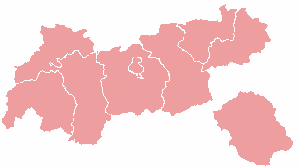
The Reutte District, often called Außerfern, is an alpine district in the federal state of Tyrol, Austria. It covers a largely mountainous area of about 1,236.37 km² and had a population of roughly 31,758 (2012). The district seat and principal market town is Reutte, which acts as the commercial and administrative hub for surrounding valleys.
Image gallery
3 Images

Geography and landscape
Reutte occupies valleys and high passes in the northern Tyrolean Alps. The district shares a long international border with Bavaria in Germany, while to the west it approaches the Austrian state of Vorarlberg. To the south lie the Tyrolean districts of Imst and Landeck. Prominent natural features include rocky alpine ridges, river valleys such as that of the Lech, and several lakes and reservoirs used for recreation and local water management.
Administrative structure and communities
The district is composed of multiple municipalities, ranging from the central market town to small mountain villages. Settlements are distributed along valley floors and lower mountain slopes; many communities have economies based on tourism, agriculture and local services. Reutte functions as the principal center for education, health care and administration.
History and name
The traditional name Außerfern literally refers to the area beyond the Fern Pass—an important historic route across the Alps. That corridor has shaped local trade and movement for centuries, linking northern and southern Europe. Historic fortifications and pastoral traditions reflect the district’s strategic position at an Alpine crossroads.
Economy, transport and recreation
Modern Reutte balances local industry with a strong tourism sector. Outdoor activities such as hiking, climbing, winter sports and fishing attract visitors to alpine trails and lakes. Transport routes over mountain passes and along valley roads connect the district to neighboring Bavaria, to other Tyrolean regions and to Vorarlberg, making cross-border ties important for commerce and daily life.
Notable sites and conservation
The district contains cultural and natural attractions: castle ruins and historic fortifications near Reutte, clear mountain lakes, and river corridors with significant ecological value. Conservation efforts aim to preserve river habitats and alpine ecosystems while accommodating sustainable tourism and recreation.
Questions and answers
Q: Where is the Reutte District located?
A: The Reutte District is located in Tyrol, Austria.
Q: What are the neighboring districts of the Reutte District?
A: The neighboring districts of the Reutte District are Imst and Landeck in the south, and Bregenz and Bludenz in the west.
Q: What country does the Reutte District border in the north?
A: The Reutte District borders Bavaria, Germany in the north.
Q: What is the area of the Reutte District?
A: The area of the Reutte District is 1,236.37 km².
Q: How many people lived in the Reutte District in 2012?
A: As of 2012, 31,758 people lived in the Reutte District.
Q: What is the administrative center of the Reutte District?
A: The administrative center of the Reutte District is Reutte.
Q: What is another name for the Reutte District?
A: The Reutte District is also referred to as “Außerfern”.
Related articles
Author
AlegsaOnline.com Reutte District (Außerfern) — geography, history and highlights Leandro Alegsa
URL: https://en.alegsaonline.com/art/82386