
Respiratory system
The respiratory system moves oxygen into the body and removes carbon dioxide. This article explains its parts, how breathing and gas exchange work, links to cellular respiration, control mechanisms, and common disorders.
Overview
The respiratory system is the set of organs and structures that supply oxygen to the bloodstream and remove the waste gas carbon dioxide. It supports life by enabling gas exchange at the lungs and by providing the oxygen required for cellular metabolism. For the biochemical process that uses oxygen to release energy in cells, see biochemical respiration. The two principal gases involved are oxygen taken in and carbon dioxide expelled.
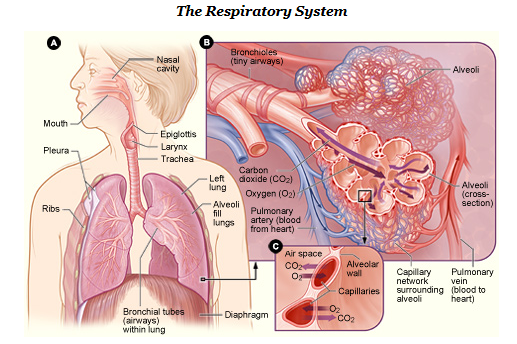
Image gallery
10 Images




Structure and major parts
The respiratory tract is commonly divided into upper and lower regions. The upper tract conditions incoming air and filters particles; the lower tract conducts air to the gas-exchanging units. Key components include:
- nose and nasal cavity
- pharynx and larynx (voice box)
- trachea and bronchi (airways)
- lungs, which contain millions of alveoli where exchange occurs
How breathing and gas exchange work
Breathing involves two linked mechanical actions. Inhalation draws air into the lungs and exhalation expels it. This ventilation is the first step in the respiratory sequence. At the alveoli, oxygen and carbon dioxide cross the thin barrier between air and blood by diffusion. Oxygen binds to hemoglobin in red blood cells and is transported to tissues, while carbon dioxide produced by cells is carried back to the lungs to be removed.
Cellular respiration and energy
The respiratory system provides the oxygen needed for cellular respiration, the metabolic process that converts nutrients into usable chemical energy and produces carbon dioxide as a byproduct. It is important to distinguish the organ-level process of breathing and gas transport from the intracellular biochemical steps that generate energy.
Regulation, health and clinical relevance
Breathing rate and depth are regulated automatically by neural networks in the brainstem and by chemical sensors that monitor blood levels of carbon dioxide and oxygen. The diaphragm and intercostal muscles create pressure changes that move air. The respiratory system also defends against infection and pollutants through mucus, cilia and immune cells. Common disorders include infections (bronchitis, pneumonia), chronic conditions (asthma, chronic obstructive pulmonary disease) and injuries that impair ventilation or gas exchange. Pulmonary function tests and noninvasive monitors are used clinically to assess respiratory performance.
Notable distinctions and importance
While often used interchangeably with breathing, the term "respiration" can refer to different scales: whole-body gas exchange, the mechanical act of ventilation, or the intracellular chemical pathways of energy production. Together, these processes enable aerobic life, influence acid–base balance, and interact closely with the circulatory system to maintain homeostasis.
Questions and answers
Q: What is the respiratory system?
A: The respiratory system, also called the gas exchange system, is the body's process of getting rid of carbon dioxide and taking in oxygen.
Q: What are the main organs involved in this process?
A: The lungs are the main organ involved in this process.
Q: What is the first step in this process?
A: The first step in this process is breathing in air, or inhaling. Inhalation means bringing air rich in oxygen into the body.
Q: What happens during gas exchange?
A: During gas exchange, oxygen diffuses into the blood and carbon dioxide diffuses out of the blood.
Q: How does cellular respiration produce energy for cells?
A: Cellular respiration produces chemical energy that cells need to function, as well as carbon dioxide.
Q: Where does carbon dioxide from cellular respiration go after it's produced?
A: Carbon dioxide from cellular respiration is breathed out of the body from the lungs.
Related articles
Author
AlegsaOnline.com Respiratory system Leandro Alegsa
URL: https://en.alegsaonline.com/art/82311