
Badlands: Eroded, arid landscapes and their defining features
Badlands are heavily eroded, sparsely vegetated terrains formed in soft sedimentary rocks. This article summarizes their formation, characteristic landforms, distribution, and significance.
Overview
Badlands are a class of rugged, often colorful dry terrain characterized by steep slopes, minimal soil, and sparse vegetation. They develop where soft sedimentary layers—such as mudstone, siltstone or volcanic ash—are exposed to intense weathering and runoff. The result is a maze of sharp ridges, pinnacles and hollows that are difficult to traverse on foot and generally impassable by regular vehicles.
Image gallery
10 Images


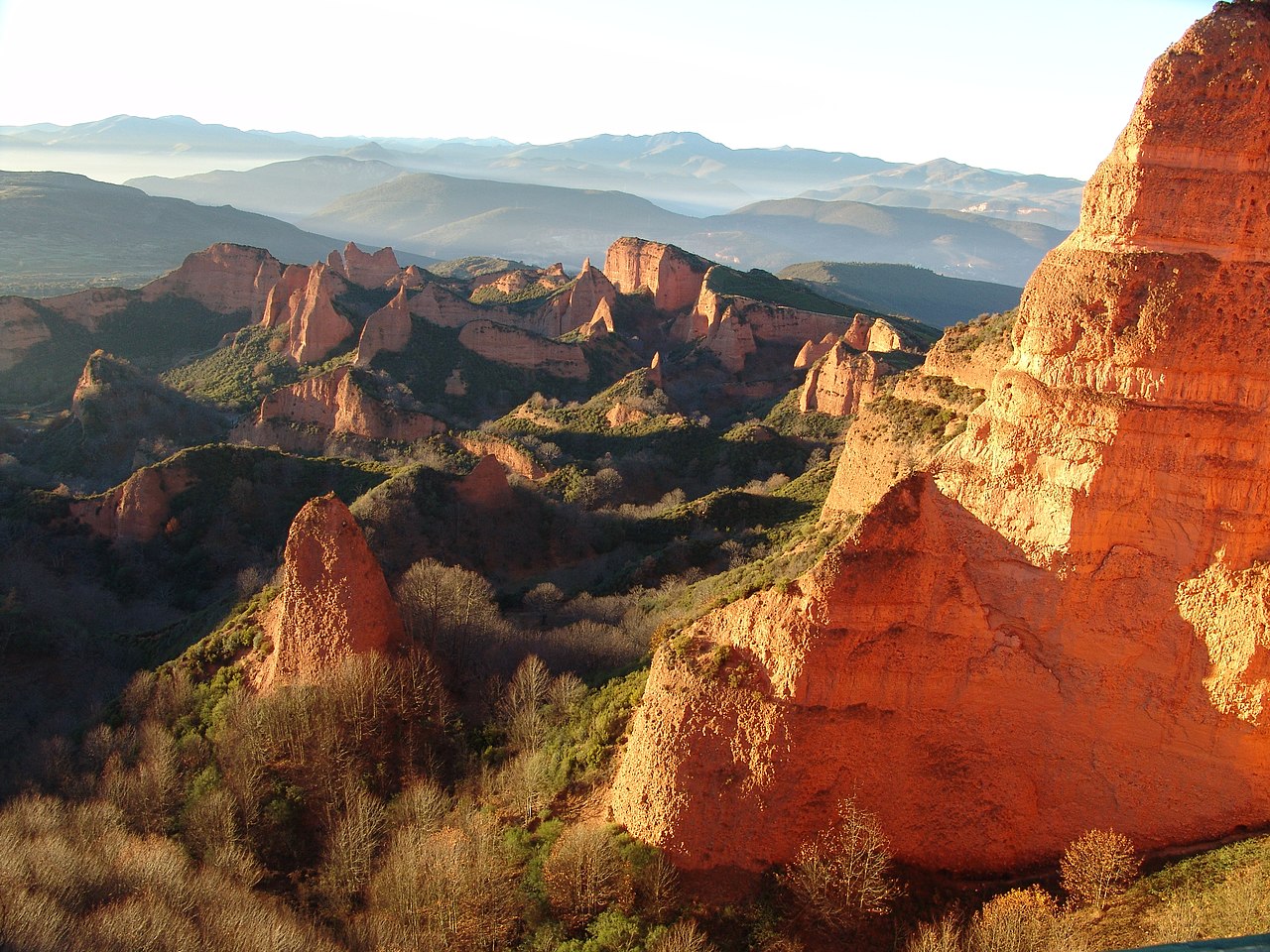


Formation and characteristics
Formation is driven primarily by erosion from water and, to a lesser degree, wind. Rainfall concentrates in channels and rapidly removes fine sediments; freeze–thaw cycles and sparse plant cover accelerate breakdown. Harder beds or cemented layers resist wear, leaving inverted relief where resistant layers protrude. Stratified sequences commonly reveal contrasting colors and textures, reflecting differences in mineral content and depositional history.
Common landforms
Badlands host a variety of small-scale erosional features. Typical forms include:
- Canyons and deep, narrow channels cut by concentrated runoff.
- Ravines, steeper-sided gullies that carve into slopes.
- Gullies, small but active drainage paths that expand during storms.
- Layered outcrops revealing coal or dark horizons, and alternating beds of varying resistance.
Distribution and examples
Badland-like terrains occur worldwide where the climate is semi-arid to arid and sedimentary deposits are exposed. They often form in former floodplains, deltaic muds or ash-fall deposits; exposures of strata are common study sites for geologists. Bright clays and siltstones may create striking color contrasts, while interbedded clays and sandstone produce layered relief that records environmental change through time.
Importance, uses and distinctions
Badlands are important for science, recreation and education. Their exposed layers provide accessible records of ancient environments, fossils and sedimentary processes. They are often protected for conservation and research, but their fragile soils and active erosion require careful management to avoid accelerated degradation. Unlike rocky deserts or mesas, badlands are defined more by rapid erosion of soft materials than by bedrock prominence, making them distinctive both visually and geomorphologically.
Questions and answers
Q: What are badlands?
A: Badlands are a type of dry terrain that is difficult to move across, characterized by canyons, ravines, gullies and other geological forms.
Q: How are badlands formed?
A: Badlands are formed when softer rock is eroded by wind and water, leaving harder rock sticking up.
Q: Why are badlands difficult to cross by foot, horse or car?
A: Badlands are difficult to cross due to their rugged terrain and the absence of smooth paths.
Q: What are the common geological forms found in badlands?
A: Canyons, ravines, gullies and other such geological forms are common in badlands.
Q: What are the different types of colour displays that may be found in dry badlands?
A: Dry badlands may have spectacular colour displays that range from dark black/blue coal strata to bright clays and sandstone.
Q: Can cars cross badlands?
A: No, badlands are impossible to cross by car.
Q: Why are badlands so challenging to move through?
A: Badlands are challenging to move through due to their rugged and uneven terrain, making it difficult to find a smooth path.
Related articles
Author
AlegsaOnline.com Badlands: Eroded, arid landscapes and their defining features Leandro Alegsa
URL: https://en.alegsaonline.com/art/8227