
Republic of China (1912–1949)
State on the Chinese mainland from the 1912 Xinhai Revolution to 1949; marked by revolutionary origins, a fragmented warlord era, Nationalist rule, war with Japan, and civil war.
The Republic of China (ROC) was the polity established on the Chinese mainland after the collapse of imperial rule in 1912. It emerged from the Xinhai Revolution that overthrew the Qing dynasty and sought to replace the imperial system with a modern republic. The period 1912–1949 encompassed competing governments, regional militarism, attempts at state-building by the Nationalist Party, a prolonged struggle with the Chinese Communist movement, a devastating war with Japan, and ultimately the Communist victory on the mainland.
Image gallery
10 Images



Foundation and provisional government
Revolutionary activity that culminated in 1911–1912 led to the proclamation of a republic and the selection of provisional leaders. Prominent among them was Sun Yat-sen, an influential revolutionary thinker and one of the symbolic founders of the new regime. Early attempts to establish national institutions were complicated by the persistence of regional military power. The Beiyang Army and its leader Yuan Shikai exerted decisive influence over the early republic; Yuan would briefly seek to reassert monarchical authority before his death precipitated new fragmentation.
Warlord era and political fragmentation
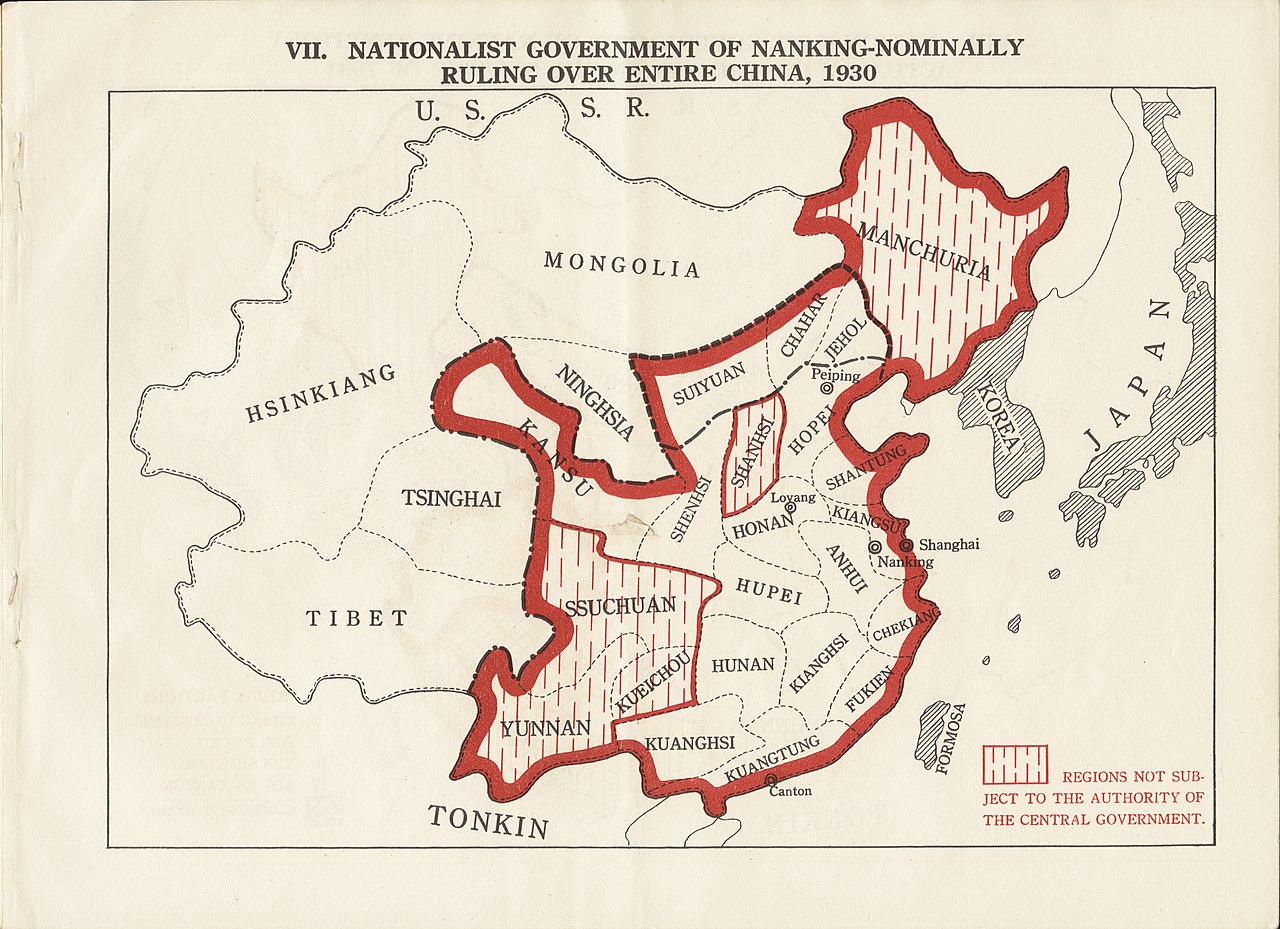
After Yuan Shikai's death the central government lost effective control over much of the territory, leading to the so-called Warlord Era. Provinces were dominated by competing military cliques whose alliances and rivalries produced recurring conflict and administrative instability. New political movements, including the Kuomintang (KMT) and the Chinese Communist Party (CPC), developed in this environment. In the south, a rival KMT administration based in Canton (Guangzhou) sought to rebuild national unity while experimenting with organizational and military reforms.
Nationalist reunification and the Chiang era
Chiang Kai-shek (Jiang Jieshi) emerged as the dominant KMT leader after Sun's death and led the military campaign known as the Northern Expedition, which in the mid-1920s reduced the power of many warlords and brought large areas under Nationalist control. The KMT established a government in Nanjing and pursued programs of administrative reform and economic modernization. Political tensions within the KMT and between the KMT and the CPC culminated in a rupture in 1927 that led to violent purges of leftists and the start of prolonged armed struggle between Nationalists and Communists; these conflicts formed the core of the Chinese Civil War.
Japanese invasion and wartime mobilization
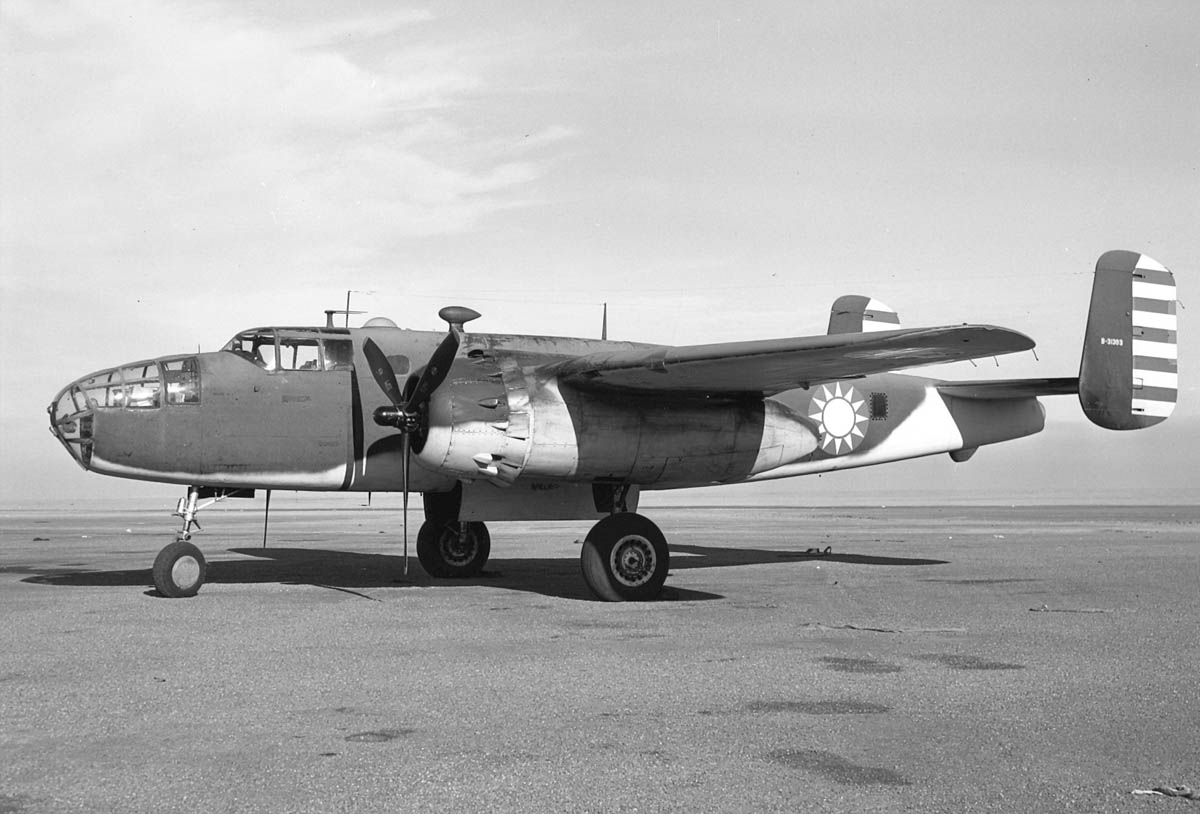
During the 1930s and 1940s the Republic faced a major external threat from the Empire of Japan. Full-scale invasion in 1937 launched the Second Sino-Japanese War, a conflict that merged with the broader global struggle of World War II. The war produced extensive destruction, large numbers of military and civilian casualties, and widespread displacement. Nationalist and Communist forces at times cooperated against the common invader, but competition and mutual distrust persisted. Japanese defeat and formal surrender in 1945 (see surrender and its aftermath) ended direct occupation but left China exhausted and politically polarized.
Renewed civil war and mainland outcome
After 1945 the fragile cooperation broke down and full-scale civil war resumed. The CPC gradually gained popular support in many rural areas and improved its military position. By 1949 Communist forces controlled most of the Chinese mainland and proclaimed the establishment of the People's Republic of China. The Nationalist government led by Chiang evacuated to Taiwan, where the Republic of China continued as the island's governing authority and claimed continuity with the pre-1949 state.
Politics, institutions and society
The 1912–1949 era encompassed repeated efforts to draft constitutions, build central institutions, and modernize the economy and military. Attempts at constitutional government, land and fiscal reforms, and industrial development met the limits imposed by military competition, regionalism and foreign encroachment. Social change included urbanization, growth of new educational institutions, expansion of print media, and the rise of organized labor and student movements. Political life was often dominated by party organization and military patronage rather than stable electoral institutions.
Economy and infrastructure
Economic development during the period was uneven. Coastal cities and treaty ports saw industrial and commercial growth, while large rural regions remained agrarian and vulnerable to taxation and wartime requisition. Infrastructure projects such as railways, modern factories, and communications networks expanded in some regions, but war and fragmentation hindered coherent national planning. Wartime mobilization transformed industrial priorities and social organization, leaving legacies that affected post‑1949 reconstruction.
Foreign relations and recognition
The Republic navigated complex foreign relationships with powers that included Western states, Japan and the Soviet Union. Diplomatic recognition, treaties, and military aid shifted through the decades as global politics changed. During World War II the ROC was a member of the Allies; after 1949 the question of recognition became a key issue in international diplomacy, affecting who represented China in international organizations in subsequent years.
Legacy and historiography
The Republic of China (1912–1949) left a contested legacy. Supporters credit it with initiating modern political ideas, building party institutions and attempting modernization; critics emphasize the costs of fragmentation, authoritarian tendencies, and the failure to consolidate peaceful democratic governance on the mainland. Historians examine the period for lessons about state‑building, revolution, and the interaction between social change and military power. For more on principal actors and events see entries on Sun Yat-sen, the Kuomintang, the Communist Party, the Sino-Japanese War, and the civil war. Further reading on cities, economic change, and cultural life can be found through specialized studies and archives.
Timeline of major phases
- 1911–1912: Xinhai Revolution and founding of the Republic.
- 1912–1916: Early republican politics and Yuan Shikai's rise and fall.
- 1916–1926: Warlord fragmentation and regional militarism.
- 1926–1928: Northern Expedition and nominal reunification under the KMT.
- 1927 onward: KMT–CPC split, rural insurgency and the Long March.
- 1937–1945: Full-scale war with Japan; wartime alliances and strain.
- 1946–1949: Renewed civil war leading to Communist victory; KMT retreat to Taiwan.
This account summarizes major political, military and social developments of the Republic of China on the mainland. For readers seeking primary documents, government proclamations and contemporary journalism provide direct evidence, while later scholarly work offers analysis of causes and consequences of events that reshaped modern East Asia. Additional resources and specialized articles treat topics such as military campaigns, regional governance, economic policy and the cultural life of the period; consult related entries and reference works for more depth on specific subjects (Qing fall and legacy, Chiang Kai-shek, Japanese military operations, Canton/Guangzhou, and Nanjing).
Questions and answers
Q: What was the Republic of China?
A: The Republic of China (ROC) was a country that existed between 1912 and 1949. It was created after the Xinhai Revolution overthrew the Qing dynasty and Sun Yat-sen became its first president.
Q: Who led the Beiyang government?
A: The Beiyang government was controlled by Yuan Shikai, the leader of the Beiyang Army.
Q: What happened when Yuan Shikai declared himself Emperor of China?
A: When Yuan Shikai declared himself Emperor of China in late 1915 to early 1916, people did not accept it and a National Protection War broke out.
Q: What caused North China's economy to suffer during 1927-1928?
A: North China suffered from overtaxation and too many warlords fighting each other, which caused its economy to die during 1927-1928.
Q: Who became leader of Kuomintang after Sun Yat-sen's death?
A: After Sun Yat-sen's death, General Jiang Jieshi (Chiang Kai-Shek) became leader of Kuomintang.
Q: How did Jiang Jieshi respond to Communist Party of China (CPC)?
A: In April 1927, Jiang Jieshi created a nationalist government in Nanjing and massacred Communists in Shanghai as a response to CPC, which forced them into armed rebellion and started Chinese Civil War.
Q: What event marked the end of Second Sino-Japanese War?
A:The Second Sino-Japanese War ended with Japan surrendering at the end World War II in 1945.
Related articles
Author
AlegsaOnline.com Republic of China (1912–1949) Leandro Alegsa
URL: https://en.alegsaonline.com/art/82227