
Renault in Formula One: team, engine supplier and motorsport legacy
History and role of Renault in Formula One, from the RS01 turbo debut in 1977 through engine-supplier successes, works team championships, the 2008 controversy and the later sale and rebranding of the team.
Renault's involvement in Formula One stretches back to the 1970s and has taken multiple forms: pioneering engine manufacturer, full works team, and supplier to other constructors. The company first made a major technical statement in 1977 with the Renault RS01, a car that introduced turbocharged engines to Grand Prix racing when it appeared at Silverstone. Over subsequent decades Renault alternated between running its own factory team and supplying engines to top outfits, contributing to major championship campaigns while also enduring well‑publicised controversies. The name Renault F1 therefore refers to a complex, long‑running presence in the sport rather than a single continuous team identity.
Image gallery
10 Images
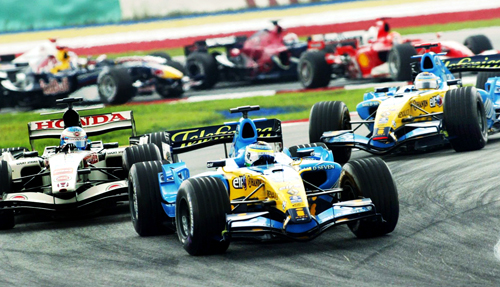


Overview and technical role
Renault has been both a car builder and an engine supplier. As a manufacturer of power units it developed turbocharged and naturally aspirated V‑engines that were used by its own team and by customer teams. Its early adoption of turbo technology forced other manufacturers to respond and changed the performance envelope of Formula One. As a works team Renault built chassis, managed race operations and employed drivers and engineers; as a supplier it delivered engines to teams that then combined them with their own cars and personnel. Across its intermittent involvement, Renault has been credited with technical innovation and with enabling championship‑winning programmes.
History and major periods
The company first appeared at the front of international motor racing in the early 1900s, and its modern F1 presence began in earnest in the late 1970s. The RS01 marque at Silverstone in 1977 marked Renault's introduction of a turbocharged engine to Grand Prix competition. During the 1980s and 1990s Renault supplied engines that powered competitive teams and contributed significantly to title bids. In the late 1990s and early 2000s Renault consolidated its role by acquiring Benetton’s racing operation and converting it into a works team. The renamed Renault team achieved its most recent works success in the mid‑2000s, winning consecutive World Championships with a factory team and driver pairing.
Achievements and notable campaigns
- Technical innovation: early and influential use of turbocharged engines, which shaped powertrain development in F1.
- Engine supplier success: Renault power units were integral to championship campaigns by prominent teams in the late 20th century.
- Works team titles: as a constructor Renault secured both drivers’ and constructors’ honours in the 2000s.
- Long‑term presence: the Renault name continued in Formula One across repeated entries and exits through the 1970s, 1980s, 1990s and into the 21st century.
2000s resurgence and the Fernando Alonso era
After taking over the Benetton team, Renault rebranded the operation and rebuilt its factory entry. That period culminated in back‑to‑back championship wins in the mid‑2000s with a driver who progressed from testing and development roles into race leadership. These titles underlined Renault's capability to combine a competitive chassis with an engine package and race strategy that together could challenge the sport's established leaders.
Controversy and restructuring
The team’s modern era was not without setbacks. A major scandal in 2008 centred on an orchestrated incident during a night race in Singapore that led to strong sanctions against team staff and reputational damage to the organisation. The sequence involved a deliberate on‑track crash that produced debris and a safety car period, an action later attributed to team direction and resulting in internal dismissals and external penalties. The public fallout included sponsor departures and a reorganisation of senior personnel. Important personalities connected to that controversy faced regulatory action by the sport’s governing body at the time.
Sale, rebranding and national identity
Financial and strategic choices prompted Renault to restructure ownership of its racing activities. In late 2010 the company sold its remaining shares in the factory team to a private investor group; those interests subsequently became associated with another marque and the squad ran under a new name in following seasons. The changes also affected the team’s national racing licence: after many years as a French entrant, the team was registered under a different national licence for competition in 2011, marking a symbolic shift in its official identity.
Legacy and continuing influence
Renault’s legacy in Formula One is multifaceted. It is remembered for introducing turbo technology to the sport, for supplying engines that contributed to championship wins, and for operating a works team that reached the top level of competition. The organisation’s episodes of competitive success coexist with episodes of controversy and change of ownership. Renault’s engineering and motorsport activities have influenced regulations, competitor development paths and the broader narrative of manufacturer involvement in Formula One.
Key facts and links
- Renault is the parent company associated with the racing operation: Renault.
- The RS01 debuted at Silverstone, introducing turbocharged F1 engines.
- The safety‑car incident that triggered investigation produced extensive track debris: reporting at the time.
- The driver who benefited from the safety‑car period was Fernando Alonso, who later won races for the team.
- The scandal prompted sponsor departures, including a principal sponsor referenced as a major partner and the insurer ING.
- The team shares were transferred to an investor group and later became associated with Lotus Cars branding.
- Renault’s handover of Benetton’s operation is a pivotal moment: Benetton takeover.
- Following ownership and operational changes the squad was entered under a British licence for competition.
- The licensing and naming change took effect in 2011.
- Before this change, the last season without a French‑registered team dated back to 1975.
Overall, Renault’s presence in Formula One can be read as a story of technical leadership, commercial transformation and alternating cycles of sporting success and organisational renewal. Its role as both engine supplier and constructor makes it an important case study in manufacturer involvement in the modern history of Grand Prix racing.
Questions and answers
Q: What is Renault F1?
A: Renault F1 is a Formula One racing team owned by the Renault company.
Q: When did Renault first compete in Formula One?
A: Renault first competed in Formula One as an engine supplier and car builder from the late 1970s to 2021, with many breaks.
Q: Who was the first French Grand Prix winner at the wheel of a Renault?
A: Ferenc Szisz won the first French Grand Prix at the wheel of a Renault.
Q: What year did Renault win their first Drivers' Championship?
A: In 2005, former test driver Fernando Alonso won the Drivers' Championship for Renault.
Q: What happened in 2009 that caused controversy for the team?
A: In 2009, Nelson Piquet Jnr told media that he had been instructed by Flavio Briatore, boss of the team, to crash his car deliberately during a race so that Fernando Alonso could gain an advantage and go on to win.
Q: How were Flavio Briatore and Pat Symmonds punished following this event?
A: Following a meeting of FIA Super Council in Paris, Team Principle Flavio Briatore and Chief Engineer Pat Symmonds were found guilty and both had to leave the team; Flavio was also banned from Formula 1 for life (this ban has since been lifted).
Q: When did Lotus Cars purchase shares in Renualt F1?
A:In December 2010, Genii Capital purchased remaining ownership shares from Renualt which were then purchased by Lotus Cars owned by Proton.
Related articles
Author
AlegsaOnline.com Renault in Formula One: team, engine supplier and motorsport legacy Leandro Alegsa
URL: https://en.alegsaonline.com/art/82113
Sources
- autosport.com : "Heidfeld confirmed at Renault"
- news.bbc.co.uk : "Renault F1 team to be renamed Lotus Renault GP in 2011"
- autosport.com : "Renault to switch to British licence"