
Bad Guy (Billie Eilish song)
A 2019 single by Billie Eilish from her debut album, noted for its minimalist production, trap-influenced closing section, chart-topping success, and Grammy wins.
"Bad Guy" is a single recorded by American singer-songwriter Billie Eilish for her debut studio album When We All Fall Asleep, Where Do We Go?. Co-written and produced by Eilish's brother Finneas O'Connell, the track became one of the defining pop songs of 2019, known for its sparse, bass-forward arrangement, deadpan vocal delivery and a sudden trap-style beat change toward the end.
Image gallery
4 Images
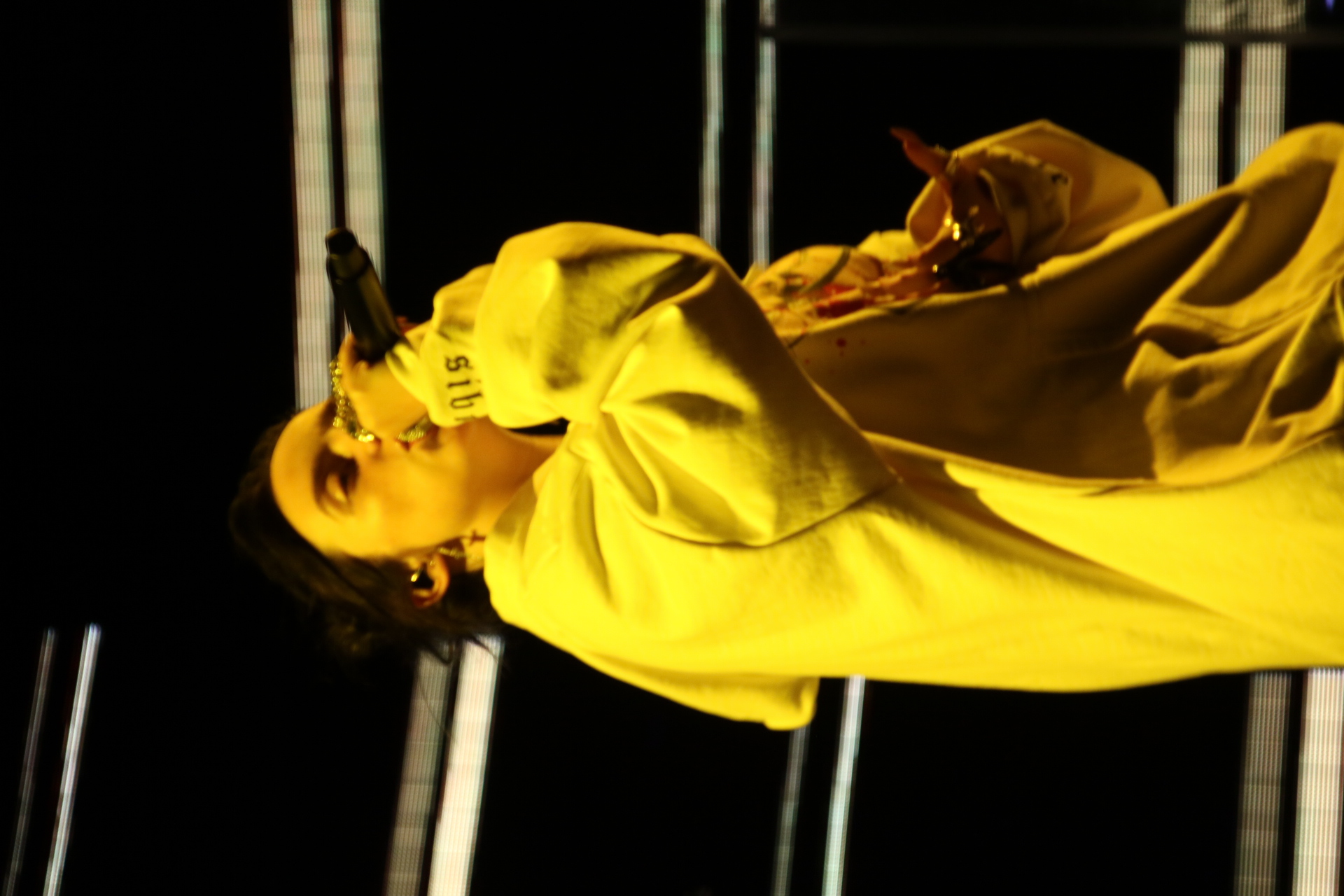


Musical characteristics and lyrics
The song is built around minimal electronic textures, percussive finger snaps and clipped synth lines that leave ample space for Eilish's whispery, conversational vocals. The production emphasizes rhythm and timbre over dense harmony, creating an intimate yet playful atmosphere. Lyrically, the track adopts a teasing, subversive persona that toys with archetypes of dangerousness and seduction; its ironic tone and pronouncements of being the "bad guy" are delivered with both confidence and tongue-in-cheek humor.
Release, remixes and versions
Released as a single from Eilish's debut album, "Bad Guy" received broad radio play and streaming attention. A notable official remix featuring Canadian pop star Justin Bieber arrived in July 2019, drawing additional attention and cross-audience interest. Several other remixes and live reinterpretations circulated after its release, contributing to the song's longevity on playlists and in performances.
Reception, charts and awards
Critics praised the track's inventive minimalism and Eilish's distinctive vocal style. Commercially, "Bad Guy" reached number one on multiple national charts, including the US Billboard Hot 100, where it broke through after several weeks near the top — an achievement that made Eilish the first artist born in the 21st century to top that chart. The song also reached the summit in markets such as Canada and Australia and placed highly across Europe.
- At the 62nd Annual Grammy Awards the song won major songwriting and recording honors, including Record of the Year and Song of the Year.
- It was nominated in pop performance categories and competed with hits such as "Truth Hurts" by Lizzo in related awards seasons.
Visuals, performances and cultural impact
The official music video complemented the song's irreverent tone with striking, surreal imagery, choreography and visual jokes; it became a popular clip on streaming platforms and social media. Live renditions of the song often play with dynamics and staging, and the track inspired covers, parodies and memes, helping to cement Eilish's image as a generation-defining pop artist. Its production approach — quiet, intimate vocals over sparse beats — influenced other contemporary pop productions.
Notable facts and legacy
Beyond chart positions and awards, "Bad Guy" stands out for how it reshaped expectations about mainstream pop production and vocal delivery at the end of the 2010s. Its combination of minimal electronic elements with an unexpected trap-influenced closing segment showcased a willingness to blend genres and surprise listeners within a concise pop format. The song remains a frequent reference point when discussing Billie Eilish's rise and the broader shift toward more subdued, textural pop music in the streaming era.
Questions and answers
Q: What is the name of the song?
A: The song is called "Bad Guy".
Q: Who wrote and produced the song?
A: The song was co-written by Billie Eilish and her brother Finneas, who also produced it.
Q: What type of music does the song feature?
A: The song is mostly an electroscopic track but features a trap music breakdown in the last 33 seconds. It also includes finger snaps and clicks throughout.
Q: When did Justin Bieber release his remix of "Bad Guy"?
A: Justin Bieber released his remix of "Bad Guy" on July 11, 2019.
Q: When did "Bad Guy" reach number one on Billboard's Hot 100 chart in the US?
A: On August 19, 2019, Billboard announced that "Bad Guy" had reached number one on their Hot 100 chart in the US after spending nine weeks at number two.
A: On January 26, 2020, at the 62nd Annual Grammy Awards, "Bad Guy" won Record of the Year and Song of the Year awards. It was also nominated for Best Pop Solo Performance but lost to “Truth Hurts” by Lizzo.
Q: How many awards did “Bad Guy” win at the 62nd Annual Grammy Awards?
A: At the 62nd Annual Grammy Awards," Bad Guy" won two awards - Record of the Year and Song of the Year.
Tags
Related articles
Author
AlegsaOnline.com Bad Guy (Billie Eilish song) Leandro Alegsa
URL: https://en.alegsaonline.com/art/8171
Sources
- youtube.com : "bad guy (with Justin Bieber)"
- listen.tidal.com : "Try the TIDAL Web Player"
- uproxx.com : "Lil Nas X's 'Old Town Road' Is No Longer The No. 1 Song In The Country"
- grammy.com : "62nd Annual GRAMMY Awards"
- australian-charts.com : Australian-charts.com – Billie Eilish – bad guy"
- austriancharts.at : Billie Eilish – bad guy Austriancharts.at"
- ultratop.be : Ultratop.be – Billie Eilish – bad guy"
- ultratop.be : Ultratop.be – Billie Eilish – bad guy"
- billboard.com : Illegal name entered Billie Eilish/Billie+Eilish/chart?f=793 Billie Eilish Album & Song Chart History"
- danishcharts.com : Danishcharts.com – Billie Eilish – bad guy"
- finnishcharts.com : Finnishcharts.com – Billie Eilish – bad guy"
- lescharts.com : Lescharts.com – Billie Eilish – bad guy"
- musicline.de : guy/single Die ganze Musik im Internet: Charts, News, Neuerscheinungen, Tickets, Genres, Genresuche, Genrelexikon, Künstler-Suche, Musik-Suche, Track-Suche, Ticket-Suche - musicline.de"
- chart-track.co.uk : Chart Track"