
Red panda (Ailurus fulgens): overview, traits, and conservation
Small arboreal mammal of the eastern Himalayas and southwestern China, known for reddish fur, ringed tail, bamboo diet, and unique taxonomic status; faces habitat loss and conservation concerns.
Overview
The red panda (Ailurus fulgens) is a small arboreal mammal native to temperate forests of the eastern Himalayas and parts of southwestern China. Often called the lesser panda, firefox, or cat-bear, it is the only living member of the family Ailuridae and occupies a distinct branch of carnivoran evolution. For general background on mammals see mammal.
Image gallery
10 Images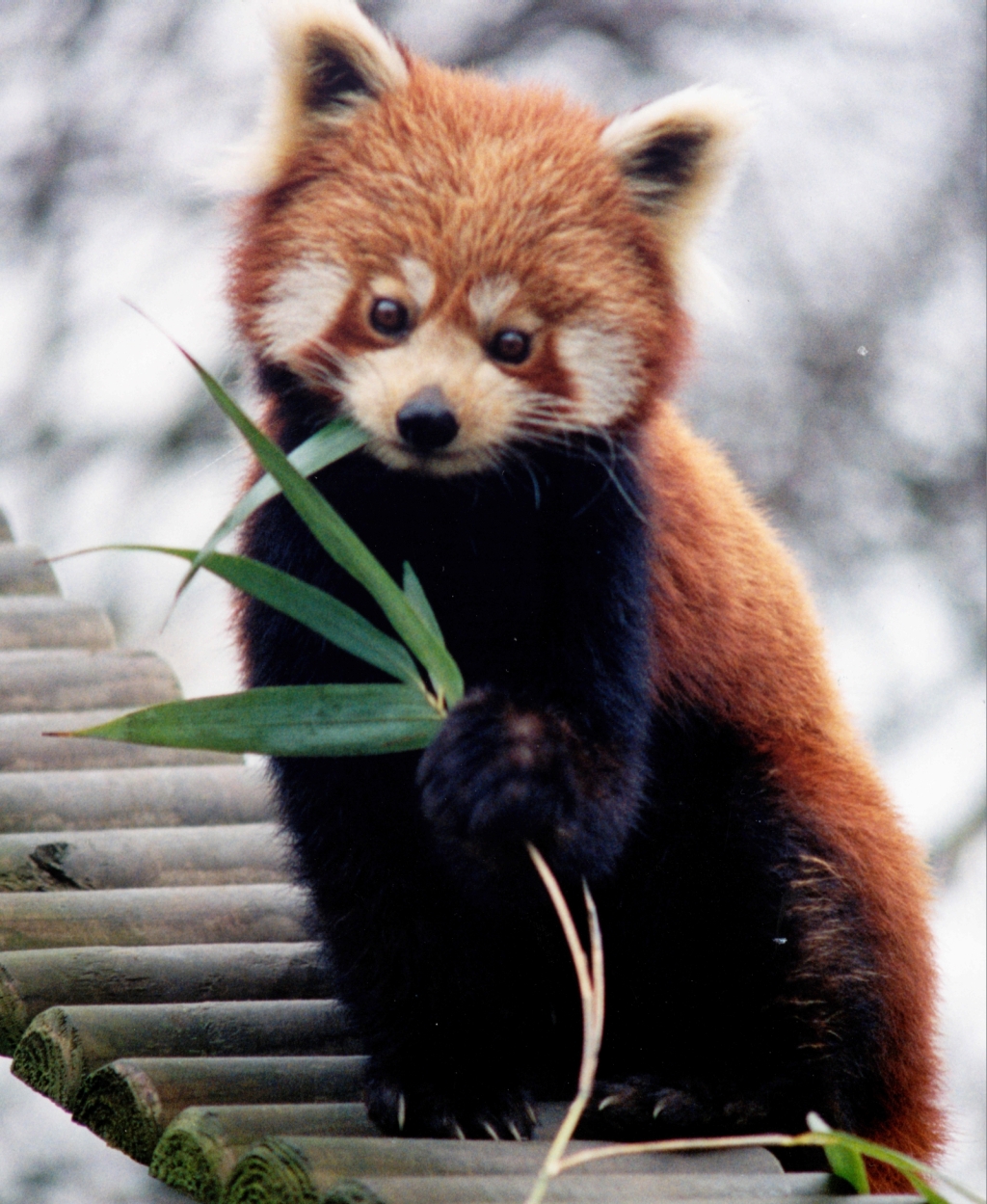




Appearance and characteristics
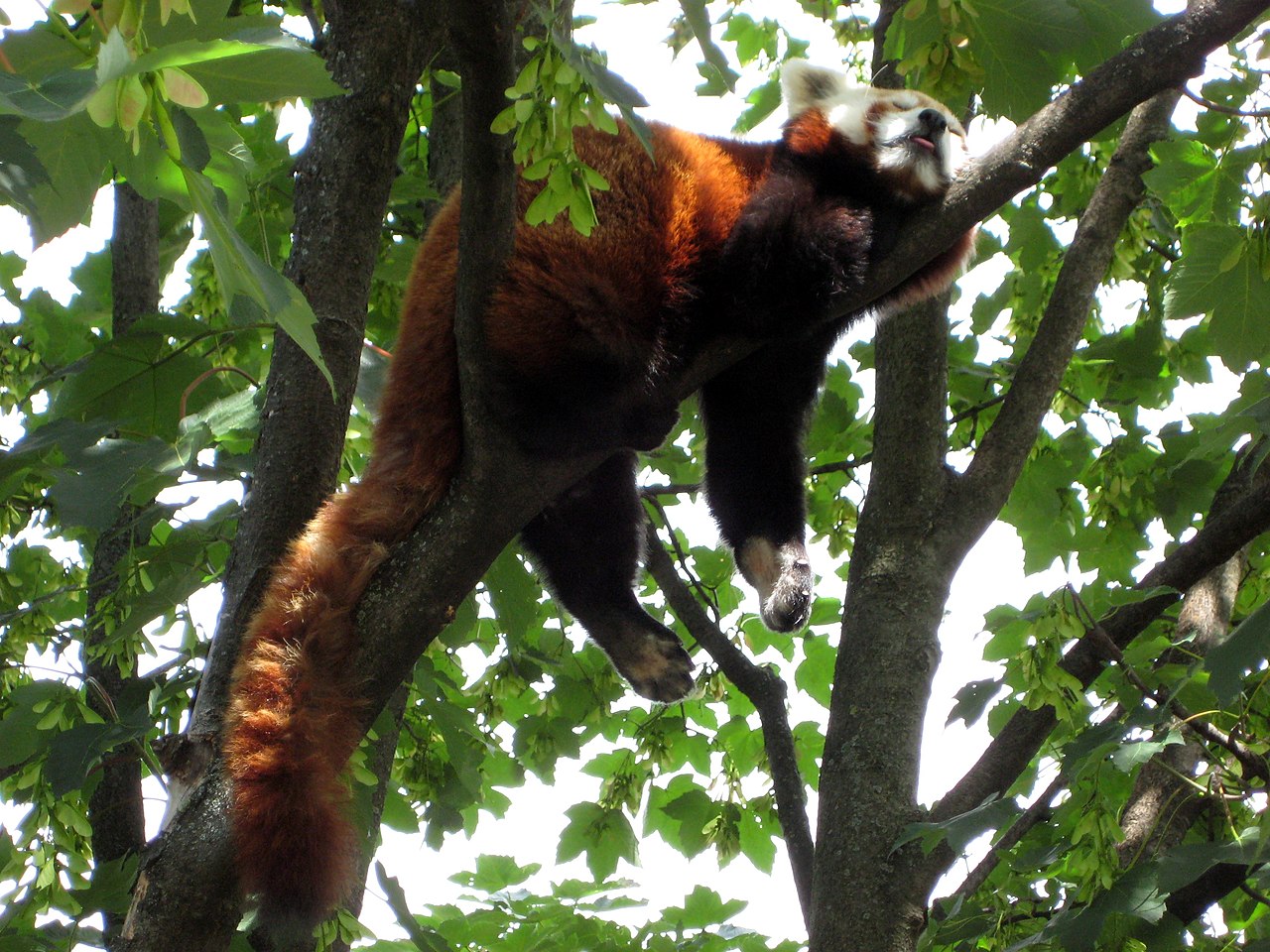
Red pandas are roughly the size of a large domestic cat but have a longer, bushy, ringed tail that helps with balance and insulation. Their coat is reddish-brown on the upper parts and paler below, with a masked face and white markings. They possess a modified wrist bone, sometimes called a "false thumb," that aids in grasping bamboo and other food.
Distribution, habitat and subspecies
They inhabit montane bamboo forests at mid to high elevations. Two traditionally recognized subspecies are A. f. fulgens (Himalayan) and A. f. styani (from farther east in China). Some genetic studies suggest greater diversity within the group, and taxonomic treatment has evolved as new data appear.
Behavior and diet
Primarily crepuscular and solitary, red pandas are excellent climbers and spend much time in trees. Although classified with carnivorans, their diet is largely herbivorous: bamboo makes up a major portion, supplemented by fruits, berries, eggs, small mammals, and insects depending on season and locality.
Reproduction and lifespan
Mating seasons and life-history details vary across their range. Females give birth to small litters, and juveniles remain dependent for several months. In captivity red pandas may live into their teens; wild lifespans are typically shorter due to predation and environmental pressures.
Conservation and notable facts
Red pandas face habitat loss, fragmentation, and localized hunting or capture. Conservation responses combine protected areas, habitat management, anti-poaching enforcement, and captive-breeding programs. Notable points include their unique taxonomic position separate from giant pandas and their cultural popularity as an emblematic Himalayan species.
- Common threats: habitat conversion, fragmentation, illegal trade.
- Conservation measures: protected reserves, community forestry initiatives, captive breeding and reintroduction efforts.
- Distinctive trait: the "false thumb" wrist bone used for handling bamboo.
Questions and answers
Q: What is the red panda?
A: The red panda is a mammal and the only species of the Ailuridae family.
Q: How many subspecies are there?
A: There are two subspecies of the red panda, Ailurus fulgens fulgens and Ailurus fulgens styani.
Q: What other names does it go by?
A: The red panda is also known as lesser panda, cat-bear, bear-cat and firefox.
Q: What family does it belong to?
A: The red panda belongs to the Ailuridae family.
Q: Where can they be found in the wild?
A: Red pandas can be found in temperate forests in Nepal, India, Bhutan, China and Myanmar.
Q: Are they endangered?
A: Yes, red pandas are currently listed as Vulnerable on the IUCN Red List of Threatened Species due to habitat loss and fragmentation.
Q: How big do they get when fully grown? A: Adult red pandas typically weigh between 4-6 kg (9-13 lbs) with a body length of 50–64 cm (20–25 inches).
Related articles
Author
AlegsaOnline.com Red panda (Ailurus fulgens): overview, traits, and conservation Leandro Alegsa
URL: https://en.alegsaonline.com/art/81684
Sources
- commons.wikimedia.org : Ailurus fulgens
- species.wikimedia.org : Ailurus fulgens
- animals.nationalgeographic.com : animals.nationalgeographic.com/animals/mammals/red-panda/