
Red algae (Rhodophyta): biology, ecology and human uses
Red algae (phylum Rhodophyta) are mostly marine, photosynthetic eukaryotes notable for red phycobiliproteins, unique cellular traits, complex life cycles and important ecological and commercial roles.
Overview
Red algae belong to the phylum Rhodophyta, a diverse branch of predominantly marine photosynthetic eukaryotes. They include several thousand described species and range from microscopic single-celled forms to large, multicellular seaweeds. Their red to purplish color is produced by accessory pigments called phycobiliproteins, which complement chlorophyll in capturing light. For an introductory summary see Rhodophyta overview.
Image gallery
10 Images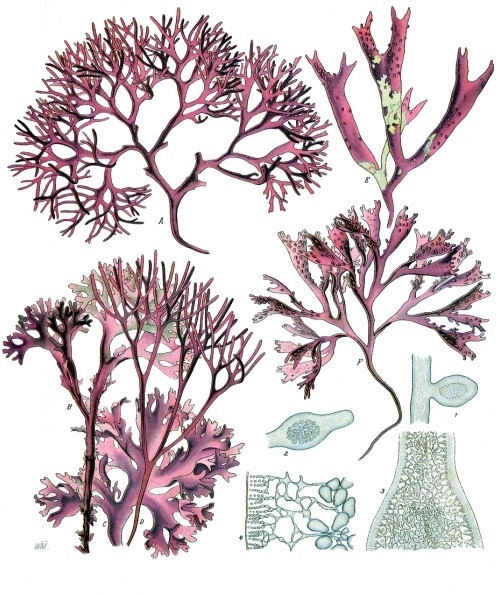




Key characteristics
Red algae have a set of cellular and biochemical features that distinguish them from green algae and other photosynthetic groups. Their cells are eukaryotic but typically lack flagella and centrioles, meaning their gametes are non-motile and depend on water movement for transfer (cell structure). Their chloroplasts show traits inherited from a primary cyanobacterial endosymbiosis and lack an external layer of endoplasmic reticulum around the plastid (chloroplast anatomy).
The primary light-harvesting pigments include chlorophyll a together with phycobiliproteins such as phycoerythrin and phycocyanin, which absorb wavelengths that penetrate deeper water and give many species a reddish hue. Red algae store carbohydrate as a starch-like compound, often called floridean starch, located outside the plastids (pigments and storage, floridean starch).
Life cycles and evolutionary history
Many red algae follow complex life histories that include alternation of generations. Unlike the simple diploid-haploid alternation found in some plants, many species display a triphasic cycle with distinct gametophyte, carposporophyte and tetrasporophyte stages; this diversity of reproductive strategies helps explain their success in varied habitats (life cycles).
Chloroplasts in red algae trace to a primary endosymbiotic event in which an ancestral eukaryote incorporated a photosynthetic cyanobacterium; later diversification produced the modern Rhodophyta and their plastid features (endosymbiosis, evolutionary context). Some of the earliest interpreted multicellular eukaryote fossils have been attributed to red algal relatives, indicating an ancient lineage.
Ecology, distribution and notable forms
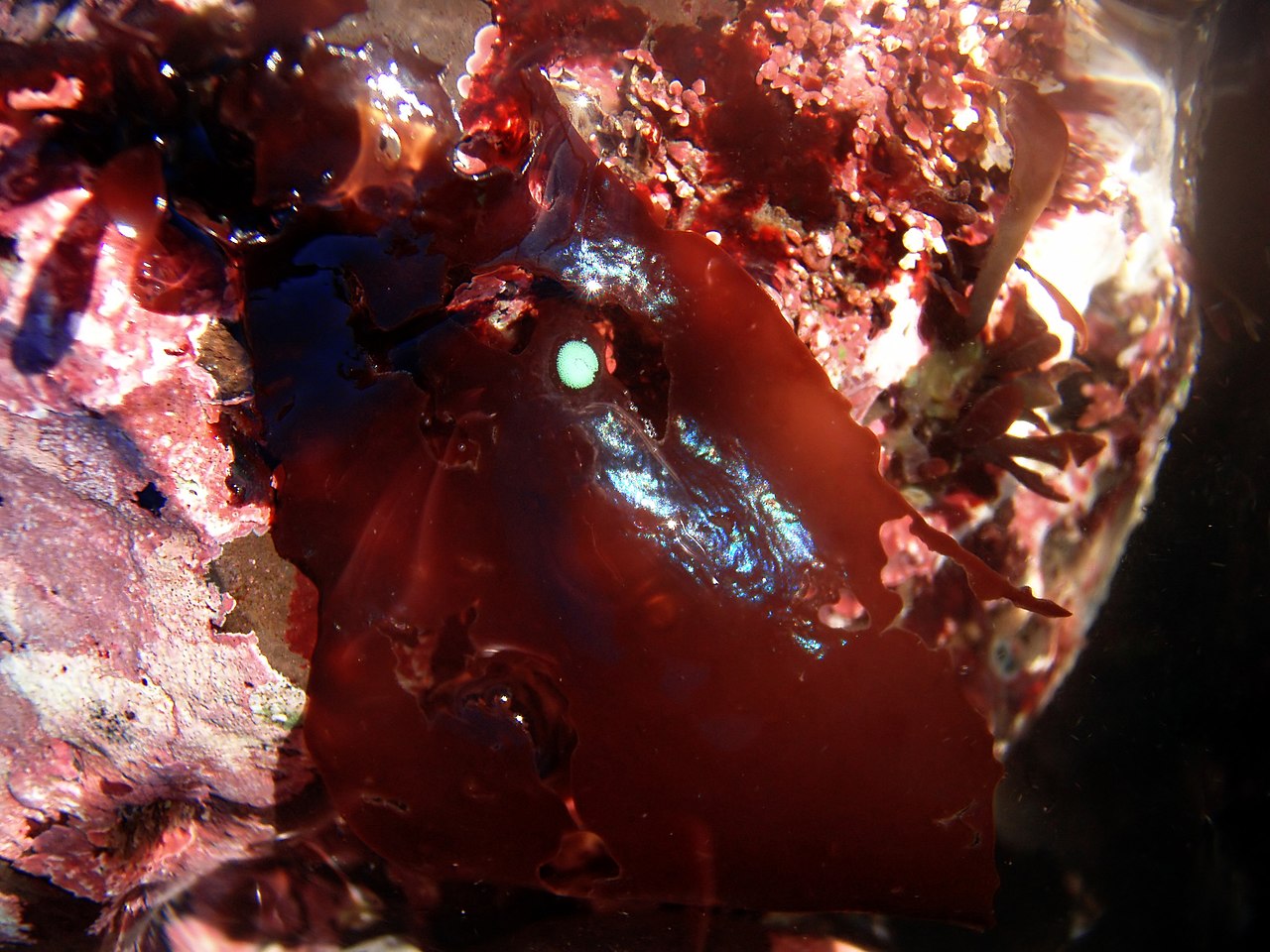
Most red algae are marine and occupy coastal zones from shallow tide pools to deeper subtidal environments where light is limited; their pigments are well suited to absorbing blue and green wavelengths. Coralline red algae, which deposit calcium carbonate in their cell walls, play important roles in reef construction and stabilization. A modest number of species have adapted to freshwater and brackish habitats (habitat diversity).
Uses and significance
Red algae are economically and culturally important. Edible seaweeds such as nori (from genera like Porphyra and Neopyropia) are staples in several cuisines. Industrial products derived from red algae include agar and carrageenan, polysaccharides used as gelling, stabilizing and clarifying agents in food, microbiological media and biotechnology. Phycobiliproteins extracted from red algae are valuable as fluorescent labels in research and diagnostic techniques.
Distinguishing facts and practical notes
- Non-motile reproduction: absence of flagellated reproductive cells distinguishes red algae from many other algal groups.
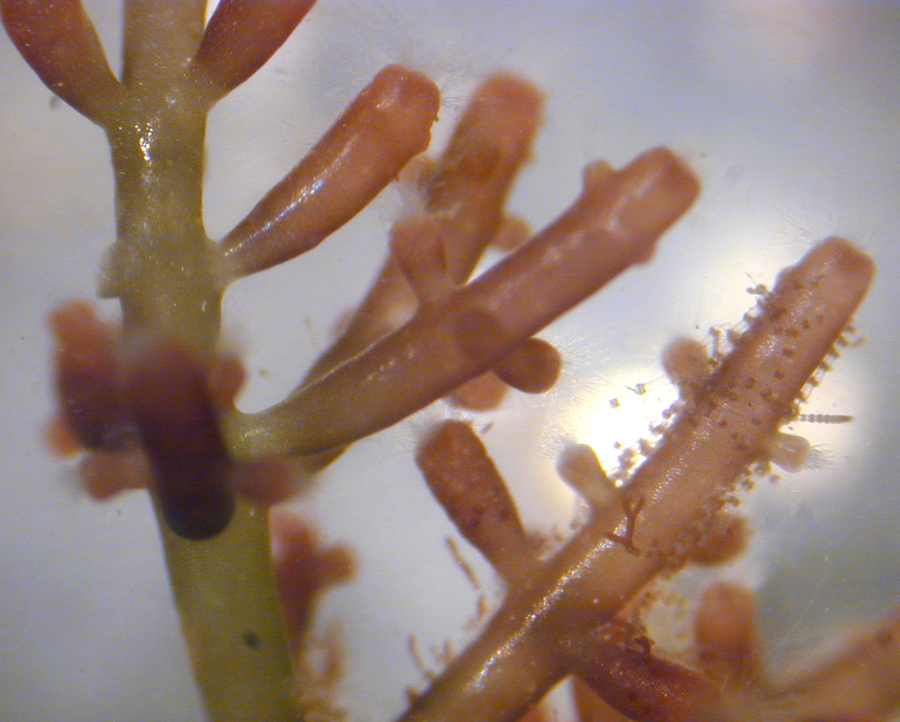
- Structural diversity: forms range from filamentous and delicate blades to calcified crusts that cement reefs.
- Commercial cultivation: species cultivated for food and hydrocolloids influence coastal economies and aquaculture practices.
- Conservation: habitat loss, pollution and warming seas affect red algal communities and the services they provide.
Together, these features make Rhodophyta a distinct and ecologically significant group of photosynthetic organisms, with a long evolutionary history and ongoing importance for ecosystems, industry and research.
Questions and answers
Q: What is the phylum that red algae belong to?
A: Red algae belong to the phylum Rhodophyta.
Q: How many species of red algae are there?
A: There are about 6000 species of red algae.
Q: What gives red algae their reddish color?
A: Red algae have reddish phycobilin pigments—phycoerythrin and phycocyanin—which give them their red color.
Q: Do red algae have eukaryotic or prokaryotic cells?
A: Red algae have eukaryotic cells.
Q: Do red algae have flagella and centrioles?
A: No, red algae do not have flagella and centrioles.
Q: What is the usual red algal life history?
A: The usual red algal life history is an alternation of generations with three generations rather than two.
Q: What is Nori and what is it made of?
A: Nori is a type of food that is made from red algae.
Related articles
Author
AlegsaOnline.com Red algae (Rhodophyta): biology, ecology and human uses Leandro Alegsa
URL: https://en.alegsaonline.com/art/81620
Sources
- ncbi.nlm.nih.gov : "The unique features of starch metabolism in red algae"
- doi.org : 10.1098/rspb.2001.1644
- pubmed.ncbi.nlm.nih.gov : 11429143
- autocww.colorado.edu : "Algae"
- doi.org : 10.1146/annurev.arplant.59.032607.092915
- pubmed.ncbi.nlm.nih.gov : 18315522