
Recording studio
Facility designed to capture, edit and produce audio. Covers layout, acoustics, equipment, history, business models and studio types including commercial, project and home setups.
A recording studio is a purpose-built facility for capturing sound—most commonly music, spoken word and other audio—and for editing, mixing and producing finished recordings. Studios vary from modest home setups to specialised commercial complexes owned by labels, media companies or independent operators. Typical studio work combines acoustic control, technical equipment and creative personnel to translate live performances into reproducible media.
Image gallery
10 Images






Layout and acoustic design
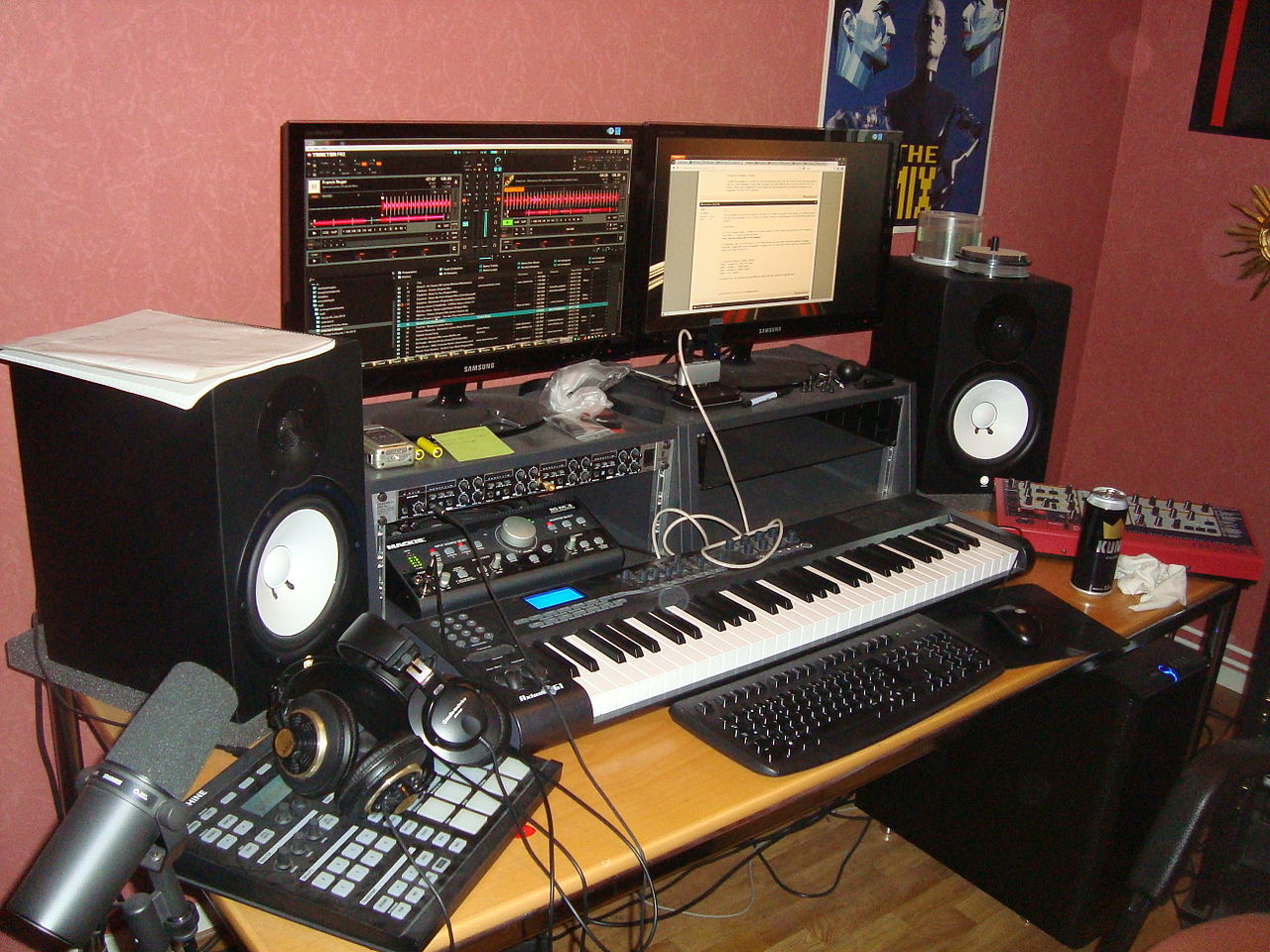
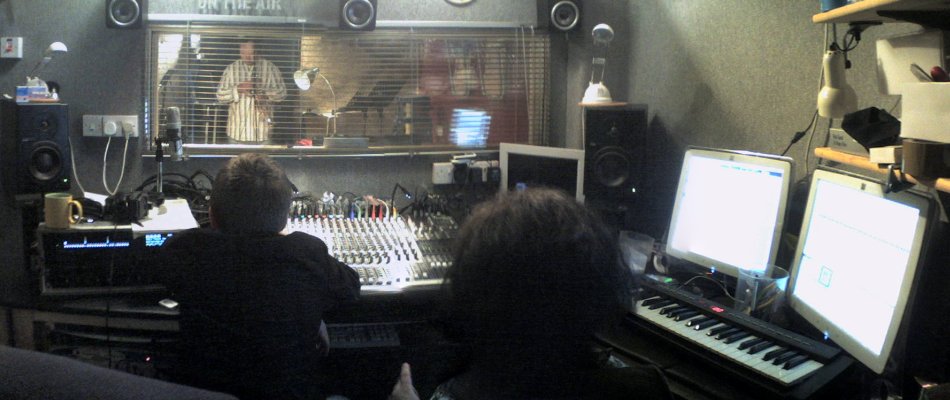
Studios are usually organised into distinct functional areas to control sound and workflow. Common spaces include a live room for groups and ensembles, one or more isolation booths or vocal booths for soloists and loud instruments, and a control room that houses the console, recording system and monitoring speakers. Acoustic treatment and sound isolation are central: absorption panels, diffusers, bass traps and movable baffles reduce undesirable reflections, standing waves and bleed between sources. Structural measures such as floating floors, staggered-stud walls and heavy, sealed doors help prevent external noise and mechanical transmission. Engineers often design or tune a room’s natural reverberation rather than relying solely on electronic reverb.
Isolation, room behaviour and measurement
Effective isolation separates simultaneous sound sources so close-miked signals remain clean, while room geometry and surface materials shape the audible character. Asymmetrical room shapes and diffusers reduce focused reflections; low-frequency problems are tackled with bass trapping and volume changes. Simple measurements such as frequency sweeps and decay time (commonly discussed as RT60 in technical literature) are used to evaluate and refine treatment. Portable baffles and gobos provide temporary control for rehearsals or live tracking.
Equipment and signal flow
Core studio equipment includes microphones (dynamic, condenser, ribbon), microphone preamplifiers, analog or digital mixing consoles or control surfaces, digital audio workstations (DAWs), and converters that translate analog signals to and from digital. Outboard processing such as compressors, equalizers and time-based effects may be inserted via patchbays. Typical signal flow runs from the sound source to microphone, through preamps and converters into a DAW for tracking, then into the mixing stage for level balancing, EQ and spatial placement, and finally to mastering for final polish and distribution encoding.
History and development
Early commercial studios shared many practices with radio production because both involved live capture of performances. The adoption of magnetic tape and, later, multitrack recording in the mid-20th century allowed overdubbing and complex arrangements that changed how music was produced. The shift from large-format analog consoles and tape to digital workstations lowered barriers to entry, giving rise to project and home studios while professional studios adapted with higher-end monitoring, acoustics and hybrid workflows.
Business models and services
Studios operate under varied commercial arrangements. Label-owned or full-service commercial studios support in-house artists and larger projects, independent studios rent time to clients and provide engineers and producers, and project or home studios serve smaller-scale production. Charging models include hourly, daily, or project fees and packaged services that combine tracking, mixing and mastering. Many studios diversify by offering voiceover, podcast production, film and television post-production, audio restoration and remote recording services.
Types and distinctions
- Commercial studios: full-service facilities with professional staff and high-end gear.
- Project studios: smaller professional or semi-professional spaces oriented to specific projects.
- Home studios: personal setups that range from basic to sophisticated using desktop DAWs and modest outboard equipment.
- Post-production and mastering studios: specialised for film, television, surround formats and final mastering.
- Mobile studios: portable systems used for live events, remote sessions and field recording.
Uses and cultural importance
Recording studios are central to music, broadcasting and media production. They enable reproducible performances, editorial control through editing and overdubbing, and high-quality capture for streaming, physical media and broadcast. Studios support creative collaboration, education and archival work, and they continue to evolve in response to technological change, economic pressures and aesthetic trends.
Further reading and practical resources can be found on topics such as recording techniques, the nature of sound media, relationships with a record label, acoustic treatment to control room reflections, historical ties to radio, technical studio techniques and the development of multitrack recording.
Questions and answers
Q: What is a recording studio?
A: A recording studio is a place that is specially prepared for the recording of music or other sound media.
Q: How are independent studios different from those associated with record labels?
A: Independent studios may only record one band or set of performers, but may also lease time to outsiders. Record label-associated studios usually have more resources and capabilities than independent ones.
Q: What are the three areas in a typical recording studio?
A: The three areas in a typical recording studio are a "live area" (with natural reverberation) for recording groups, a "dead area" (with soundproofing to prevent reverb and echoes) for vocals and soloists, and a control booth, to house the recording equipment.
Q: How do studios keep outside noises from getting into recordings?
A: Studios are usually soundproofed to keep outside noises from getting into recordings. Additionally, baffles and other objects are used inside studios to isolate sound sources, while asymmetrical room shapes can be used to prevent standing waves and sound interference.
Q: How did early radio stations differ from today's modern recording studios?
A: Early radio stations were not much different from radio studios, as the techniques used were interchangeable; however, this changed over the years as recordings could present sounds in ways radio could not carry. Modern day recording studios often rely less on effects processors than their predecessors due to an increased focus on creating good natural sounds with less processing.
Q: What type of equipment do some modern day radio stations use?
A: Some modern day radio stations use multitrack equipment such as effects processors which allow them to pre-record material before broadcasting it on air.
Related articles
Author
AlegsaOnline.com Recording studio Leandro Alegsa
URL: https://en.alegsaonline.com/art/81593