
Razor shell (razor clam): biology, ecology and human uses
Razor shells are elongated burrowing bivalves found on sandy coasts. This article summarizes their appearance, anatomy, behavior, distribution, taxonomy, culinary uses, ecological role and conservation considerations.
Overview
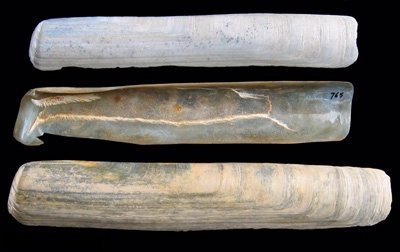
Razor shells, commonly called razor clams, are marine bivalve mollusks characterised by long, narrow, laterally compressed shells that resemble the blade of an old-fashioned straight razor. They live buried in intertidal and shallow subtidal sands and muds where they feed by filtering suspended particles from the water. General introductions and popular accounts describe their appearance, behaviour and collection techniques in more accessible terms introduction to razor clams.
Image gallery
5 Images


Anatomy and burrowing behaviour
The external shell is smooth and elongate, and the soft body includes a strong, muscular foot that the animal uses to dig. Two siphons extend from the mantle to the sediment surface and allow the clam to draw water into its body for respiration and feeding. Burrowing is rapid and specialised: the foot anchors and expands in the sediment, and coordinated shell and foot movements fluidize surrounding sand so the animal can descend. Detailed descriptions of burrowing mechanics and shell function can be found in behavioural overviews on burrowing behaviour.
Distribution and habitat
Razor shells occur on sandy and muddy coasts around the world. Species of the genus Ensis are well known from the sandy beaches of northern Europe and parts of the North Atlantic, and related or similar forms occur in other temperate and tropical regions. Local occurrences, for example around parts of Atlantic Canada, have been documented in regional faunal accounts Canadian coastal records and in guides to European shore fauna European population notes. Different species show preferences for grain size and tidal exposure: some favour coarser sand in the upper intertidal while others inhabit finer sediments at lower levels.
Taxonomy and similar groups
Several genera and families include bivalves commonly called razor clams. Ensis (family Pharidae) is one well-known genus in the northeast Atlantic. Another group, the family Solenidae (sometimes referred to simply by the genus Solen), contains elongated, razor-like bivalves found in other regions. Taxonomists have debated whether morphological similarity indicates close relationship or convergent evolution; comparative morphology and ecology suggest both possibilities, and readers can consult syntheses discussing these alternatives on convergent evolution and taxonomy.
Life cycle and feeding
Razor shells are filter feeders: they draw seawater through their siphons, trap plankton and organic particles on gill surfaces and expel filtered water. Reproduction typically involves planktonic larvae that develop in the water column before settling to the substrate and undergoing metamorphosis into juveniles. Growth rates and longevity vary by species and environmental conditions, and juvenile recruitment can be strongly influenced by sediment quality and hydrodynamic processes.
Ecological role and predators
As suspension feeders, razor shells help cycle organic matter and contribute to water quality and benthic–pelagic coupling. Beds of burrowing bivalves can also influence sediment structure and provide habitat for other invertebrates. Predators include shorebirds, fish, crabs and other scavengers that exploit clams either by digging or by taking individuals exposed during tidal changes. Habitat disturbance, pollution and changes in prey or predator abundance can alter local populations.
Fisheries, culinary uses and culture
Razor shells are harvested in many coastal communities for food. Collection methods range from hand digging at low tide to regulated harvesting with permits; techniques vary with local tradition and law. In cuisine they are appreciated for a sweet, briny flavour and a firm texture, and they are commonly steamed, quickly sautéed, grilled or added to mixed seafood dishes. Market and cultural importance differs regionally, and sustainable harvesting practices are promoted in many places.
Conservation, management and research
Populations can be vulnerable to overharvesting, habitat loss, pollution and physical disturbances such as dredging. Management measures frequently include catch limits, size limits, seasonal closures and habitat protections to ensure sustainable use. Ongoing scientific work uses genetic and genomic techniques to clarify species boundaries, population connectivity and evolutionary relationships; molecular studies are expected to bring greater resolution to questions about affinities among groups and to inform conservation actions molecular and genetic research.
Identification and further resources
- Key features: long, narrow smooth shell; strong foot; two siphons; rapid burrowing when disturbed.
- Similar animals: several unrelated bivalves have evolved a similar shape, so identification should consider shell shape, hinge teeth and local species lists.
- Where to learn more: regional field guides and faunal surveys provide practical identification tips and harvesting regulations; general summaries and species accounts are available for readers interested in natural history field and hobbyist guides.
Because taxonomy and population status vary by region, people interested in collecting or studying razor shells should consult local authorities and current scientific literature. For a concise review of evolutionary questions and comparative work, see accessible syntheses that discuss morphological similarity and phylogenetic approaches taxonomic syntheses and regional monitoring summaries regional summaries.
Further reading and primary references are available through academic reviews and coastal biodiversity resources; for practical advice on responsible harvesting and identification consult local management agencies and field guides regional harvesting guidance.
Questions and answers
Q: What are razor shells?
A: Razor shells are bivalves with the shape of an old-fashioned cut-throat razor.
Q: How do razor shells hide beneath the surface?
A: Razor shells work into the sand using their shells to hide beneath the surface.
Q: Where is Ensis found?
A: Ensis is found on sandy beaches in Northern Europe and Eastern Canada, such as Prince Edward Island.
Q: Which type of sand does Ensis arcuatus prefer?
A: Ensis arcuatus prefers coarser sand than its relatives E. ensis and E. siliqua.
Q: Are Solen and Ensis close relatives?
A: Some think Solen and Ensis are close relatives.
Q: What is convergent evolution?
A: Convergent evolution is a process in which unrelated species evolve similar traits.
Q: How will the relationship between Solen and Ensis be clarified in the future?
A: The relationship between Solen and Ensis will probably be made clear by sequence analysis in the future.
Related articles
Author
AlegsaOnline.com Razor shell (razor clam): biology, ecology and human uses Leandro Alegsa
URL: https://en.alegsaonline.com/art/81412
Sources
- marinespecies.org : "Ensis arcuatus (Jeffreys, 1865)"
- i9.photobucket.com : Large specimen.
- jstor.org : "The dynamics of burrowing in Ensis (Bivalvia)"
- doi.org : 10.1016/j.jembe.2004.05.004