
Raymond Dart — anatomist who identified the Taung child
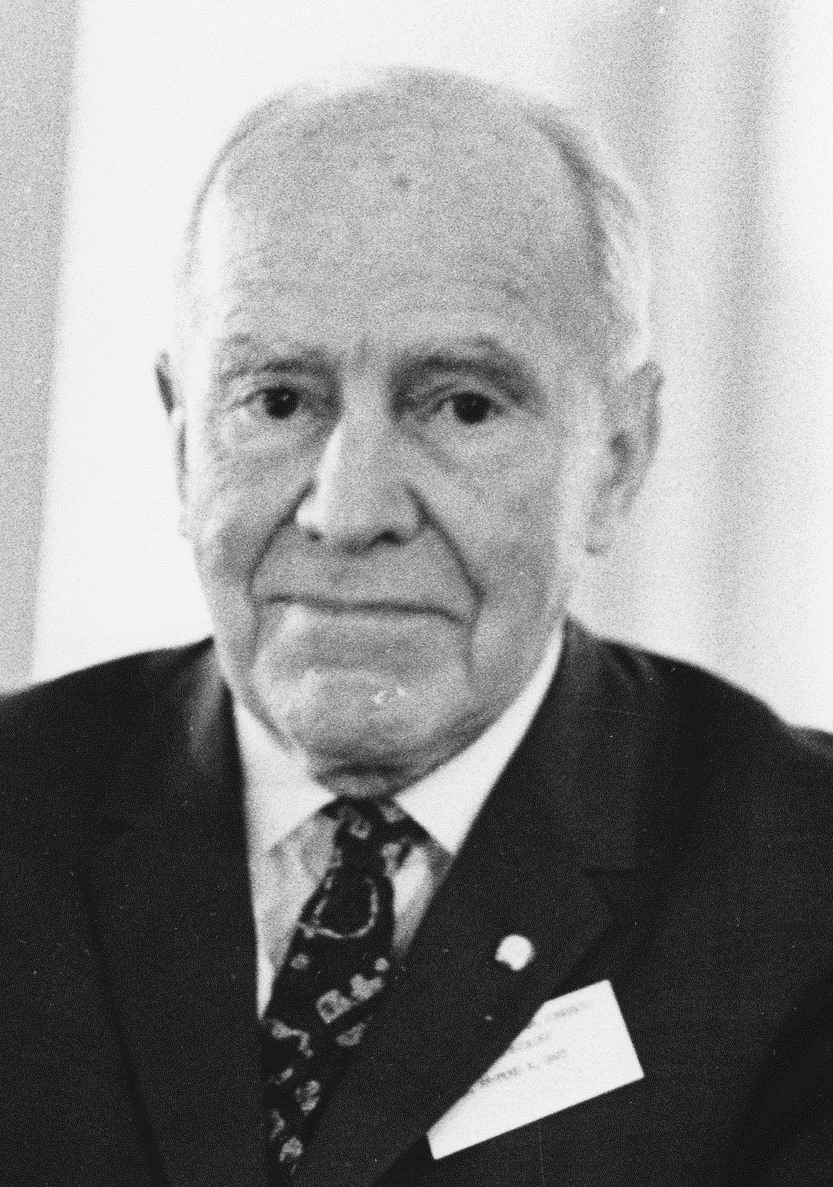
Australian anatomist and anthropologist Raymond Dart (1893–1988) identified the Taung child and helped shift ideas about bipedalism and African origins of early hominins.
Raymond Arthur Dart (1893–1988) was an Australian-born anatomist and anthropologist whose career was largely based in South Africa. He is best known for describing the fossil specimen known as the Taung child, the first recognized example of an Australopithecine, which he named Australopithecus africanus. Dart's work altered prevailing assumptions about the order in which key human traits — upright walking and brain expansion — evolved.
Image gallery
4 Images


Discovery and anatomical importance
In 1924 Dart examined a fossil skull and endocast from Taung, a limestone quarry site. He observed features of the skull and the position of the foramen magnum that suggested habitual bipedalism despite a small brain. This combination led him to argue that upright locomotion preceded a large cranial capacity in human ancestry, a claim that challenged the then-dominant view that increased brain size was the first step toward modern humans.
Scientific context and early reception
At the time of Dart's announcement the field was influenced by European collections and the acceptance of the Piltdown specimen in Britain. Many contemporaries were skeptical of Dart's interpretation and of an African origin for early hominins. Over subsequent decades additional fossils from East and South Africa reinforced Dart's conclusions and helped establish Africa as central to the story of human evolution.
Contributions, theories and controversies
Dart combined comparative anatomy with field-based paleontology and proposed provocative ideas about early hominin behavior. He developed hypotheses about tool use and bone assemblages, sometimes summarized under the term osteodontokeratic culture, and later formulations that fed into popular notions about aggressive, hunting ancestors. Some of these behavioral reconstructions have been criticized or revised by later research, but they stimulated debate and further fieldwork.
Legacy and significance
Dart's identification of an extinct hominid taxon established Australopithecus as an important genus and shifted research toward African fossil sites. His combination of anatomical detail and evolutionary interpretation influenced succeeding generations of paleoanthropologists and remains a landmark moment in 20th‑century science. He spent much of his professional life teaching and building collections at institutions such as the University of the Witwatersrand and continued to publish on comparative anatomy and human origins.
- Key specimen: the Taung child — juvenile skull and brain endocast from a quarry deposit.
- Major claim: bipedalism preceded large brain size in hominin evolution.
- Impact: helped redirect paleoanthropology toward African fieldwork.
Dart's work is a reminder that single discoveries can reshape scientific narratives and that interpretation evolves as new evidence appears. For further reading and museum resources see anatomical collections and outreach pages provided by university and scientific institutions documenting his life and the history of the Taung discovery and its species.
Questions and answers
Q: Who was Raymond Dart?
A: Raymond Arthur Dart was an Australian anatomist and anthropologist who worked in South Africa for much of his life.
Q: What did Raymond Dart discover in 1924?
A: Raymond Dart discovered the first fossil of an Australopithecine in 1924, at Taung in Northwestern South Africa (now Botswana).
Q: What is the significance of Raymond Dart's discovery?
A: Raymond Dart's discovery of the Australopithecus africanus fossil was a great event in the study of human evolution.
Q: What kind of hominid was Australopithecus africanus?
A: Australopithecus africanus was an extinct hominid closely related to humans.
Q: Where was the first fossil of Australopithecus africanus discovered?
A: The first fossil of Australopithecus africanus was discovered by Raymond Dart in Taung, Northwestern South Africa (now Botswana) in 1924.
Q: When did Raymond Dart live?
A: Raymond Dart was born on 4 February 1893 and died on 22 November 1988.
Q: Where did Raymond Dart work for much of his life?
A: Raymond Dart worked for much of his life in South Africa.
Related articles
Author
AlegsaOnline.com Raymond Dart — anatomist who identified the Taung child Leandro Alegsa
URL: https://en.alegsaonline.com/art/81383
Sources
- nature.com : Australopithecus africanus: the man-ape of South Africa