
Raymond Chandler
American novelist and screenwriter who shaped hardboiled detective fiction; creator of Philip Marlowe and author of The Big Sleep. Active 1930s–1950s; noted for spare, ironic prose and Los Angeles settings.
Raymond Chandler (July 23, 1888 – March 26, 1959) was an American novelist and screenwriter whose work helped define the hardboiled detective genre. Best known as the creator of private eye Philip Marlowe, Chandler brought a distinctive voice — terse, ironic, and richly observant — to crime fiction in the 1930s through the 1950s. His fiction and his influence extend beyond books into films and the broader noir tradition.
Image gallery
3 Images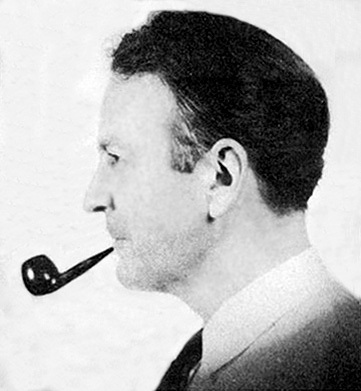


Life and career
Chandler was born in Chicago and spent parts of his youth in both the United States and England. After varied early employment, he rose to a managerial position in the oil industry but lost that job during the economic turmoil of the early 1930s. Turning to fiction in midlife, he sold short stories to pulp magazines and published his first story, "Blackmailers Don't Shoot," in the magazine Black Mask in 1933. His first novel, The Big Sleep, appeared in 1939 and introduced Philip Marlowe to a wider audience. Chandler later worked in Hollywood as a screenwriter, adapting and contributing to movies while maintaining his career as a novelist.
Style, themes, and characters
Chandler's prose is notable for its economy, sharp imagery, and a wry moral sensibility. Rather than elaborate plot mechanics, his stories foreground atmosphere, character, and the ethical ambiguities faced by his protagonists. Philip Marlowe, the archetypal Chandler detective, is intelligent, observant, and hardened by the world around him yet guided by a personal code. The city of Los Angeles itself often functions as a character in Chandler's work, depicted as glamorous and corrupt in equal measure.
Major works and adaptations
Although Chandler wrote many influential short stories, he published only seven novels during his lifetime. These novels are frequently anthologized and have been adapted for film and radio, helping to disseminate Chandler's tone and themes to a broad audience. The seven novels most commonly attributed to his canon are listed below.
- The Big Sleep (1939)
- Farewell, My Lovely (1940)
- The High Window (1942)
- The Lady in the Lake (1943)
- The Little Sister (1949)
- The Long Goodbye (1953)
- Playback (1958)
Chandler's time in Hollywood included work on several screenplays and adaptations, and he was often critical of the film industry's collaborative process. Near the end of his life he was recognized by his peers for his contributions to the mystery field, serving in leadership roles in writers' organizations.
Legacy and significance
Chandler is widely credited with elevating pulp detective stories into literature of attitude and style. His influence can be traced in later crime writers, in the development of film noir, and in popular conceptions of the lone investigator who navigates a morally ambiguous urban landscape. Critics and readers continue to study his sentences, his approach to characterization, and his portrayal of American cities in the mid-20th century.
Further resources
- Biography and career overview
- Bibliography and list of works
- Early life and family background
- Short stories and magazine publications
- Film adaptations and screenwriting
- Critical studies and essays
- Collections and archives
Raymond Chandler died on March 26, 1959, in La Jolla, California. His work remains a touchstone for readers and writers interested in crime fiction, urban realism, and stylistic economy in storytelling.
Questions and answers
Q: Who was Raymond Chandler?
A: Raymond Chandler was an American novelist and a screenwriter.
Q: Where was he born?
A: He was born in Chicago.
Q: Why did Chandler become a detective fiction writer?
A: Chandler became a detective fiction writer after he lost a position as an oil executive.
Q: When was Chandler's first short story published and where?
A: Chandler's first short story "Blackmailers Don't Shoot" was published in Black Mask, a popular pulp magazine, in 1933.
Q: When was Chandler's first novel published?
A: Chandler's first novel, The Big Sleep, was published in 1939.
Q: How many novels did Chandler publish during his lifetime?
A: Chandler published just seven novels during his lifetime.
Q: When did Chandler die and where?
A: Chandler died on March 26, 1959, in La Jolla, California.
Related articles
Author
AlegsaOnline.com Raymond Chandler Leandro Alegsa
URL: https://en.alegsaonline.com/art/81381