
Ratite: flightless birds of the southern continents
Ratites are a group of mostly large, flightless birds notable for a flat breastbone and Gondwanan distribution; the group includes ostriches, emu, cassowaries, rheas, kiwi and several extinct giants.
The term ratite refers to a set of mostly large, ground-dwelling birds that share a similar body plan and several anatomical traits. Many are flightless, though not all close relatives lack flight. Classic examples include the ostrich and emu as well as extinct giants such as the moas and the elephant birds.
Image gallery
10 Images


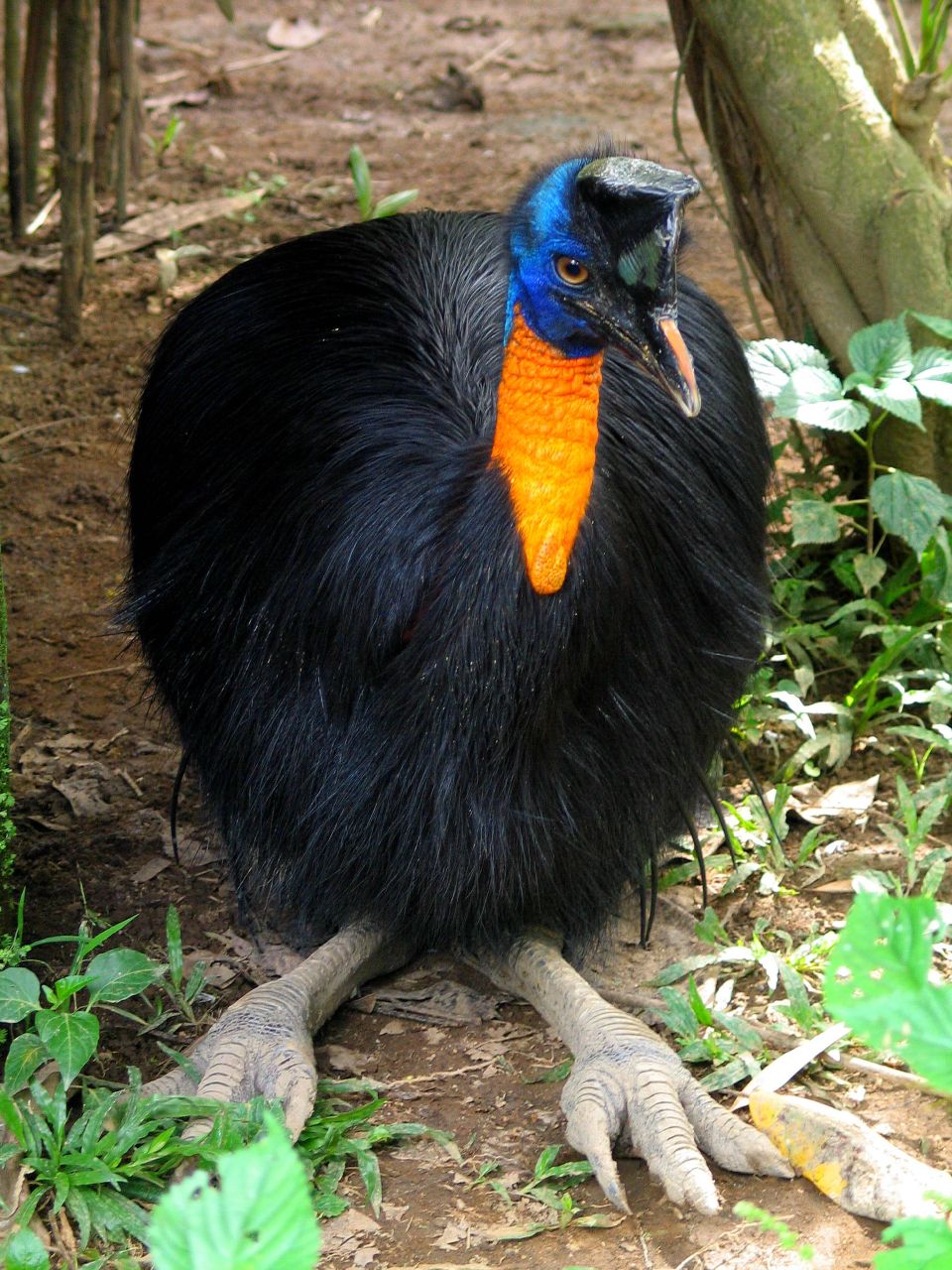
Defining characteristics
Ratites are best recognized by their flattened breastbone: they lack the pronounced central ridge or keel on the sternum that anchors large flight muscles in flying birds. Other shared features include a relatively large body size, long legs adapted for running in many species, and a generally reduced wing structure. They are often compared with other flightless birds, but ratites form a distinct assemblage based on skeletal traits.
Distribution and evolutionary background
Most ratite lineages occur primarily on landmasses that were once part of the southern super-continent Gondwana. This geographic pattern helps explain why related forms appear in Africa, Australia, New Zealand and South America. Modern genetic studies suggest a complex history involving ancient divergence, dispersal and repeated loss of flight in separate lineages rather than a single simple split.
Living and extinct examples
- Living: ostrich (Africa), emu and cassowary (Australia and New Guinea), rhea (South America), kiwi (New Zealand).
- Extinct: moas of New Zealand (moas), elephant birds of Madagascar (elephant birds), several island forms known only from fossils.
Relationships and classification
Historically, ratites were grouped together in the order Struthioniformes, separate from the small, ground-dwelling tinamous of South America. More recent analyses of DNA and morphology have shown closer connections: tinamous appear to be the closest living relatives of ratites and may be nested within the broader ratite radiation. Because of these findings, taxonomic arrangements are under revision and different authorities treat the group in different ways.
Importance and conservation
Ratites are important for studies of evolution, biogeography and the consequences of flight loss. Several species are threatened by habitat loss, hunting and introduced predators, and some large forms went extinct after human colonization of their islands. Conservation efforts focus on habitat protection, predator control and, for some species, captive breeding.
Further reading: textbooks on avian evolution and specialist reviews discuss ratite origins, the role of Gondwanan breakup, and the unique biology of both living and extinct species. See resources linked above for introductory entries.
Questions and answers
Q: What are ratites?
A: Ratites are a group of medium to large birds, most of which are flightless.
Q: Are most of the largest ratites still alive?
A: No, most of them, including the largest (moas and elephant birds) are now extinct.
Q: What is the difference between ratites and other flightless birds?
A: Unlike other flightless birds, ratites have no keel on their sternum. In a flying bird the sternum anchors the wing muscles.
Q: Did most parts of the former super-continent Gondwana have ratites?
A: Yes, most parts of the former super-continent Gondwana have ratites, or did have until the fairly recent past.
Q: Who are the closest living relatives of ratites?
A: The closest living relatives of ratites are the tinamous of South America.
Q: What does the classification used in the text include?
A: The classification used in the text includes all ratites in the order Struthioniformes, but not the tinamous.
Q: Is it possible for the classification used in the text to change in the future?
A: Yes, it is possible for the classification used in the text to change in the future.
Related articles
Author
AlegsaOnline.com Ratite: flightless birds of the southern continents Leandro Alegsa
URL: https://en.alegsaonline.com/art/81276
Sources
- journals.royalsociety.org : "Complete mitochondrial DNA genome sequences of extinct birds: Ratite phylogenetics and the vicariance biogeography hypothesis"
- doi.org : 10.1098/rspb.2001.1587
- ncbi.nlm.nih.gov : 1088691
- pubmed.ncbi.nlm.nih.gov : 11370967
- nature.com : "Complete mitochondrial genome sequences of two extinct moas clarify ratite evolution"
- doi.org : 10.1038/35055536
- pubmed.ncbi.nlm.nih.gov : 11217857
- pnas.org : "Phylogenetic evidence for multiple losses of flight in Ratite birds"
- doi.org : 10.1073/pnas.0803242105
- ncbi.nlm.nih.gov : 2533212
- pubmed.ncbi.nlm.nih.gov : 18765814
- sciencemag.org : "A phylogenomic study of birds reveals their evolutionary history"
- doi.org : 10.1126/science.1157704
- pubmed.ncbi.nlm.nih.gov : 18583609
- newscientist.com : "Bird evolutionary tree given a shake by DNA study"