
Ransomware: malware that restricts access and demands payment
Ransomware is malicious software that denies access to systems or data, typically by encryption, then demands payment. This article explains how it works, its history, notable incidents, and defenses.
Overview
Ransomware is a class of malware designed to deny legitimate users access to a computer, network, or specific digital assets. In many cases the software targets data stored on a machine and renders it unreadable — often by applying strong encryption — then requires payment, typically a ransom, in exchange for a decryption key or the promise to restore access. Other variants can simply lock a screen with a visible message or threaten to publish stolen information unless demands are met.
Image gallery
1 Image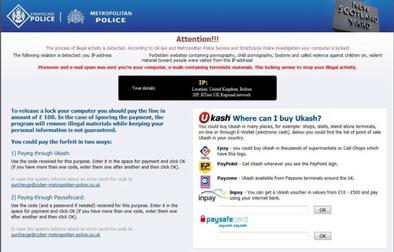
How it works and typical components
Ransomware infections often follow a pattern: initial access, execution, encryption or locking, and extortion. Attackers obtain access through phishing, software vulnerabilities, or by purchasing access from criminal marketplaces. Once running, the payload may encrypt individual files on a target machine or sabotage the operating environment, including the system's hard disk. Many modern campaigns automate propagation, data exfiltration and communication with a command-and-control infrastructure.
History and evolution
Commercial-scale ransomware activity increased significantly in the late 2000s and accelerated in the 2010s. Early examples of extortion malware trace back further, but the phenomenon became notable when organized groups refined distribution and payment methods. Some early growth in popularity was linked to operations based in parts of Eastern Europe, including Russia, and subsequently spread internationally. Security firms tracked the increase: for example, McAfee reported a large rise in distinct samples in the early 2010s.
Notable incidents
High-profile cases have illustrated both technical details and societal impact. The CryptoLocker family — sometimes described as a CryptoLocker worm in popular reporting — is an example of early large-scale criminal campaigns; law enforcement actions eventually took down parts of that infrastructure after victims paid an estimated $3 million in ransoms. Another widely publicized event was the May 2017 outbreak commonly called WannaCry. That attack affected computers in many countries and disrupted services such as the United Kingdom's National Health Service, where outdated systems running Windows XP and machines lacking recent Windows updates were especially vulnerable. The incident highlighted how reliance on unsupported software and delayed patching can magnify harm; it also underscored the role of vendors like Microsoft in issuing remedial updates.
Impact and notable characteristics
Ransomware can affect individuals, businesses, hospitals, utilities and government agencies. Consequences include operational disruption, financial loss from ransom payments or recovery costs, and reputational harm. Some attackers combine encryption with data theft to add leverage, threatening to publish sensitive information. The preferred payment method has shifted toward cryptocurrencies because they provide relative anonymity, though law enforcement and blockchain analysis have sometimes traced transactions and disrupted campaigns.
Prevention, response, and distinctions
Defensive measures emphasize preparation and layered controls. Important steps include robust backups kept offline or immutable, up-to-date software and security patches, user training to resist social engineering, endpoint protection and network segmentation to limit spread. Incident response plans should define containment, legal reporting obligations and procedures for restoring systems without paying ransoms when possible.
- Keep secure, tested backups disconnected from primary systems.
- Apply security patches promptly and retire unsupported platforms.
- Use strong authentication, least privilege and network segmentation.
- Train users to recognize phishing and suspicious attachments or links.
- Engage qualified responders and consult law enforcement for guidance.
Ransomware continues to evolve, combining older extortion techniques with innovations in distribution, encryption and monetization. Understanding its mechanics, historical examples and effective mitigations helps organizations reduce risk and respond more effectively when incidents occur.
For further reading on technical details, legal frameworks and recovery practices, consult specialized resources and current advisories from cybersecurity authorities and vendors. The terms used in this article are linked for quick reference: malware, data, encryption, ransom, files, hard disk, Russia, scams, internationally, McAfee, CryptoLocker, worm, $3 million, taken down by authorities, National Health Service, Windows, Windows XP, Microsoft.
Questions and answers
Q: What is ransomware?
A: Ransomware is a type of malicious software that restricts access to a computer system or its data, often using encryption techniques, and demands that the user pay a ransom in order for the restriction to be removed.
Q: How did ransomware become popular?
A: Ransomware first became popular in Russia, but its use has since grown internationally.
Q: How many unique samples of ransomware were collected by McAfee in 2013?
A: McAfee reported collecting over 250,000 unique samples of ransomware in the first three months of 2013.
Q: What was the estimated amount collected by CryptoLocker before it was taken down?
A: CryptoLocker had reportedly collected an estimated $3 million USD before it was taken down by authorities.
Q: What happened during the WannaCry attack in 2017?
A: The WannaCry attack spread around the world and affected over 200,000 computers in 150 countries. It lasted four days and only about $130,000 (USD) was ever paid in ransom. The United Kingdom's National Health Service (NHS) was hit particularly hard as they were using an outdated version of Windows which Microsoft no longer supported with security updates.
Q: Why were some systems still affected even though they had newer versions of Windows installed?
A: Some systems were still affected even though they had newer versions of Windows installed because their users had not yet installed the most recent security updates.
Q: What effect did WannaCry have on people and organizations worldwide?
A:The WannaCry virus led to a lot of wasted time and money for people and organizations worldwide, showing how vulnerable we are to ransomware attacks.
Related articles
Author
AlegsaOnline.com Ransomware: malware that restricts access and demands payment Leandro Alegsa
URL: https://en.alegsaonline.com/art/81165
Sources
- fbi.gov : "New Internet scam: Ransomware..."
- infoworld.com : "Update: McAfee: Cyber criminals using Android malware and ransomware the most"
- bbc.co.uk : "Cryptolocker victims to get files back for free"
- abc.net.au : "Ransomware attack still looms in Australia as Government warns WannaCry threat not over"
- bbc.com : "Cyber-attack 'unprecedented' in scale"
- motherboard.vice.com : "NHS Hospitals Are Running Thousands of Computers on Unsupported Windows XP"