
Rainwater tank (rain barrel or water butt)
A rainwater tank is a container that captures roof runoff for later use. Covers types, components, history, common uses, benefits, maintenance and legal considerations.
A rainwater tank, also called a rain barrel in North America or a water butt in the UK, is any vessel used to collect and store rainwater that runs off roofs. Systems range from small aboveground barrels to large cisterns and underground tanks. Collected water can be held for months to supply gardens, laundries or nonpotable household needs during dry periods; see general information about the container concept for storage and handling.
Image gallery
7 Images


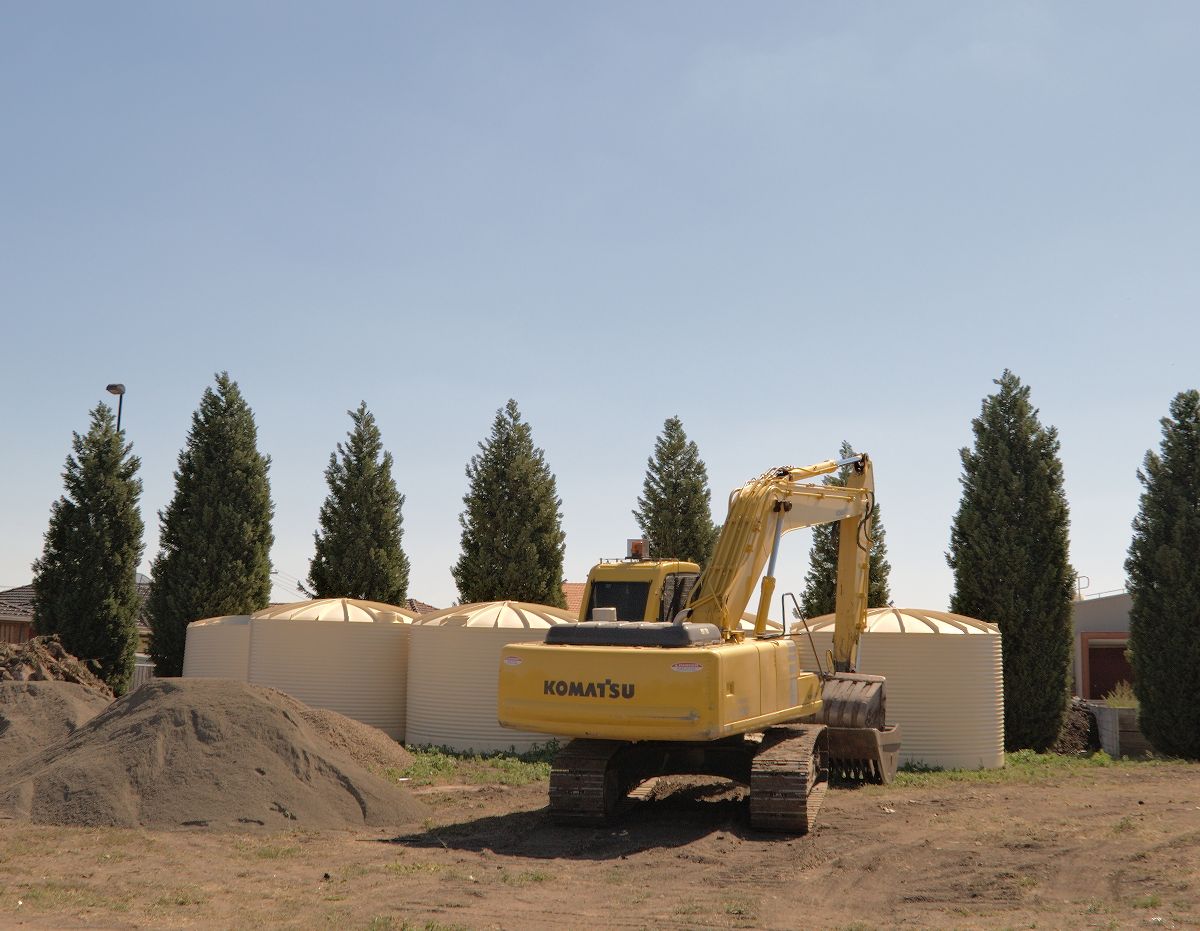



Design and common components
Basic systems attach to gutters and downspouts and include a storage tank, an inlet, and an overflow. Typical features that improve performance are fine-mesh screens to keep debris and insects out, first-flush diverters that discard the initial runoff, outlets for gravity feed or pumps, and sealed lids to reduce contamination.
Materials and sizes
Tanks are made from plastic, metal, concrete or fiberglass. Small home barrels hold tens to a few hundred litres while household cisterns and commercial tanks can store thousands. Aboveground tanks are easier to install; buried tanks save space and temperature variability but require excavation and structural supports.
History and development
Collecting rainwater is an ancient practice: civilizations used cisterns and rock-cut reservoirs long before modern plumbing. Interest in domestic rainwater harvesting has grown with concerns about water conservation, stormwater runoff, and resilience to drought, prompting improved filters, standards and integrated systems.
Uses, benefits and examples
- Garden and landscape irrigation, reducing demand on municipal supplies.
- Toilet flushing, laundry and other nonpotable indoor uses when properly plumbed and treated.
- Fire protection, livestock watering and irrigation on farms or remote properties.
- Stormwater management—storing runoff reduces peak flows and erosion in urban areas.
Maintenance, safety and regulation
Regular maintenance includes cleaning gutters and filters, checking seals and pumps, and ensuring screens prevent mosquito breeding. Rainwater is not automatically safe to drink; potable use requires filtration and disinfection or certification. Collection is regulated in some places: local codes can limit use, require backflow prevention, or, in rare cases, restrict harvesting altogether—consult local authorities if collection is forbidden in some jurisdictions. Seasonal planning can maximize benefit by storing wet-season supply for drier months.
Notable distinctions: a "rain barrel" typically denotes a small, simple aboveground unit, while "cistern" usually refers to larger-capacity or buried systems integrated into plumbing. Proper design balances storage size, roof area, climate and intended uses.
Questions and answers
Q: What is a rainwater tank?
A: A rainwater tank is a container designed to collect and store rainwater that runs off from the roof.
Q: What other names are used for a rainwater tank?
A: In North America, smaller tanks are sometimes called rain barrels, while in the UK, they are referred to as water butts.
Q: Why is it practical to have a rainwater tank?
A: It is practical to have a rainwater tank as it allows one to store water during the rainy season and use it during the summer when water is more scarce.
Q: What can a rainwater tank be used for?
A: A rainwater tank can be used for various purposes such as watering plants, flushing toilets, and washing clothes and cars.
Q: Are there any restrictions on the use of rainwater tanks?
A: Yes, there are some jurisdictions where the use of water barrels is forbidden due to concerns over water quality and safety.
Q: How can a rainwater tank benefit the environment?
A: A rainwater tank can benefit the environment by reducing the demand for municipal water supplies, which in turn can lower the strain on local water sources and reduce energy usage.
Q: Is it cost-effective to have a rainwater tank?
A: Yes, having a rainwater tank can be cost-effective as it helps lower household water bills and reduces the need for treated municipal water, which can come with high costs.
Related articles
Author
AlegsaOnline.com Rainwater tank (rain barrel or water butt) Leandro Alegsa
URL: https://en.alegsaonline.com/art/80928
Sources
- pueblopulp.com : pueblopulp.com