
Rainbow flag
A multicolored flag used worldwide to represent diversity, peace, and LGBTQ+ pride. It has historical roots in earlier banners and was popularized as a pride symbol in 1978, evolving into several variants.
The rainbow flag is a multi-striped banner that uses several colors of the visible spectrum as a symbol of inclusion, diversity and unity. It is displayed in civic, political and cultural contexts around the world. The arrangement and number of stripes vary by tradition and purpose, but the core idea is the same: the flag represents a spectrum of identities, beliefs or aspirations rather than a single uniform group.
Image gallery
10 Images


Design and common meanings
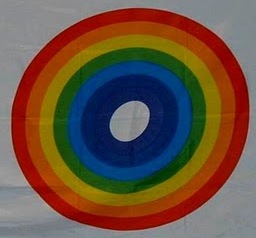
Most contemporary rainbow flags show horizontal bands of color referenced to the natural rainbow. Different movements and designers have attached specific meanings to individual colors; for example, early versions of the modern pride flag assigned concepts such as life, healing, sunlight, nature and spirit to particular stripes. A concise way to learn about the palette is to consult sources that explain the colors of the rainbow, though exact color sets are often adapted for manufacturing or symbolic emphasis.
Historical origins
Use of rainbow-like banners predates modern movements. In the 16th century the German preacher Thomas Müntzer and other participants in the German Peasants' War carried a rainbow banner as a sign of solidarity and hope. In the 20th century the rainbow reappeared in peace activism: a peace flag with rainbow stripes was displayed during a march in Italy, an early public use of the motif in protest contexts in 1961; historians link that event to later peace demonstrations and the adoption of rainbow banners in anti-war campaigns (Italy peace march, 1961).
Adoption as an LGBTQ+ symbol
The rainbow flag became widely associated with LGBTQ+ movements when an American artist and activist introduced a multi-colored flag for gay pride in 1978. That design was intended as a positive, visible emblem celebrating diversity within lesbian, gay, bisexual and transgender communities. Practical production needs soon led to simplified versions—the now-common six-stripe flag is the most recognizable worldwide—while newer variants incorporate additional colors or chevrons to acknowledge racialized communities, trans people, and other groups.
Uses, variants and distinctions
- Variants: original eight-color flag, six-stripe standard, Progress Pride with a triangular chevron, and other local or political adaptations.
- Other rainbow banners: the Andean Wiphala and various peace flags use rainbow motifs but have distinct cultural meanings and designs; they are not interchangeable with modern pride flags.
- Contexts: civic displays, pride parades, protest banners, corporate visibility campaigns, and educational materials.
Notable facts and contemporary issues
The rainbow flag functions both as an inclusive symbol and as a site of debate. Discussions around its commercialization, appropriate display, and the addition of stripes to represent particular constituencies show how living symbols evolve. Legal and political responses vary by location: in many cities the flag is flown by governments during pride months, while in other places its public display can be controversial or restricted. Despite differences, the rainbow flag remains one of the most widely recognized emblems for diversity, solidarity and peaceful expression.
Questions and answers
Q: What is the rainbow flag?
A: The rainbow flag is a multi-colored flag consisting of stripes in the colors of the rainbow.
Q: What does the rainbow flag represent?
A: The rainbow flag represents diversity and inclusiveness.
Q: Who first used the rainbow flag as a symbol of solidarity?
A: The German pastor Thomas Müntzer used the rainbow flag as a symbol of solidarity during the German Peasants' War of the 16th century.
Q: In what movement is the rainbow flag common as a symbol?
A: The rainbow flag is common as a symbol of the Peace movement.
Q: Where was the rainbow flag first used as a symbol of the Peace movement?
A: The rainbow flag was first used as a symbol of the Peace movement in a peace march in Italy in 1961.
Q: How long ago did the German Peasants' War occur?
A: The German Peasants' War occurred in the 16th century, several hundred years ago.
Q: What other cultures besides Germany and Italy display the rainbow flag?
A: The text doesn't specify which other cultures besides Germany and Italy display the rainbow flag.
Author
AlegsaOnline.com Rainbow flag Leandro Alegsa
URL: https://en.alegsaonline.com/art/80909
Sources
- jaibaba.com : The History of Meher Baba's Rainbow Flag
- bandieredipace.org : Bandiere di Pace.org
- amnesty.no : Amnesty International