
Rainband: elongated zones of organized precipitation in storms and fronts
A rainband is a long, narrow region of clouds and precipitation linked to cyclones, fronts, sea-breeze collisions or lake-effect events; it affects rainfall intensity and severe-weather risks.
A rainband is an elongated concentration of clouds and precipitation that appears as a narrow line or arc in the atmosphere. These features can be mainly stratiform (layered and widespread) or convective (made of discrete showers and thunderstorms). On a weather radar a rainband often shows a distinctive banded structure; from satellite views and observations it may appear as a curved arm, a straight line, or a series of parallel bands. The basic visual component of a rainband is the alignment of clouds and precipitation into a coherent, linear pattern.
Image gallery
5 Images
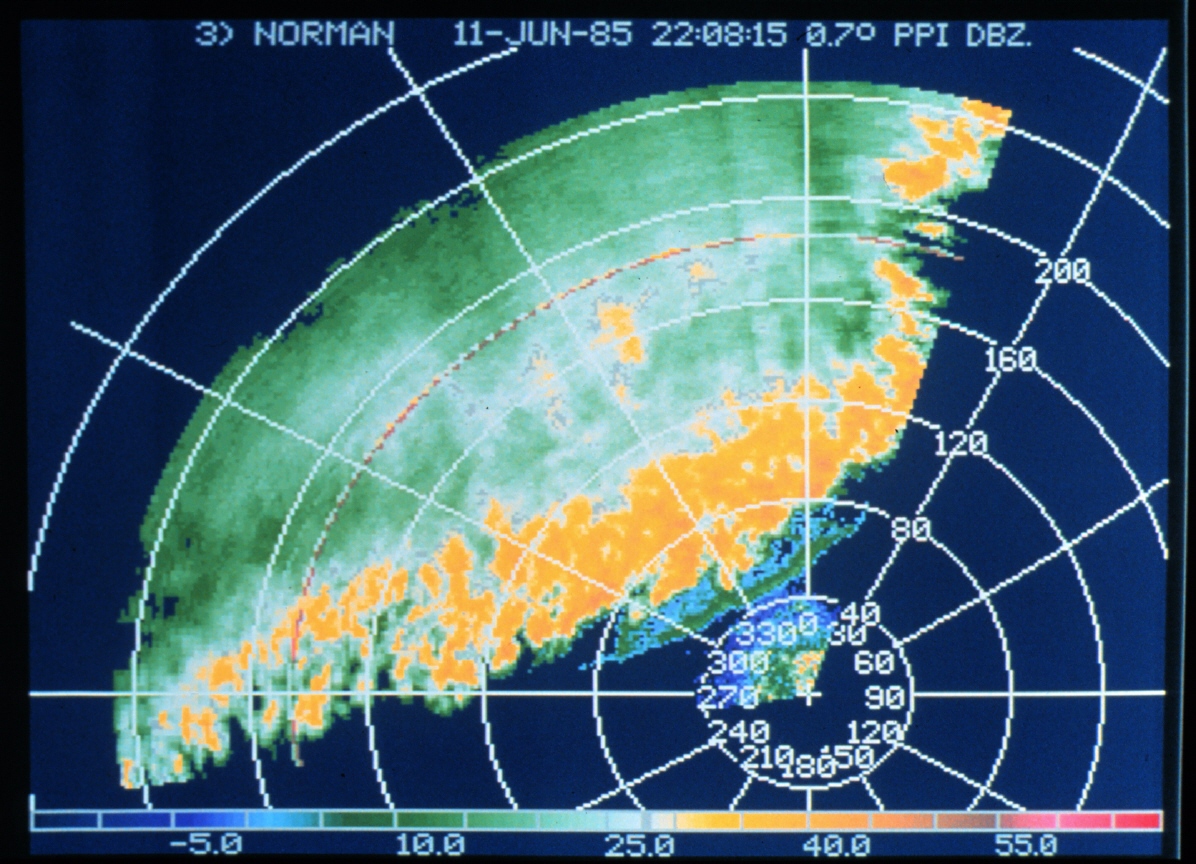


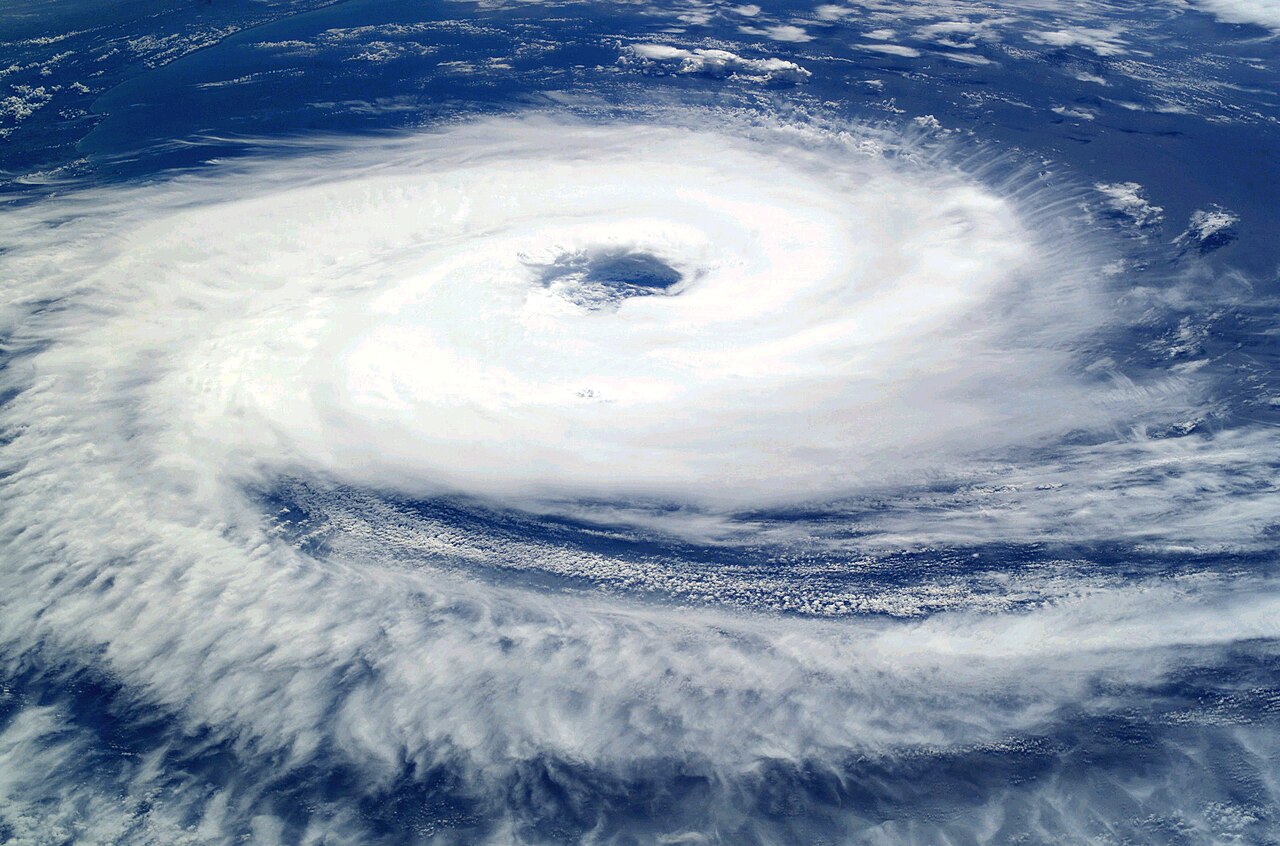
Common types and where they occur
Rainbands are not a single phenomenon and can form in several meteorological settings. Common types include:
- Tropical cyclone rainbands: Curved or spiral bands that surround a tropical cyclone and contain heavy showers and thunderstorms. These bands may encircle the center and interact with the eye and eyewall during mature hurricanes or tropical storms; their extent and organization are one indicator of a cyclone's structure and intensity. See also tropical cyclone contexts.
- Frontal rainbands: Bands that form along or ahead of cold fronts and warm fronts; some frontal bands develop into squall lines capable of producing strong winds and even tornadoes.
- Sea-breeze and mesoscale bands: Narrow lines produced where a sea breeze collides with inland air or where local circulations converge, often producing organized thunderstorms.
- Extratropical and lake-effect bands: Bands associated with mid-latitude or extratropical cyclones, and secondary bands that form downwind of warm water bodies such as the Great Lakes. These can generate heavy rain or, if temperatures are low enough, heavy snow.
How rainbands form
Rainbands arise where there is focused lifting and convergence of moist air combined with temperature contrasts. In the tropics, the rotation and inflow of a cyclone organize convective cells into spiral bands. Along fronts, the horizontal temperature gradient and advancing air create narrow zones of ascent. Local features such as mountains can deflect winds and produce barrier jets that amplify band formation, while differential heating along coastlines can trigger sea-breeze convergence lines that evolve into bands of showers. In cold-air outbreaks over warm lakes, instability and wind shear organize precipitation into narrow, intense bands that move with the low-level flow.
Impacts and importance
Although rainbands may appear narrow compared with large storm systems, they can deliver concentrated hazards. Tropical cyclone rainbands often bring torrential rain, damaging gusts, and flash flooding far from the cyclone center. Frontal bands and squall lines can produce strong straight-line winds, hail, and tornadoes. Lake-effect and extratropical bands are notable for localized heavy precipitation and rapid accumulation, particularly of snow. Meteorologists study band structure and motion to improve short-term forecasts and warnings for flooding and severe weather.
Notable distinctions and observations
Key differences among rainbands relate to scale, duration, and internal structure: tropical bands tend to be curved and part of a larger vortex; frontal bands are often transient but can extend for hundreds of kilometers; mesoscale sea-breeze bands are typically diurnal and linked to daytime heating. Radar and satellite imagery are essential tools for identifying band type and behavior. Operational forecasting combines remote sensing with observations of temperature contrasts, wind shear, and moisture to assess whether a band will produce heavy rain, thunderstorms, or snow.
For general background about atmospheric structure and convection, consult introductory resources such as the overview pages on cloud types and on convection and stability (convective processes), or specialist material on tropical cyclones, frontal dynamics and the influence of lakes or coastlines on local precipitation formation (extratropical systems, Great Lakes effects). Additional operational guidance on interpreting radar and forecasting bands is available from meteorological services and training manuals (radar resources, front analysis).
Questions and answers
Q: What is a rainband?
A: A rainband is an area of rainfall where all the clouds and precipitation are stretched out in a long line or band.
Q: What causes rainbands?
A: Rainbands are caused by differences in temperature.
Q: How can tropical cyclone rainbands be identified?
A: When seen on a weather radar, the long narrow shape of tropical cyclone rainbands is called a banded structure.
Q: What does the size of a tropical cyclone's rainband indicate?
A: The size of the rainband around a tropical cyclone helps to measure its intensity.
Q: Can mountains affect the shape of cold front-related rainbands?
A: Yes, mountains can block winds which can then form a low-level barrier jet and change the shape of cold front-related rainbands.
Q: Under what conditions do sea breeze and land breeze meet to form thunderstorms? A: Thunderstorms can form when sea breeze and land breezes meet if enough moisture is present.
Q: How can extratropical cyclones cause large amounts of precipitation?
A: Extratropical cyclones can cause large amounts of rain or snow through their associated rainbands.
Related articles
Author
AlegsaOnline.com Rainband: elongated zones of organized precipitation in storms and fronts Leandro Alegsa
URL: https://en.alegsaonline.com/art/80902
Sources
- amsglossary.allenpress.com : Rainband.
- amsglossary.allenpress.com : Banded structure.
- britannica.com : britannica.com/science/tropical-cyclone
- adsabs.harvard.edu : Three-Dimensional Kinematics of Rainbands in Midlatitude Cyclones.
- books.google.com : Mesoscale Dynamics.
- nws.met.psu.edu : 16 November Narrow Frontal Rain band Floods and severe weather.
- amsglossary.allenpress.com : Prefrontal squall line.
- books.google.com : Global Energy and Water Cycles.
- theweatherprediction.com : Mesoscale snow banding.
- cstar.cestm.albany.edu : A CLIMATOLOGICAL AND COMPOSITE STUDY OF COLD SEASON BANDED PRECIPITATION IN THE NORTHEAST UNITED STATES.
- www-das.uwyo.edu : "Lake Effect Snow"
- amsglossary.allenpress.com : Tropical cyclone.
- mri-jma.go.jp : A Numerical Study of Typhoon Flo (1990) using the MRI Mesoscale Nonhydrostatic Model.
- ams.confex.com : How Do Outer Spiral Rainbands Affect Tropical Cyclone Structure and Intensity?
- srh.noaa.gov : Tropical Cyclone Structure.