
Radioactive contamination: causes, effects, and remediation
Overview of radioactive contamination — what it is, how it spreads, health risks, detection and cleanup methods, and how it differs from irradiation.
Overview
Radioactive contamination is the presence of radioactive substances in places where they are not wanted, such as soil, water, air, buildings or living organisms. These substances emit ionizing radiation as they decay and can persist in the environment for long periods because many radionuclides have long half-lives. Contamination may be localized or widespread and can be deposited as particles, dissolved ions or attached to surfaces.
Image gallery
10 Images




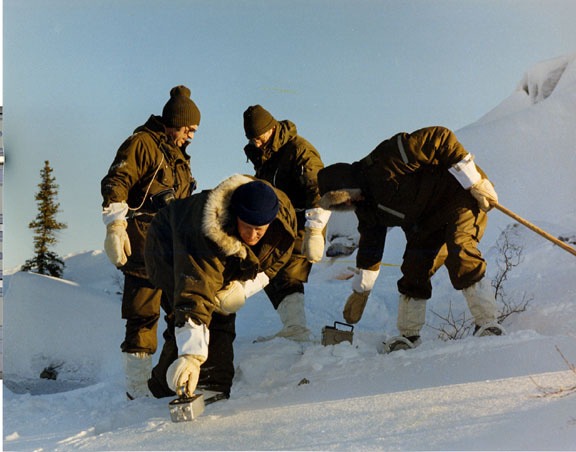
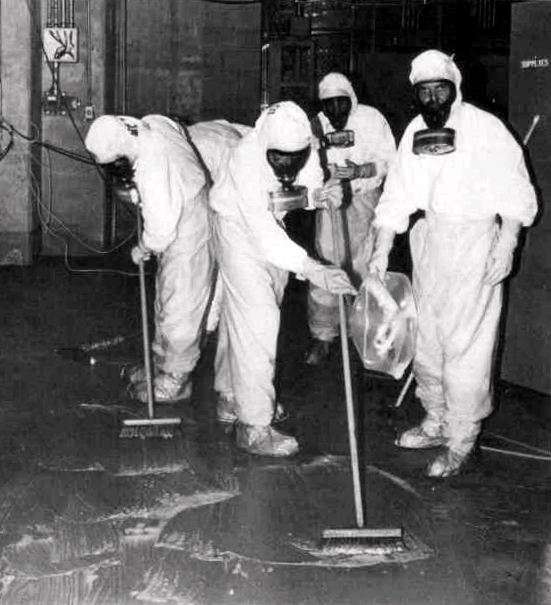
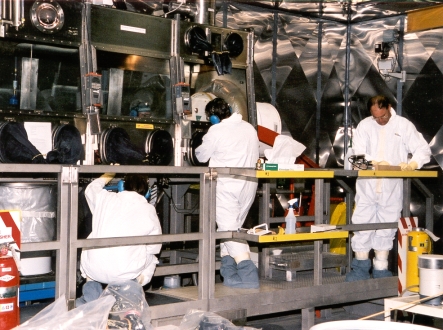
Characteristics and types
Contaminants differ by the types of radiation they emit (alpha, beta, gamma) and by chemical behavior. Alpha emitters are hazardous if inhaled or ingested but have low external penetration; gamma emitters can penetrate shielding and pose external exposure risks. The term "half-life" describes how long a radionuclide remains active; some decay quickly, others remain hazardous for years to centuries. For general background on environmental processes and persistence see environmental contamination resources and for decay fundamentals see half-life explanations.
Sources and pathways
Common sources include accidents at nuclear reactors, releases from fuel reprocessing and waste facilities, fallout from weapons testing, medical and industrial sources, and routine discharges from nuclear operations. Radioactive material moves through air, surface water and groundwater and can enter food chains, leading to uptake by plants and animals. Nuclear power operations are a notable source of spent fuel and byproducts; information about nuclear industry practices is available via nuclear energy references.
Detection, risks and examples
Detection uses instruments such as Geiger counters, scintillation detectors and gamma spectrometers; personal dosimeters measure individual exposure. Health risks depend on dose, exposure route and radionuclide chemistry — acute high exposures cause radiation sickness, while chronic lower exposures increase cancer risk. Well-known contamination events like reactor accidents and weapons testing have informed modern safety and emergency planning.
Management and remediation
Responses include containment, removal of contaminated soil or debris, decontamination of surfaces, stabilization (immobilizing contaminants), vitrification of high-level wastes and long-term monitoring. Properly managed radioactive waste and secure storage reduce hazards, but long-term stewardship and regulatory oversight remain essential. For guidance on waste handling see radioactive waste management.
Distinctions and notable facts
It is important to distinguish contamination (material present in the environment) from irradiation (exposure to radiation without material transfer). Contamination may require cleanup to remove hazardous material, whereas irradiation is a temporary exposure. Contamination incidents have shaped international standards, emergency procedures and public communication practices to limit exposure and protect health and the environment.
Questions and answers
Q: What is radioactive contamination?
A: Radioactive contamination is the pollution of the environment with radioactive materials that were not originally present.
Q: What makes many radioactive substances dangerous?
A: Many radioactive substances have very long half lives, and therefore remain dangerous if they are present in the environment for a long time.
Q: Where are many of these radioactive materials produced?
A: Many radioactive materials are produced in nuclear power plants, although they are typically processed to become radioactive waste.
Q: Is radioactive waste dangerous?
A: Radioactive waste can be dangerous if it is not stored safely. However, if it is stored safely, there is little danger.
Q: What is half life?
A: Half life is the amount of time it takes for half of a radioactive substance to decay.
Q: How can radioactive contamination affect the environment?
A: Radioactive contamination can cause harm to plants, animals, and humans who come into contact with it. It can also damage ecosystems and the overall environment.
Q: How can radioactive waste be disposed of safely?
A: Radioactive waste can be disposed of safely through methods such as deep geological disposal, where the waste is buried deep underground in stable rock formations.
Related articles
Author
AlegsaOnline.com Radioactive contamination: causes, effects, and remediation Leandro Alegsa
URL: https://en.alegsaonline.com/art/80766
Sources
- guardian.co.uk : "Two years on, America hasn't learned lessons of Fukushima nuclear disaster"
- nytimes.com : "Report Finds Japan Underestimated Tsunami Danger"
- thebulletin.org : "The lasting toll of Semipalatinsk's nuclear testing"
- books.google.com : Death of a Dissident: The Poisoning of Alexander Litvinenko and the Return of the KGB
- johnstonsarchive.net : "K-19 submarine reactor accident, 1961"
- johnstonsarchive.net : "K-27 submarine reactor accident, 1968"
- johnstonsarchive.net : "K-431 submarine reactor accident, 1985"
- nrc.gov : "Lost Iridium-192 Source"
- www-pub.iaea.org : The Radiological Accident in Goiania
- iaea.org : Strengthening the Safety of Radiation Sources
- books.google.com : Medical Management of Radiation Accidents, Second Edition
- doi.org : 10.1126/science.328.5979.679-a
- www-pub.iaea.org : "Investigation of an accidental Exposure of radiotherapy patients in Panama"
- johnstonsarchive.net : "Deadliest radiation accidents and other events causing radiation casualties"
- doi.org : 10.1097/01.CCM.0000257229.97208.76