
Rabindranath Tagore: Poet, Composer and Cultural Reformer
Comprehensive overview of Rabindranath Tagore (1861–1941): life, major works, music and art, educational initiatives, and his influence on Bengali and global culture.
Rabindranath Tagore (born 7 May 1861, died 7 August 1941) was a Bengali polymath whose work as a poet, novelist, playwright, composer, educator and visual artist reshaped literary and cultural life in South Asia and resonated internationally. Often revered as Kabiguru ("poet-teacher"), he blended classical forms and folk traditions with modern ideas. In 1913 he became the first Asian awarded the Nobel Prize in Literature, recognized for a body of lyrical and spiritual poetry that reached readers beyond linguistic borders.
Image gallery
10 Images


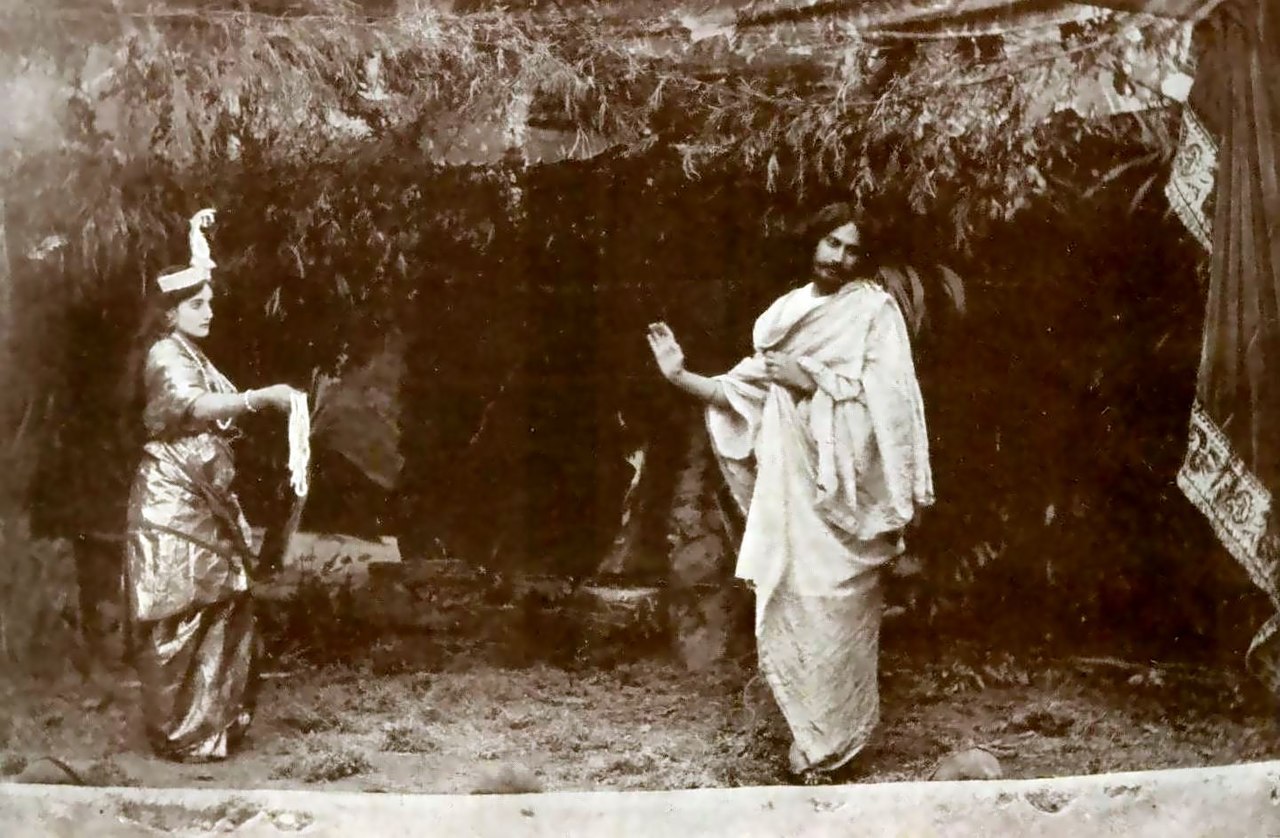

Early life and education
Tagore was born into a prominent Bengali family in the Jorasanko neighborhood of Calcutta (now Kolkata). His father, Debendranath Tagore, and his mother, Sarada Devi, belonged to an environment engaged with religious reform and literary activity. Formal schooling did not suit him as a youth; much of his early learning took place at home, in private tutors and in the family library, where he absorbed languages, philosophy, science and classical literature. As a teenager he published poems and dramas, and later travelled in India and abroad. A brief period of legal studies in London did not lead to a law career; instead he returned to India and devoted himself to creative and social work.
Literary work and themes
Tagore's writing spans poetry, short stories, novels and plays. His poetic collection Gitanjali ("Song Offerings") brought him international attention and was central to his Nobel recognition. Other important novels and long works include Gora and Ghare-Baire (The Home and the World), which explore identity, social change and the fraught politics of nationalism. Across genres his work often addresses the relationship between the individual and society, spiritual longing, nature, and the tensions of modernity.
Music, painting and educational experiments
Tagore composed more than two thousand songs combining classical, devotional and folk elements in a body now known as Rabindra Sangeet; these songs remain a living part of Bengali culture. He also took up painting in later life and produced distinctive canvases and sketches that stood apart from his literary fame. As an educator he founded a residential school at Santiniketan that emphasized nature, the arts and international exchange; this institution later developed into Visva-Bharati University, envisioned as a meeting place for Eastern and Western traditions.
Selected works and contributions
- Major poetry: Gitanjali and numerous lyric sequences.
- Novels and prose: Gora; Ghare-Baire; essays on culture and education.
- Music: Rabindra Sangeet and the national anthems of two countries: Jana Gana Mana (India) and Amar Shonar Bangla (Bangladesh).
- Education and art: founding of Santiniketan and pioneering approaches to learning and cultural exchange.
For further study about his life and works see entries on his Bengali name and early manuscripts at Bengali name and script, discussions of his role as a philosopher and artist at philosophical and artistic pursuits, and compilations of his novels and short fiction at collected novels. Music scholars and performers frequently reference collections and analyses at music and composition and repositories of songs at song collections. Contextual studies of his influence on Bengali culture can be found at cultural influence.
Detailed treatments of particular works—such as critical editions of Gitanjali—are available through specialized resources listed at major works and broader bibliographies and visual archives at literary and art archives. Essays on his role as a social and cultural reformer are assembled at reformer studies.
Tagore's legacy is multifaceted: he helped modernize Bengali literature, shaped musical traditions still performed today, and proposed educational models that stressed creativity and global dialogue. His engagement with universal themes and his experimental openness to different forms keep his work relevant to readers, musicians, artists and educators worldwide.
Questions and answers
Q: Who was Rabindranath Tagore?
A: Rabindranath Tagore was a poet, philosopher, artist, and composer from India who greatly influenced Bengali culture during the late 19th century and early 20th century. He was also a cultural reformer.
Q: What were the major works of Rabindranath Tagore?
A: Some of Rabindranath Tagore's major works include Gitanjali (Song Offerings), Gora (Fair-Faced), and Ghare-Baire (The Home and the World). He also wrote many stories, novels, poems, and dramas.
Q: What did Rabindranath Tagore do to modernize Bengali art?
A: Rabindranath Tagore made it possible to make art using different forms and styles, which greatly modernized Bengali art.
Q: When was Rabindranath Tagore born?
A: Rabindranath Tagore was born on May 7, 1861.
Q: Where was Rabindranath Tagore born?
A: Rabindranath Tagore was born at Jorasanko in Calcutta.
Q: When did Rabindranath Tagore die?
A: Rabindranath Tagore died on August 7, 1941.
Q: How many children did Rabindranath Tagore have?
A: Rabindranath Tagore had five children with his wife Mrinalini Devi, whom he married in 1883.
Related articles
Author
AlegsaOnline.com Rabindranath Tagore: Poet, Composer and Cultural Reformer Leandro Alegsa
URL: https://en.alegsaonline.com/art/80674
Sources
- nobelprize.org : "Rabindranath Tagore - Facts"
- therealgems.com : "In 1901 He started ashram in "santiniketan""
- milansagar.com : "Akshay Chowdhury"
- translate.google.com : English translation from Google Translate
- duttachaudhurichronicles.com : "Dutta Chaudhury family of Andul"
- nationalanthems.me : Bangladesh, Amar Shonar Bangla আমার সোনার বাংলা
- india.gov.in : National Anthem - Know India. Nation Portal of India. Government of India.
- parliamentofindia.nic.in : "Volume XII. Tuesday, the 24th January 1950. Online Transcript, Constituent Assembly Debates"
- tribuneindia.com : "A tribute to the legendary composer of National Anthem"
- rediff.com : "Controversy over Jana Gana Mana takes a new turn"
- rediff.com : "Who composed the score for Jana Gana Mana? Gurudev or the Gorkha?"
- lehigh.edu : "Amardeep Singh: National Anthem Throwdown: Jana Gana Mana vs. Bande Mataram"
- worldwidejournals.com : "Sir Rabindranath Tagore Struggled for Global Freedom"