
Quebec Bulldogs (Quebec Hockey Club) — early Canadian ice hockey team
Senior-level ice hockey club from Quebec City, active from the late 19th century; became professional, won early Stanley Cups, and moved to Hamilton in 1920 to become the Tigers.
The Quebec Bulldogs, formally the Quebec Hockey Club and later organized as the Quebec Athletic Club, were an influential senior-level ice hockey team from Quebec City. Their recorded activity reaches back to leagues of the late 19th century, and they participated in the formative era that moved Canadian hockey from amateur local play toward professional leagues. The squad is remembered for early championship success, prominent players, and a popular nickname that outlived the club's city tenure.
Image gallery
3 Images
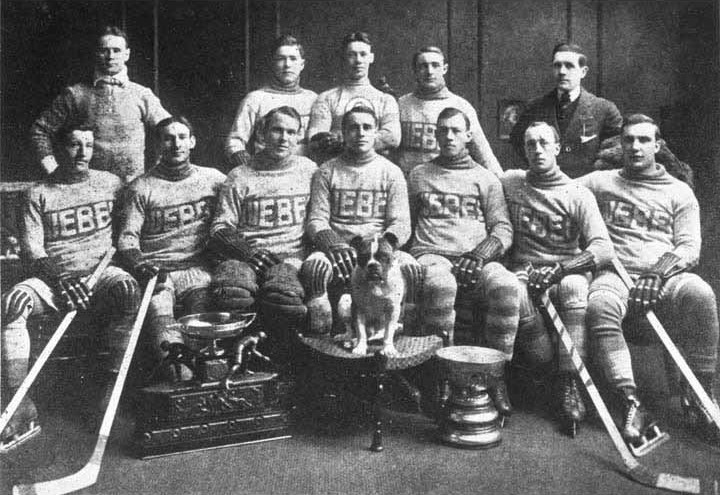

Origins and competitive development
Documentation shows the club competing in the Amateur Hockey Association of Canada and local tournaments beginning in the late 1880s. Over the next two decades the organization played in a succession of regional and national leagues as the sport's structure evolved. Around 1908 the club accepted professionalism and joined the higher-profile professional circuits that emerged at that time. It later participated in the National Hockey Association (NHA) era and, briefly, in the early National Hockey League (NHL) framework before financial pressures and league reorganization affected its future.
Achievements and notable figures
The Bulldogs achieved their greatest success in the 1910s, winning the Stanley Cup in the club era that predates the modern NHL dynasty model. They also fielded several standout players who became well known across Canada for scoring and leadership. Among these, Joe Malone stands out as a prolific goal scorer linked closely with the Quebec franchise and with the sport's early professional era.
Team identity and popular image
The nickname "Bulldogs" originated with newspapers and supporters rather than as an official corporate name at first; it became so widely used that the team embraced the image informally. Fans adopted a bulldog mascot and the label grew into the common reference for the club in media and culture. This blend of civic pride and strong public branding helped the franchise maintain a distinct identity even as leagues and rosters changed.
Key dates and later decline
- Late 1880s: documented competition in amateur regional leagues; see early records.
- Circa 1908: transition toward professional play.
- Early 1910s: Stanley Cup successes and peak competitive profile.
- 1920: franchise relocation to Hamilton, where it was reorganized as the Tigers.
Legacy and significance
Although the Quebec Bulldogs franchise did not remain in Quebec City, its contribution to organized hockey is part of the sport's formative history in Canada. The club illustrates common themes of the era: the shift from amateur clubs to professional teams, the influence of media-created nicknames, and the financial fragility that often prompted relocations. Historians and fans cite the Bulldogs when recounting early Stanley Cup competition, the era's notable athletes, and the cultural ties between hockey clubs and their communities during the first decades of organized ice hockey.
Questions and answers
Q: Who were the Quebec Bulldogs?
A: The Quebec Bulldogs were a men's senior-level ice hockey team officially known as the Quebec Hockey Club, later as the Quebec Athletic Club.
Q: When did the recorded play of the Quebec Hockey Club go back to?
A: The recorded play of the Quebec Hockey Club goes back as far as the Amateur Hockey Association of Canada (AHAC) in 1889.
Q: Was the Quebec Hockey Club known to have played in tournaments before 1889?
A: Yes, the Quebec Hockey Club is known to have played in tournaments prior to the year 1889.
Q: Did the Quebec Bulldogs ever become a professional ice hockey team?
A: Yes, the Quebec Bulldogs continued as an amateur team through various leagues, eventually becoming professional in 1908.
Q: When did the Quebec Bulldogs start playing in the NHL?
A: The Quebec Bulldogs started playing in the National Hockey League.
Q: Where did the team move to when they changed their name from the Bulldogs to the Tigers?
A: When the team officially changed its name from the Bulldogs to the Tigers, they moved to Hamilton, Ontario, in 1920.
Q: Why did the Quebec Bulldogs get their name?
A: The Bulldog name was given by the media and was so popular with the fans a Bulldog mascot was created, but it was never officially changed until the team moved to Hamilton, Ontario, in 1920 and became the Tigers.
Related articles
Author
AlegsaOnline.com Quebec Bulldogs (Quebec Hockey Club) — early Canadian ice hockey team Leandro Alegsa
URL: https://en.alegsaonline.com/art/80435
Sources
- ccbn-nbc.gc.ca : "Welcome to the Plains of Abraham"