
Queanbeyan River
A perennial river in New South Wales, Australia, the Queanbeyan River feeds the Molonglo catchment and supplies drinking water to Canberra and Queanbeyan; its name likely derives from an Aboriginal word.
Overview
The Queanbeyan River is a perennial stream in southeastern New South Wales in Australia. It forms part of the larger Molonglo catchment, which itself drains into the Murray–Darling Basin. The river runs for about 104 kilometres and drains a catchment of roughly 96,000 hectares, flowing through the Monaro and Capital Country regions before joining other waterways that link to the Australian inland river network.
Image gallery
6 Images
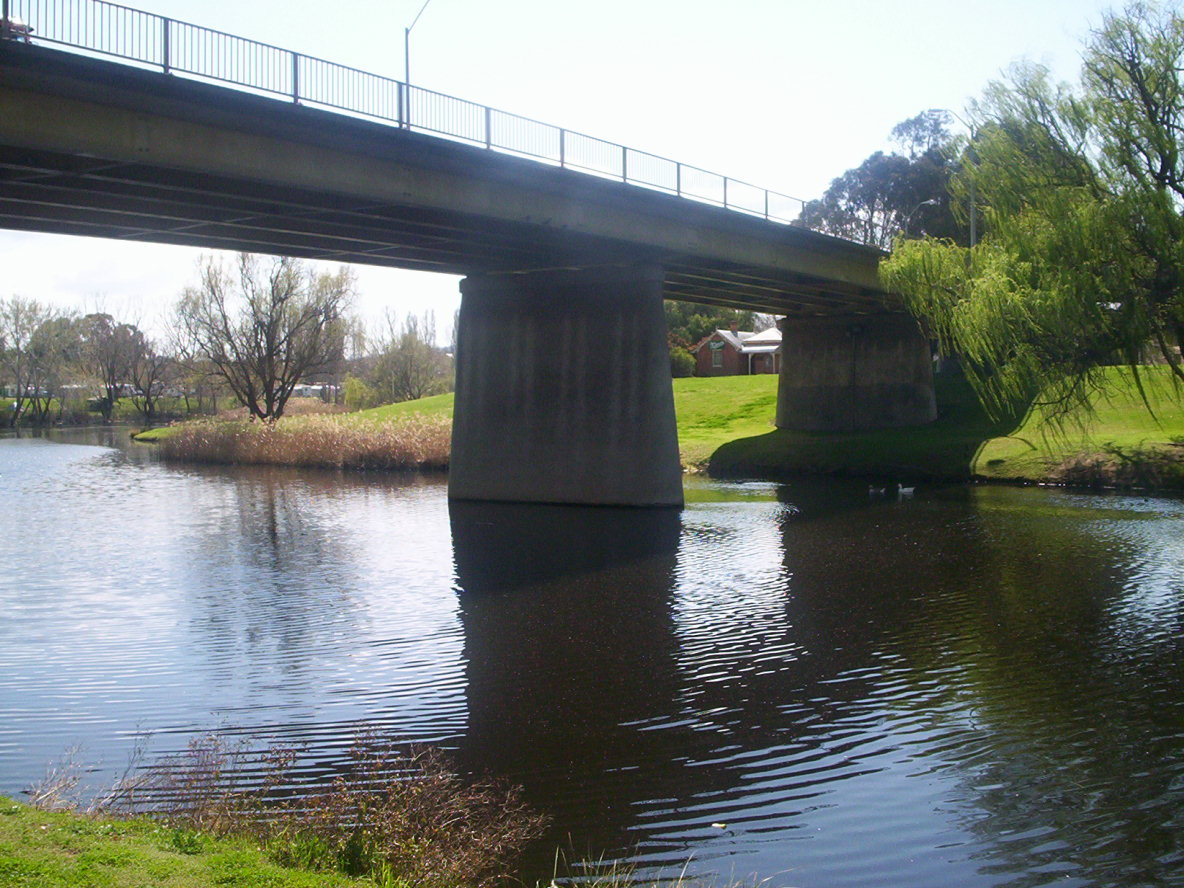


Course and characteristics
The Queanbeyan rises in upland country and descends across mixed grazing and forested landscapes. Along its course it receives runoff and minor tributaries, passes close to the urban area of Queanbeyan and contributes to the wider Molonglo system. The river is generally described as a perennial stream, meaning it flows year-round under typical climatic conditions. Flow volume varies seasonally and with climate; dry periods reduce discharge while wetter years increase it.
- Length: ~104 km
- Catchment area: ~96,000 ha
- Regions: Monaro and Capital Country
History and name
The river valley has long been part of the landscape of local Aboriginal peoples. It is commonly reported that the name "Queanbeyan" derives from a word used by Ngarigo or other local peoples that was interpreted to mean "clear water" or a similar phrase, though accounts vary and Indigenous place-name histories are often complex. European settlement in the area from the 19th century established towns and pastoral activities that altered land use and affected the river's environment.
Uses and significance
The Queanbeyan River contributes to regional water supply. Together with the nearby Cotter River it helps meet the potable water needs of both Canberra and the City of Queanbeyan. Because of this role, protecting water quality in the catchment has been a management priority. The protection and allocation of water resources in the area are subject to Australian federal legislation and state-level controls, which aim to balance supply, environmental outcomes and community use.
Management, conservation and notable facts
Management of the Queanbeyan catchment involves a mix of public authorities, local councils, landholders and community groups. Measures may include riparian vegetation protection, erosion control, monitoring of pollutants and land-use planning to limit impacts on the drinking-water supply. Recreational uses such as angling, walking and scenic appreciation occur where access and conditions permit, but are managed to reduce contamination risks.
Key points to note: the river is linked to the Molonglo system, contributes to the Murray–Darling Basin, and plays a practical role as a source of treated water. Researchers, managers and local communities continue to study and care for the river to maintain ecological values while supporting urban and rural demands.
Further information
For general background and local governance details consult regional resources and water authority publications: see links on catchment management (Aboriginal heritage), place-name studies (original word), and river descriptions (Queanbeyan River).
Questions and answers
Q: What is the Queanbeyan River?
A: The Queanbeyan River is a perennial stream in New South Wales, Australia.
Q: What catchment is the Queanbeyan River part of?
A: The Queanbeyan River is part of the Molonglo catchment.
Q: Where is the catchment of the Queanbeyan River located?
A: The catchment of the Queanbeyan River is located in the Murray-Darling Basin, in the Monaro and Capital Country regions of New South Wales.
Q: How long is the Queanbeyan River?
A: The Queanbeyan River is 104 kilometres (65 mi) in length.
Q: What is the size of the river catchment of the Queanbeyan River?
A: The river catchment of the Queanbeyan River is 96,000 hectares (240,000 acres).
Q: What is the role of the Queanbeyan River and the Cotter River in the region of Canberra and Queanbeyan?
A: The Queanbeyan River and the Cotter River meet the potable water supply needs of the Canberra and Queanbeyan region.
Q: What is the meaning behind the name of the Queanbeyan River?
A: It is said the Aboriginal Ngarigo people used a word that sounded like queanbeyan to name the river. The word meant "clearwater".
Related articles
Author
AlegsaOnline.com Queanbeyan River Leandro Alegsa
URL: https://en.alegsaonline.com/art/80433
Sources
- gnb.nsw.gov.au : "Queanbeyan River"
- gnb.nsw.gov.au : "Queanbeyan"
- bonzle.com : "Map of Queanbeyan River"