
Quagga (Equus quagga quagga) — extinct southern African plains zebra subspecies
The quagga was a distinct, recently extinct subspecies of plains zebra from southern Africa, notable for reduced striping. It vanished in the 19th century; selective-breeding projects attempt to recreate its appearance.
Overview
The quagga (Equus quagga quagga) was a subspecies of the plains zebra that lived on the dry grasslands of southern Africa. Unlike other zebras, it had bold striping restricted largely to the head, neck and front part of the body, while the rear was a plain brown. The quagga is commonly described as having an intermediate look between a zebra and other brown ungulates; its unusual pattern made it one of the best-known examples of regional variation within a species.
Image gallery
10 Images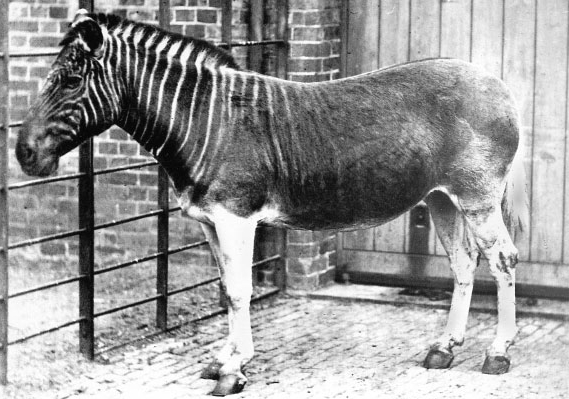



Appearance and distinguishing features
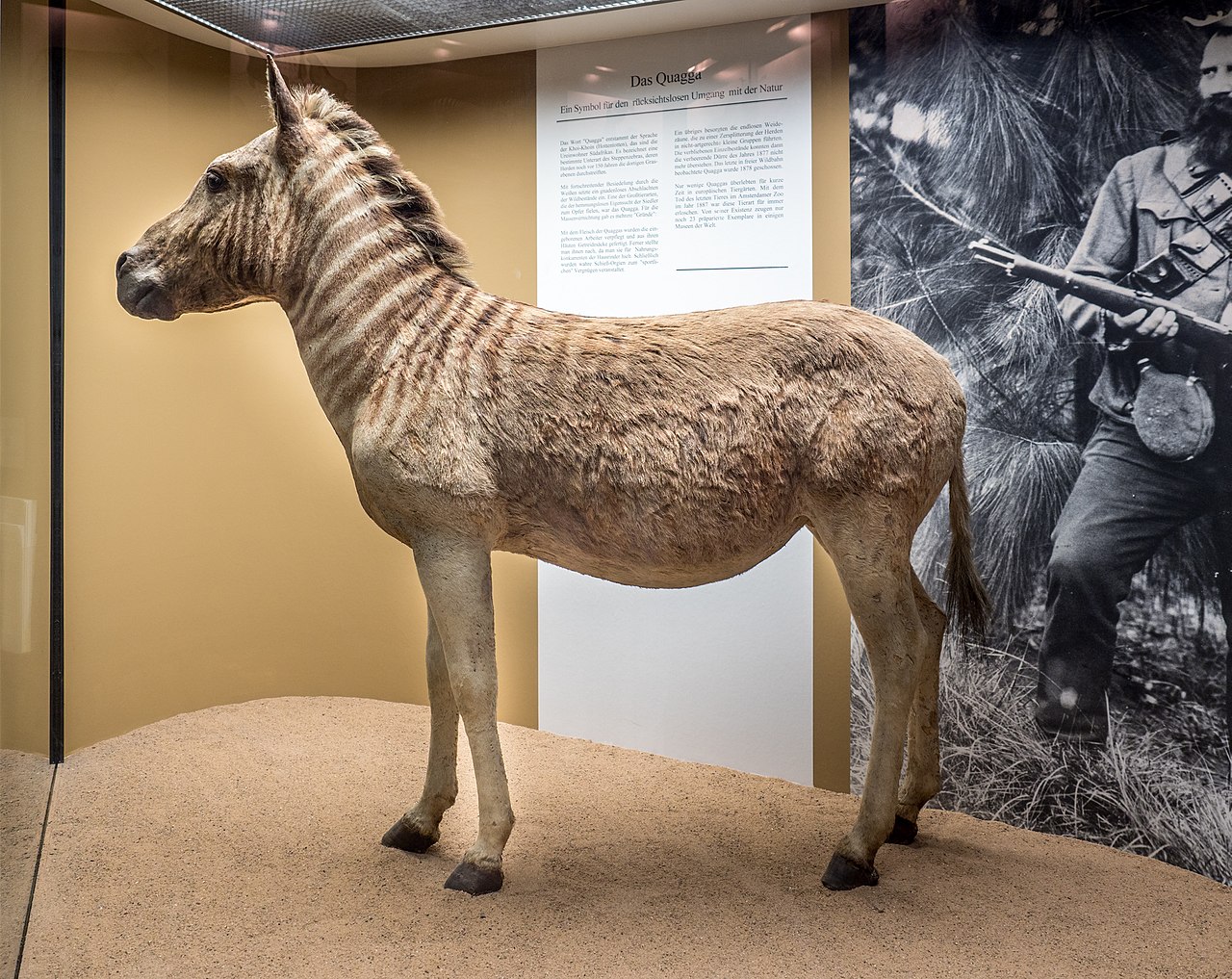
Key characteristics of the quagga included a yellowish-brown coat on the hindquarters, with black or dark-brown stripes most pronounced on the forequarters and face. Individual variation existed in the number and clarity of stripes. Museums preserve skins, skulls and several skeletons that provide most of our direct knowledge about its morphology.
Range, habitat and behaviour
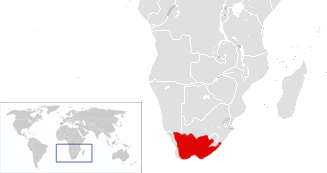
The quagga inhabited dry, open grassy plains and semi-arid regions in what is now South Africa and adjacent areas, with records extending north to the Orange River. It grazed in herds and, like other zebras, fed on grasses. Historical accounts describe its vocalizations and social behavior, which contributed to the name "quagga"—a rendering of a local onomatopoeic term for its call.
Extinction and causes
Pressure from European settlement, hunting for meat and hides, and competition with domestic livestock greatly reduced quagga numbers during the 19th century. Habitat loss and targeted culling by farmers who protected grazing for sheep and cattle accelerated the decline. The last reliably reported wild quaggas disappeared in the 1870s during extended dry conditions, and the final captive individual died in the Amsterdam Zoo on 12 August 1883. Museums now hold a limited number of skins and skeletal remains—valuable for study and public display.
Genetics, classification and revival attempts
Early genetic work showed the quagga was not a separate species but a subspecies of the plains zebra, having diverged from other populations many tens of thousands of years ago. Because of this close relationship, a South African selective-breeding effort started in 1987 aims to re-create animals with quagga-like markings by choosing plains zebras with reduced striping. This program produced foals with lighter stripes in the 21st century; proponents argue this restores an ecological and visual analogue rather than resurrecting the original genotype.
Significance and notable facts
- The quagga is often cited in discussions of extinction caused by human activity and of de-extinction or ecological replacement projects.
- It was one of several recognized subspecies of the plains zebra; historical taxonomy and modern DNA studies have refined its placement among Equus subspecies. See general zebra references such as plains zebra accounts and subspecies lists at taxonomic resources for broader context.
- Contemporary conservation and historical awareness efforts use museum specimens and research to inform education about lost biodiversity and sustainable land use; some accounts link its last decline to drought episodes recorded in the 19th century (drought).
Questions and answers
Q: What is a Quagga?
A: The Quagga is a recently extinct zebra and one of the six subspecies of plains zebra.
Q: What did the Quagga look like?
A: The Quagga was a yellowish-brown zebra with stripes only on its head, neck and forebody, and looked similar to an Okapi.
Q: Where was the Quagga native to?
A: The Quagga was native to dry grassy plains in the south of the African continent and was found as far north as the Orange River.
Q: Why was the Quagga hunted?
A: The Quagga was hunted for food and for their skin, and also because farmers did not want it to eat the grass they needed for their sheep and goats.
Q: When did the last wild Quaggas die?
A: The last wild Quaggas died during a drought in 1878.
Q: Where is the last captive Quagga's body?
A: The last captive Quagga's body is now in a museum.
Q: How is a foundation in Africa trying to bring Quaggas back to life?
A: The foundation is taking zebras that have very light stripes and breeding them. They began in 1987 and the first Quagga foal was born in 2005.
Related articles
Author
AlegsaOnline.com Quagga (Equus quagga quagga) — extinct southern African plains zebra subspecies Leandro Alegsa
URL: https://en.alegsaonline.com/art/80362
Sources
- iucnredlist.org : "Equus quagga quagga"
- petermaas.nl : "Recently Extinct Animals - Species Info - Quagga"
- quaggaproject.org : "The Quagga Project :: South Africa"