
Pyrite (Fool's Gold): Properties, Formation, Uses, and Hazards
Pyrite (FeS2), commonly called fool's gold, is an iron sulfide mineral known for its metallic luster, cubic crystals, geological occurrence, uses, and environmental effects.
Pyrite, commonly called "fool's gold," is an iron sulfide mineral with the chemical formula FeS2. The mineral's bright, metallic, brass-yellow appearance often leads to confusion with native gold. The name comes from the Greek for "stone which strikes fire" because pyrite can produce sparks when struck against metal or hard stone. In mineral classification it is treated as an iron sulfide species and is one of the most abundant sulfide minerals in the Earth's crust.
Image gallery
10 Images

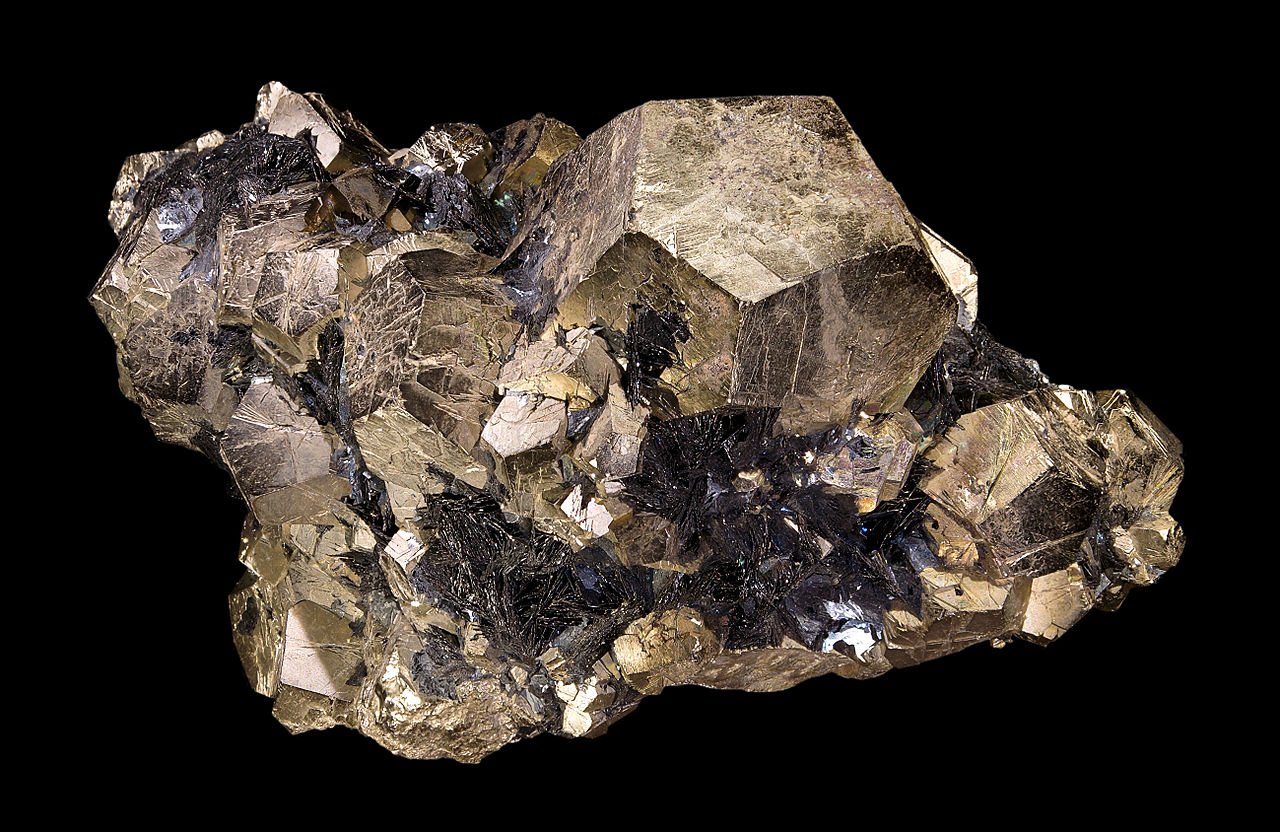



Physical and chemical properties
Pyrite typically forms well-defined crystals, most commonly cubes and the twelve-faced pyritohedron. It has a metallic luster, brittle tenacity, and a pale brass-yellow color. On the Mohs scale its hardness is about 6–6.5, and it leaves a greenish-black to brownish-black streak. Its specific gravity is relatively high for a common rock-forming mineral (around 5). The mineral has poor cleavage and commonly displays complex twinning and striated crystal faces. Chemically, iron occurs combined with disulfide (S2) groups in the structure.
Formation and occurrence
Pyrite forms in a wide range of geological settings. It precipitates from hydrothermal fluids, occurs as disseminated crystals in igneous and metamorphic rocks, and is common in sedimentary environments such as black shales and coal seams where reducing conditions allow sulfide to form. Biogenic processes—microbial sulfate reduction—also play a role in sedimentary pyrite formation. Weathering and oxidation of pyrite at or near the Earth's surface produce iron oxides and sulfuric acid.
Economic uses and scientific interest
Historically pyrite was an important source of sulfur and was used to produce sulfuric acid and for ignition in early firearms. While it is not a primary ore of iron in most modern operations, pyrite is mined where it contributes to sulfur recovery and certain industrial applications. Pyrite and related iron sulfide phases are studied for potential uses in low-cost photovoltaic and semiconductor research and are of interest for understanding ore-forming processes.
Environmental and practical considerations
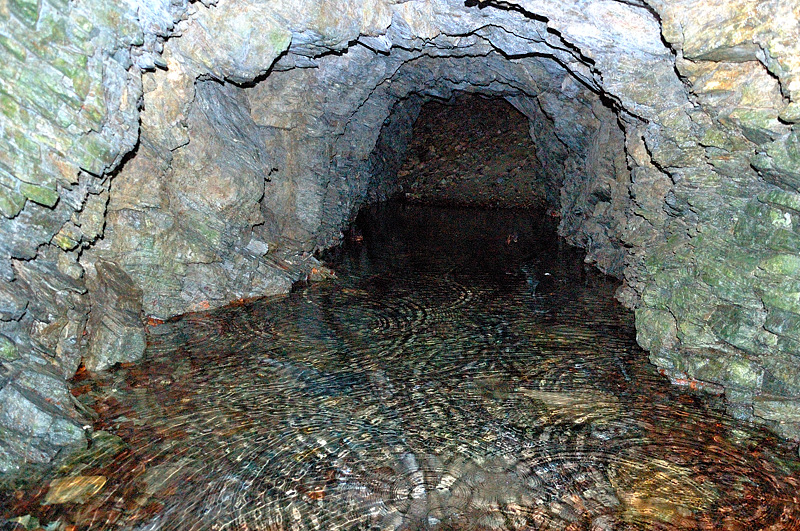
When exposed to oxygen and water, pyrite oxidizes to release dissolved iron and sulfuric acid. This process is central to the environmental issue known as acid mine drainage, which can mobilize heavy metals and lower pH in affected waters. Management of mine wastes, tailings, and disturbed soils requires careful control of pyrite oxidation to protect water quality and ecosystems.
Distinguishing pyrite from similar minerals
Although pyrite resembles gold to the eye, it differs in hardness, streak, and brittleness: gold is softer, malleable, and leaves a yellow streak, whereas pyrite is brittle and leaves a dark streak. Minerals with similar appearance include chalcopyrite and other copper sulfides; chalcopyrite often has a more golden brass color and softer feel. Marcasite shares the same chemical composition but has a different crystal structure and habit. For identification, visual inspection combined with simple tests (streak, hardness) is usually sufficient.
Cultural and historical notes
Pyrite has long featured in jewelry and ornamentation when polished, and collectors prize well-formed crystals for their geometric beauty. Its historical role in early fire-starting and in the sulfur industry links pyrite to technological developments in metallurgy and chemistry. For geology and environmental science, pyrite is a recorder of past redox conditions and an important factor in modern landscape processes.
Further reading and resources
- General mineral descriptions and identification guides: Fe (iron) and mineral data.
- Comparisons with gold and other sulfides: gold comparison.
- Information on copper-bearing sulfides often confused with pyrite: copper sulfide minerals.
Pyrite remains important across disciplines: it is a subject of mineral collection, a factor in environmental management, and a focus of research into mineral properties and industrial applications. For people working in mining, geology, or environmental science, recognizing pyrite and understanding its behavior is essential.
Questions and answers
Q: What is pyrite?
A: Pyrite is a mineral that is an iron sulfide with the chemical formula FeS2.
Q: What is the metallic feature of pyrite?
A: The metallic feature of pyrite is its luster.
Q: What is the color of pyrite?
A: Pyrite is typically brass-yellow in color, ranging from pale-to-normal.
Q: What is the nickname given to pyrite?
A: Pyrite is nicknamed fool's gold because its color and metallic lustre make it resemble gold.
Q: What other minerals can be referred to as pyrite?
A: Some other sulphides, such as copper sulphide, can also be referred to as pyrite.
Q: Why is pyrite called fool's gold?
A: Pyrite is called fool's gold because of its resemblance to gold, which can easily fool inexperienced prospectors.
Q: What is the chemical formula of pyrite?
A: The chemical formula of pyrite is FeS2, which means it consists of one iron atom and two sulfur atoms.
Related articles
Author
AlegsaOnline.com Pyrite (Fool's Gold): Properties, Formation, Uses, and Hazards Leandro Alegsa
URL: https://en.alegsaonline.com/art/80242
Sources
- books.google.com : Glossary of Geology
- books.google.com : A glossary of the mining and mineral industry
- webmineral.com : Pyrite on webmineral
- mindat.org : Pyrite on Mindat.org
- rruff.geo.arizona.edu : Handbook of Mineralogy
- books.google.com : Descriptive Minerology, 6th ed.