
Pussy Riot: Russian feminist punk protest collective
Pussy Riot is a Russian feminist punk performance collective formed in Moscow in 2011, known for masked public actions, a high-profile 2012 trial, international solidarity campaigns and debate over free expression.
Overview
Pussy Riot is a Russian feminist punk performance collective formed in Moscow in 2011. The group stages short, theatrical actions in public spaces that mix music, slogans and visual theatre to call attention to issues such as gender equality, political repression and the relationship between church and state. Participants frequently present themselves as a collective rather than as a fixed band, using anonymity and costume to emphasize group identity and to protect members.
Image gallery
8 Images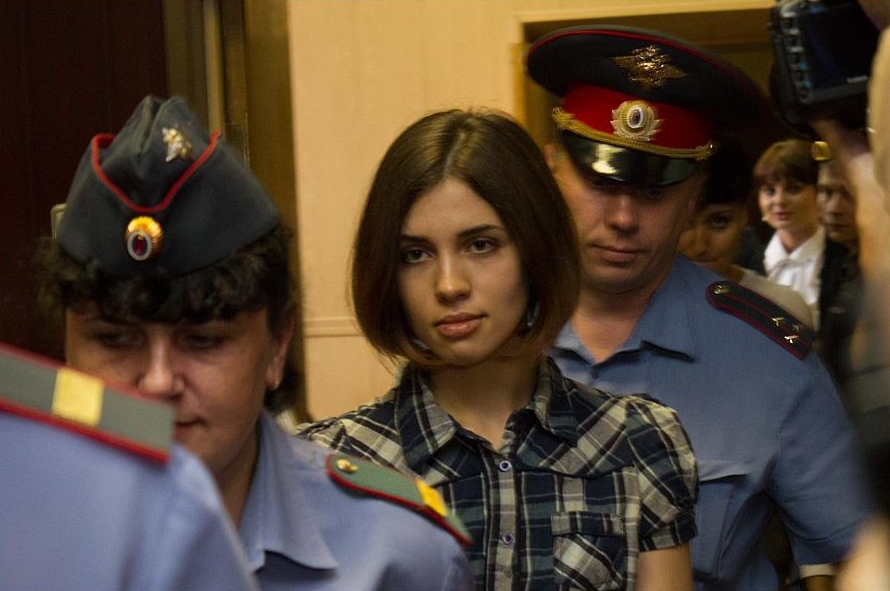




Origins and early activity
The collective emerged from Moscow’s informal activist and art scenes and drew on punk aesthetics, DIY performance and feminist politics. Early actions were spontaneous, mobile and deliberately provocative, intended to attract media attention and to circulate via social media. Commentators and supporters have described Pussy Riot both as a punk project and as a protest collective rooted in activist art. The group’s formation and many of its actions took place in and around Moscow, where public demonstrations and art interventions contrast sharply with official public space regulation.
Style and methods
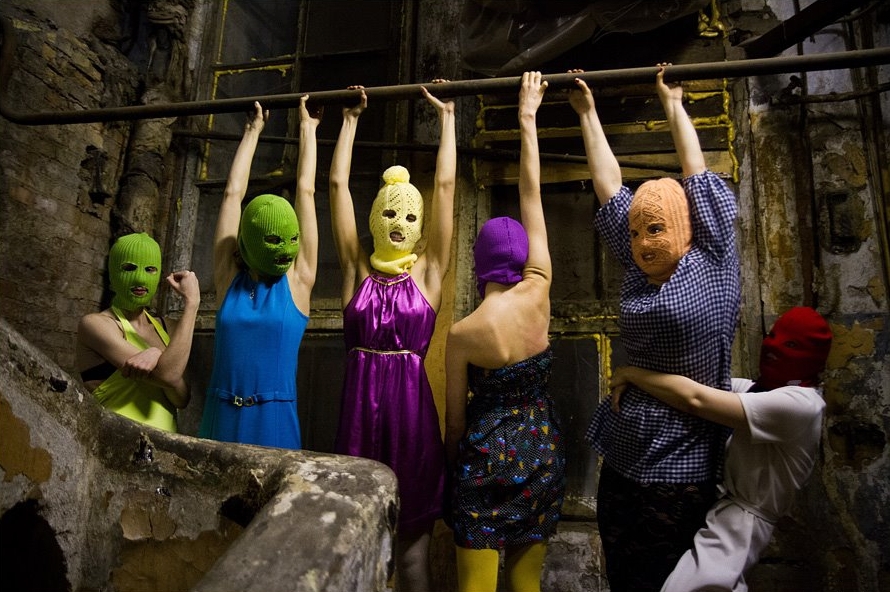
Pussy Riot’s performances are typically brief and highly visible. Participants often wear brightly colored balaclavas, sing or chant improvised songs, and perform in unexpected settings such as public squares, transportation nodes or cultural institutions. Their method mixes performance art, guerrilla theatre and protest tactics with an emphasis on rapid documentation and online distribution. This visual and performative strategy is intended both to provoke public debate and to protect the group through collective anonymity.
2012 cathedral protest and legal case
The collective gained global attention after a February 2012 performance inside the Cathedral of Christ the Saviour in central Moscow, an action participants called a "punk prayer" protesting the close ties between the Russian Orthodox Church and political authorities. Three women—Yekaterina Samutsevich, Nadezhda Tolokonnikova and Maria Alyokhina—were arrested and later convicted on charges that many observers described as hooliganism motivated by religious offence. The case raised questions about freedom of expression, criminal law and the influence of religion on public policy. Coverage and legal records often reference the cathedral setting and subsequent imprisonment and appeals.
Appeals, releases and continued activism
Responses to the trial included domestic and international protests, petitions and legal appeals. One of the defendants, Yekaterina Samutsevich, was released after a successful appeal; Nadezhda Tolokonnikova and Maria Alyokhina served custodial terms and were later released under different arrangements. The appeals and rulings attracted attention from human-rights organisations and foreign commentators who questioned whether the punishments were proportionate. Legal and political observers traced the appeals process and its implications for public protest and criminal justice in Russia in subsequent analyses; for procedural details see references to the appeal process.
International reaction and support
The trial produced a wide international response. Solidarity events, benefit concerts and public statements by artists, activists and organisations highlighted concerns about free expression and political repression. Prominent cultural figures publicly supported the prisoners, drawing further attention to the case; public endorsements and campaigns included statements by international artists and human-rights groups. At the same time, some domestic audiences criticised the performances as offensive to religious sensibilities, illustrating a sharp split in public opinion.
Internal debates and collective identity
The collective has remained fluid in membership and approach. After the legal cases, internal debates surfaced about strategy, publicity and anonymity: some members argued for continued public visibility, while others emphasized the protective value of masking and group anonymity. Disagreements over media appearances and personal profiles prompted discussion about whether public exposure of individual faces undermined the group’s collective identity. These tensions illustrate broader challenges faced by activist collectives that operate at the intersection of art and politics.
Legacy and significance
Pussy Riot is widely regarded as a symbol of contemporary protest art and a focus for debates about civil liberties in Russia. Their actions prompted legal, cultural and political questions about blasphemy, freedom of assembly and the limits of dissent. Supporters see their interventions as important political speech; critics view some actions as deliberately provocative. Regardless of perspective, the group shaped international awareness of dissent in Russia and influenced similar forms of politically engaged performance elsewhere. Analyses of their impact often discuss how their tactics intersect with feminist activism, artistic strategies of resistance and critique of political leadership.
- Notable participants: Yekaterina Samutsevich, Nadezhda Tolokonnikova, Maria Alyokhina.
- Methods: short public performances, masked anonymity, music and chants.
- Themes: gender equality, political freedom, church–state relations and prisoner advocacy.
For background on early formation and activism see discussion of the group’s supporters and framing as a self-described collective. For broader context consult human-rights commentary and arts criticism that trace reactions to the imprisonment, international solidarity campaigns and continuing debate over protest, religion and state authority. Additional reporting and analysis often revisit the original Moscow incident and the cathedral setting to understand legal outcomes and cultural impact.
Questions and answers
Q: Who is Pussy Riot?
A: Pussy Riot is a feminist punk rock protest group of eleven women from Russia.
Q: When was Pussy Riot formed?
A: Pussy Riot was formed in Moscow in August 2011.
Q: Why were three members of Pussy Riot put in prison?
A: Three members of Pussy Riot were put in prison for a protest they did at a cathedral in Moscow against Vladimir Putin.
Q: Who was let out of prison in September 2012 and why?
A: Yekaterina Samutsevich was let out of prison in September 2012 after her appeal succeeded.
Q: Were there protests around the world against the imprisonment of Pussy Riot members?
A: Yes, there were protests around the world by people who thought that it was wrong for Pussy Riot members to be put in prison.
Q: Who advocated for the release of Pussy Riot members?
A: Lots of famous people said that Pussy Riot members should be released, including Madonna.
Q: Who was let out of prison on December 23, 2013 and were they still considered a member of Pussy Riot?
A: Tolokonnikova and Alyokhina were let out of prison on December 23, 2013. Other members declared that they could not be Pussy Riot members because they showed their faces on US television.
Related articles
Author
AlegsaOnline.com Pussy Riot: Russian feminist punk protest collective Leandro Alegsa
URL: https://en.alegsaonline.com/art/80164
Sources
- news.com.au : Madonna asks for leniency for Pussy Riot
- independent.co.uk : Pussy Riot duo sacked by bandmates after us tv appearance