
Purple Mountain (Zijin Shan) — scenic and historic mountain in Nanjing
Purple Mountain (Zijin Shan) is a 449 m hill in Xuanwu District, Nanjing, China, known for its cultural monuments, observatory, museums and protected natural areas and a major local landmark.
Overview
Purple Mountain, locally called Zijin Shan, is a prominent wooded peak rising within Xuanwu District of Nanjing, China. The mountain itself is described on many maps and guides as a singular feature (location) in the cityscape and reaches approximately 448.9 meters above sea level. It functions both as a natural reserve and an ensemble of historic and commemorative sites, making it one of the most visited urban mountains in eastern China.
Image gallery
2 Images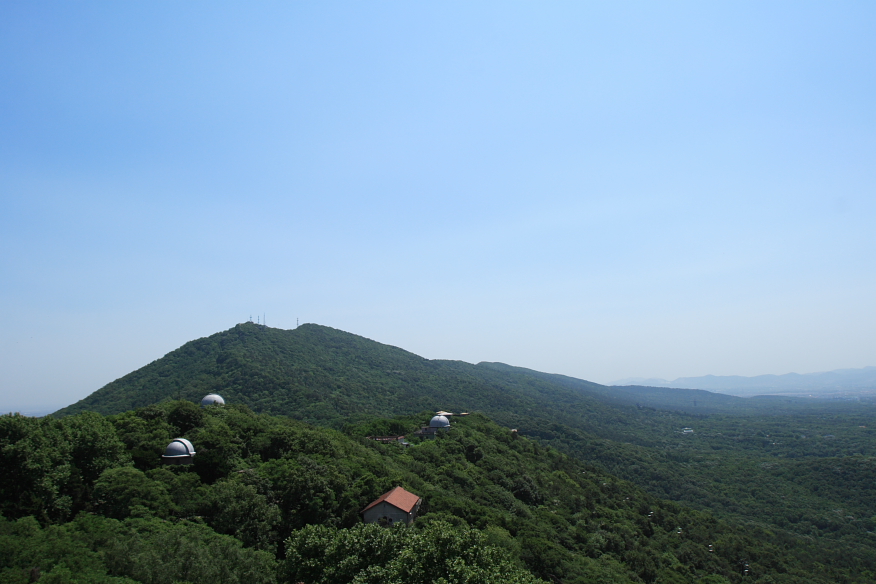
Characteristics and landscape
Purple Mountain is characterized by mixed broadleaf and coniferous woodlands, valleys and trails that have been cultivated for public access. The slopes host gardens, stone steps and viewing platforms that afford panoramic views of Nanjing. Administratively and culturally it is often grouped among the so-called Four Famous Mountains South of the Yangtze River. It has also been recognized in modern planning as a national-level ecological demonstration and cultural preservation area, reflecting efforts to balance tourism with conservation.
Historic and cultural sites
Beyond natural scenery, Purple Mountain contains several important monuments. The site of the Sun Yat-sen Mausoleum, the Ming Xiaoling Mausoleum and the Linggu Temple complex are all widely known landmarks located on or near the mountain. Scientific and cultural institutions include the Purple Mountain Observatory on higher ground and the Nanjing Museum immediately to the south. Together these places create a compact cultural landscape where history, commemoration and research coexist.
Uses and significance
Purple Mountain serves multiple roles: a recreational green space for city residents, a setting for pilgrimage and state ceremonies, and an open-air classroom for history and natural science. Hiking paths and scenic drives attract amateur walkers and photographers, while scholars and tourists visit mausoleums and temples to study architecture and modern Chinese history. The mountain’s combination of living forest and cultural relics makes it a frequent subject of local tourism promotion and academic study.
Visitor information and notable facts
- Access: trails, paths and roads connect the mountain to central Nanjing; local transit and parking are available near major sites.
- Conservation: management emphasizes both visitor amenities and protection of slopes, archaeological remains and vegetation.
- Recognition: its inclusion among famous regional peaks and its national demonstration titles underline its dual importance for culture and ecology.
- Nearby institutions: the observatory and museum contribute to an educational corridor at the mountain’s base and summit.
For practical planning, detailed maps and schedules are provided by local tourist authorities and cultural bureaus; digital and printed guides often cite the mountain’s elevation and list its principal attractions. Purple Mountain remains one of Nanjing’s defining geographic and cultural features, where natural scenery and layers of Chinese history intersect.
Questions and answers
Q: Where is Purple Mountain located?
A: Purple Mountain is located in Xuanwu District in Nanjing, China.
Q: How high is Purple Mountain?
A: Purple Mountain is 448.9 meters or 1,472 feet high.
Q: What is Purple Mountain known for?
A: Purple Mountain is known for being a scenic spot and historic site in Nanjing. It is also one of the Four Famous Mountains South of the Yangtze River and a national ecological and cultural demonstration site.
Q: What is located on Purple Mountain?
A: Purple Mountain Observatory is located on the mountain.
Q: What is located just to the south of Purple Mountain?
A: Nanjing Museum is located just to the south of Purple Mountain.
Q: What is the significance of Purple Mountain?
A: Purple Mountain is significant for its cultural and ecological importance, being one of the Four Famous Mountains South of the Yangtze River in addition to its national ecological and cultural demonstration site status.
Q: Why does Purple Mountain need to be explained?
A: The text implies that the significance or importance of Purple Mountain as a national ecological and cultural demonstration site may need further explanation or elaboration.
Related articles
Author
AlegsaOnline.com Purple Mountain (Zijin Shan) — scenic and historic mountain in Nanjing Leandro Alegsa
URL: https://en.alegsaonline.com/art/80147