
Punt (boat)
A punt is a flat‑bottomed boat propelled by pushing a pole against the bed of shallow rivers. Historically a workboat, today it is best known for leisure use and racing on English rivers.
A punt is a shallow, flat‑bottomed boat with a squared bow and stern designed to operate in shallow water. It is driven by a person standing in the boat (the punter) who pushes a long pole against the riverbed to propel and steer the craft, a practice known as punting. The basic form prioritizes stability and a minimal draft so the boat can move where deeper hulls cannot. flat boat and broad front are common descriptive terms.
Image gallery
10 Images

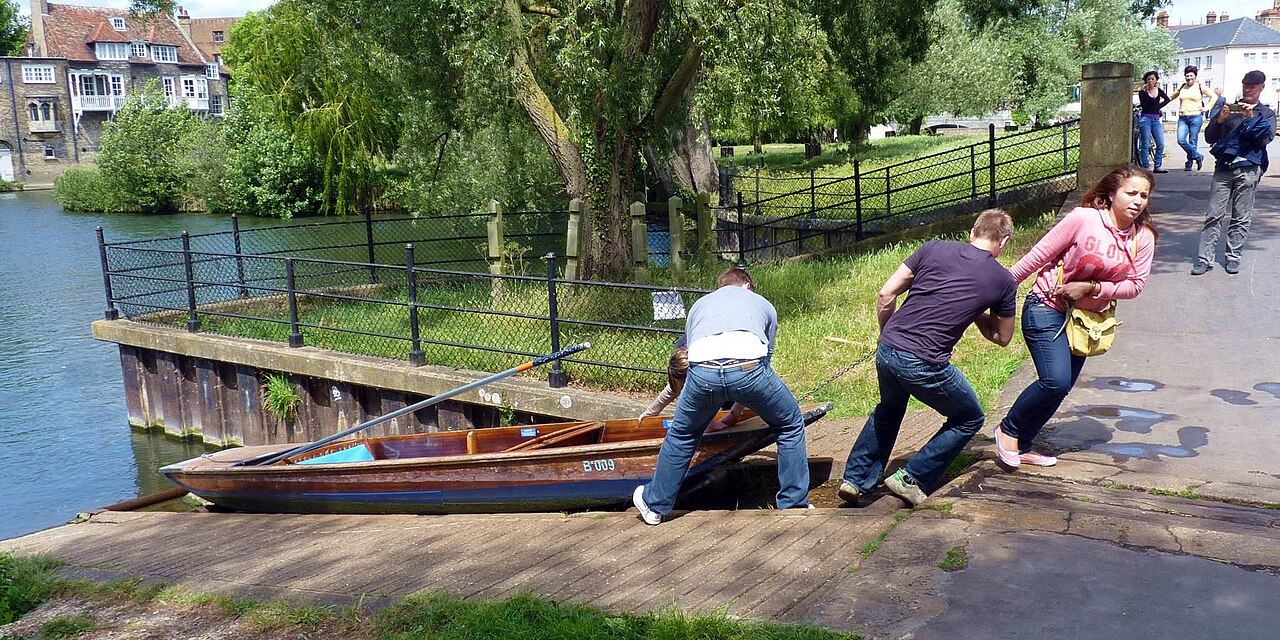


Design and components
Punts are usually open boats with a wide, flat floor and simple transoms. Traditional punts are constructed from timber, but modern versions may use lightweight materials such as aluminium or fiberglass. Typical parts include:
- the hull — a flat base with low sides for shallow water use;
- the pole — a straight staff, often made of ash, carbon or aluminum, used for propulsion and steering;
- seating or benches for passengers, sometimes with a raised platform for the punter;
- trim and fittings such as grab rails and non‑slip surfaces.
History and development
Punts originated as practical workboats on slow, shallow waterways. They were used for carrying goods, shooting from a stable platform and for fishing because their low draft allowed access close to banks and in marshy areas. Over time the simple cargo or utility punt evolved into purpose‑built craft for leisure. Many of the surviving traditions and craft styles have regional roots in Europe.
Uses, culture and sport
In modern times punting is often recreational. Sightseeing trips, private leisure outings and guided tours use punts on rivers and canals. Punting is especially associated with university towns such as university centres — notably Oxford and Cambridge in England — where it is a tourist attraction and part of student life. Punts are also used in competitive events and summer regattas, particularly on the Thames and other English rivers.
Variations and notable facts
There are several local and functional variants of the punt: some are narrow and built for speed while others are broad and designed to carry many passengers. Because propulsion relies on pushing the pole to the bed, punts require shallow sandy or silty bottoms and are less useful where the riverbed is rocky or very deep. Their simplicity has helped the punt remain a distinctive and enduring craft in regions where shallow inland waterways are common.
Although often thought of as a historic or picturesque boat, punts remain practical for certain working tasks and continue to be built and maintained by specialist craftsmen. For general information on shallow‑water craft and traditional riverboats see related resources: rivers, cargo craft, and recreational fishing and shooting platforms.
Questions and answers
Q: What is a punt?
A: A punt is a flat boat with a broad front designed for use in small rivers or other shallow water.
Q: What is punting?
A: Punting means boating in a punt. The punter pushes a pole against the river bed and this gives the punt a way to move.
Q: What were punts originally built for?
A: Punts were originally built as cargo boats or platforms. They were for shooting at birds and fishing.
Q: Where are punts mostly used for pleasure trips?
A: Punts are mostly used for pleasure trips on the rivers in the university towns of Oxford and Cambridge in England.
Q: Are there any races held on the Thames?
A: Yes, there are races held on the Thames during summer regattas.
Q: What is the purpose of pushing a pole against the river bed?
A: The purpose of pushing a pole against the river bed is to give the punt a way to move.
Q: What is the design of a punt?
A: A punt is designed with a flat bottom and a broad front.
Author
AlegsaOnline.com Punt (boat) Leandro Alegsa
URL: https://en.alegsaonline.com/art/80088