
Pulilan (Bulacan, Philippines)
Pulilan is a municipality in Bulacan province, Philippines, best known for its annual Carabao Festival. It lies northwest of Manila and had a population of about 97,323 in the 2015 census.
Overview
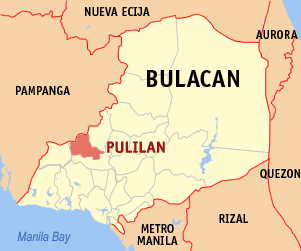
Pulilan is a town formally organized as a municipality in the central plains of the province of Bulacan, in the Philippines. It is situated roughly 50 kilometres northwest of Manila and occupies a position in the west‑central portion of the province. The municipality combines a largely agricultural landscape with expanding residential and small commercial areas.
Image gallery
10 Images




Geography and boundaries
Pulilan sits on low, fertile plains that have long supported rice cultivation and other crops. It is bordered by several municipalities and towns: Apalit in Pampanga to the northwest, Baliuag to the north, Plaridel to the south, and Calumpit to the west. Rivers and irrigation canals cross the area and have shaped both farming patterns and settlement locations.
Population and administration
According to the national population count, the 2015 census recorded about 97,323 residents in Pulilan. The municipality is administratively subdivided into local communities that handle day‑to‑day governance, public services and barangay‑level affairs. Like many towns in the region, Pulilan has seen gradual population growth and peri‑urban development related to its proximity to Metro Manila.
History and cultural heritage
Pulilan has roots in the Spanish colonial era when parishes and towns in the central plains were established around agriculture and church communities. The town’s religious life centers on the parish dedicated to San Isidro Labrador, the patron saint of farmers, whose feast is observed in mid‑May. Over time Pulilan developed cultural traditions that tie agricultural practice, community ritual and religious observance together.
Carabao Festival and local traditions
Pulilan is widely known for its annual Carabao Festival, traditionally held in May to coincide with the feast of San Isidro. During the festival, decorated carabaos — the local carabao (water buffalo) used in plowing and transport — are paraded through the streets. A distinctive moment of the celebration is when the animals are led to kneel before the parish church as a symbolic act of blessing and thanksgiving. The event draws visitors, photographers and cultural observers interested in folk festivities and rural lifeways.
Economy and contemporary life
While agriculture remains important—especially rice, vegetable crops and some livestock—Pulilan’s economy also includes retail, services and small‑scale manufacturing. Its location near major transport routes has encouraged commuting and the spread of residential subdivisions. Public markets, small enterprises and seasonal fairs reflect a mixed economy that balances traditional farming with modern livelihoods.
Key facts and significance
- Administrative status: municipality in Bulacan.
- Country context: part of the Philippines, close to Manila.
- Population reference: 2015 census figure of about 97,323 people.
- Cultural highlight: the annual Carabao Festival honoring San Isidro Labrador and featuring decorated carabaos.
Pulilan illustrates how a provincial town preserves agricultural traditions and local religious customs while adapting to regional development pressures. Its Carabao Festival remains a vivid expression of community identity and the continuing cultural importance of farming in the Philippine lowlands.
Questions and answers
Q: What is Pulilan?
A: Pulilan is a municipality or a town in the province of Bulacan, Philippines.
Q: Where is Pulilan located?
A: Pulilan is located at the west-central part of the province of Bulacan, Philippines, and lies 50 kilometers northwest of Manila.
Q: Which settlements surround Pulilan?
A: Pulilan is surrounded by the settlements of Apalit in Pampanga, Baliuag in the north, Plaridel in the south, and Calumpit in the west.
Q: How many people live in Pulilan based on the 2015 Philippine national census?
A: According to the 2015 national census of the Philippines, Pulilan has 97,323 people.
Q: What is the Carabao Festival?
A: The Carabao Festival is a once-a-year festival that happens in May in Pulilan, Philippines. It is famous for having carabaos walked together on the streets and kneel as they pass in front of San Isidro Labrador Parish Church, in honor of Saint Isidore the Laborer, the town's patron saint.
Q: What is a carabao?
A: A carabao is a kind of water buffalo found in the Philippines.
Q: Who is the patron saint of Pulilan?
A: The patron saint of Pulilan is Saint Isidore the Laborer.
Related articles
Author
AlegsaOnline.com Pulilan (Bulacan, Philippines) Leandro Alegsa
URL: https://en.alegsaonline.com/art/80010
Sources
- comelec.gov.ph : "Official City/Municipal 2013 Election Results"
- nap.psa.gov.ph : "Province: BULACAN"
- psa.gov.ph : "Region III (Central Luzon)"