
Publius Ovidius Naso (Ovid) — Roman poet of love, myth and exile
Publius Ovidius Naso (Ovid), born 43 BC in Sulmo, was a leading Roman poet whose works—Metamorphoses, Amores, Ars Amatoria and exile poems—shaped classical and later European literature.
Overview
Publius Ovidius Naso, commonly called Ovid in the English-speaking tradition, was an Ancient Roman poet born on 20 March 43 BC in Sulmo (modern Sulmona). He likely died in AD 17 or 18 in Tomis, the Black Sea town now known as Constanţa. Ovid is usually ranked with Virgil and Horace among the principal figures of Latin poetry and is celebrated for the variety and virtuosity of his verse.
Image gallery
10 Images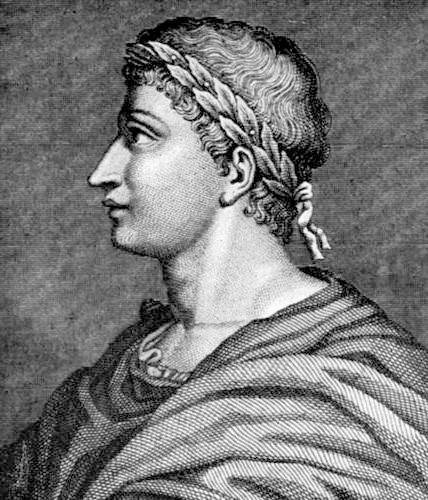


Major works and themes
Ovid wrote in a range of metres and genres, blending elegiac love poetry, didactic instruction and mythological narrative. His most famous work, the Metamorphoses, is a long narrative poem that retells a wide series of myths about transformation; he also composed elegies such as the Amores, the didactic Ars Amatoria, and the calendar-poem Fasti. After his exile he produced the Tristia and the Epistulae ex Ponto, poems marked by longing and pleas for clemency.
Characteristics and style
Ovid's style is noted for its polished diction, playful wit, and narrative inventiveness. He often uses rhetorical devices and dramatic monologue to give voice to mythic characters and lovers, and he treats myth with irony as well as sympathy. His facility with verses allowed him to move between light erotic elegy and sustained epic-like storytelling.
Life and exile
Ovid flourished during the Augustan age but was abruptly sent into exile in AD 8 by the emperor Augustus. The reasons are uncertain; Ovid himself cited a mysterious "carmen et error" (a poem and an error). His banishment to Tomis deeply affected his later output and reputation: the exile poems document his isolation and appeals to return.
Reception and influence
Ovid was enormously influential across centuries. He was one of the most read classical authors in medieval Europe and remained central to the Renaissance. Artists, dramatists and poets have drawn on his myths, and his narrative techniques helped shape later storytelling. His place in literature rests on both technical skill and the enduring appeal of his themes.
Selected works
- Metamorphoses — epic collection of transformation myths
- Amores — elegiac love poems
- Ars Amatoria — didactic, controversial manual of love
- Fasti, Heroides, Tristia, Epistulae ex Ponto — calendar, epistolary and exile poems
For further introductory materials and translations one can consult standard classical collections and modern commentaries; these have kept Ovid's voice alive in many languages and artistic forms. See also discussions of his relationship to contemporary poets and the Augustan regime for context on his life and works.
Ovid (English tradition) • Ancient Rome • Poetry • Tomis/Constanţa • Virgil • Horace • Latin language • Literary history • Verse technique • Medieval reception • Renaissance reception
Questions and answers
Q: Who was Publius Ovidius Naso?
A: Publius Ovidius Naso was an Ancient Roman poet.
Q: What is he better known as in the English-speaking world?
A: He is better known as Ovid in the English-speaking world.
Q: When was he born and where?
A: He was born on March 20, 43 BC in Sulmona, then called Sulmo.
Q: Do people know when he died?
A: People today do not know when he died, but it was probably either 17 AD or 18 AD.
Q: Where did he die?
A: He died in Tomis, which is modern-day Constanţa in Romania.
Q: With whom is Ovid considered among the three great poets of Latin literature?
A: Ovid is considered among the three great poets of Latin literature with Virgil and Horace.
Q: What was Ovid's preferred style of writing?
A: Ovid usually wrote in verses.
Related articles
Author
AlegsaOnline.com Publius Ovidius Naso (Ovid) — Roman poet of love, myth and exile Leandro Alegsa
URL: https://en.alegsaonline.com/art/79923
Sources
- wikidata.org : wikidata.org/wiki/Q7198
- authority.bibsys.no : 90051069
- catalogo.bne.es : XX1135076
- catalogue.bnf.fr : cb119183166
- data.bnf.fr : (data)
- cantic.bnc.cat : a10133379
- d-nb.info : 118590995
- isni.org : 0000 0001 2142 7757
- id.loc.gov : n79041738
- kopkatalogs.lv : 000004701
- musicbrainz.org : 4f7c6dc7-fac9-48de-98cc-47498debcdaa
- id.ndl.go.jp : 00451944
- aleph.nkp.cz : jn19981001925
- nla.gov.au : 35403763
- uli.nli.org.il : 000102395