
Pteropoda: pelagic gastropods known as sea butterflies and sea angels
Pteropods are small, free-swimming marine gastropods—often transparent—grouped as sea butterflies (shelled) and sea angels (shell-less); they play key roles in open-ocean food webs and are sensitive to ocean change.
Pteropoda are a group of free-swimming pelagic gastropods commonly called sea butterflies and sea angels. These delicate organisms live in the open ocean rather than on the seafloor and are often small, mostly transparent, and winged by paired flaps (parapodia) that they use to swim. The names sea snails and sea slugs are sometimes applied to pteropods in general usage, though those terms also refer to other marine gastropod groups.
Image gallery
3 Images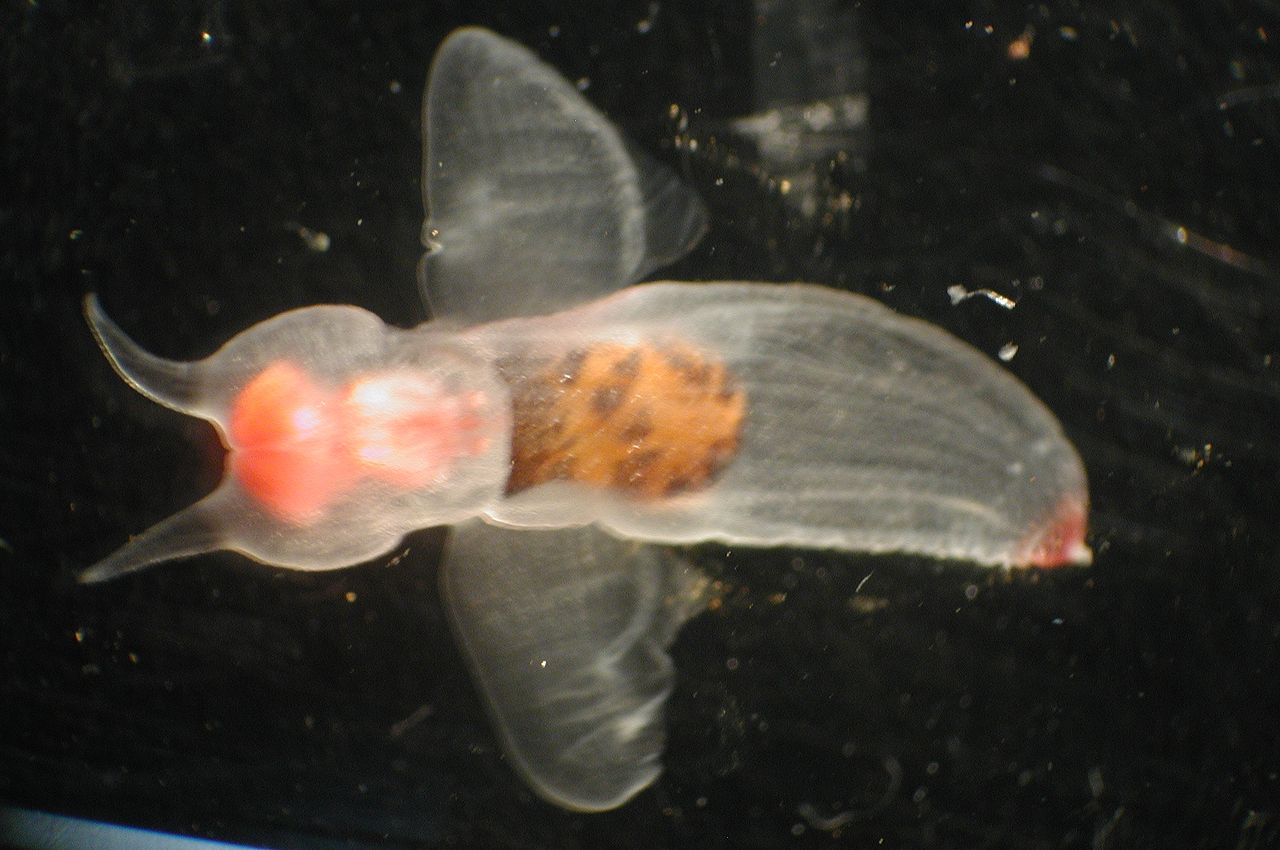


Distinctive characteristics
Pteropods are adapted to a pelagic lifestyle. Most species are minute and lightly built; many have a thin external shell while others are shell-less. They propel themselves with rhythmic movements of wing-like parapodia and frequently have buoyancy adaptations such as gas-filled tissues or light skeletons. Their transparency and slow, fluttering motion make them distinctive components of the open-water microfauna.
Classification and diversity
Traditionally pteropods are divided into two major clades: the Thecosomata (commonly called sea butterflies) which possess an external shell, and the Gymnosomata (sea angels), which lack a shell and are often more active predators. The evolutionary relationship of these two clades has been debated; molecular studies provide evidence that pteropods form a natural group, but some details of their ancestry and internal branching remain active topics of research. Scientific discussion of monophyly and sister-group relationships continues in the literature (monophyly, sister taxa).
Ecology and feeding
Pteropods occupy pelagic zones from surface waters to mid-depths and are important links in marine food webs. Many Thecosomata are suspension feeders, using mucous webs to capture phytoplankton and small particles, while many Gymnosomata are carnivorous and prey on other pteropods. Their abundance and nutritional content make them prey for fish, birds, and larger planktonic predators.
Life cycle and behavior
Life histories vary among species but generally include planktonic eggs and larvae that develop directly into adult-like forms. Reproduction is sexual, and some species show seasonal population blooms tied to productivity cycles. Behaviorally, pteropods show swimming patterns and vertical movements that influence their distribution and exposure to predators and environmental change.
Importance, threats, and research
Pteropods are ecologically important as grazers and prey and are used as indicators in studies of ocean health. Because many thecosomes build shells of aragonite, they are sensitive to ocean acidification and warming; weakened calcification and shell dissolution have been observed under low-pH conditions, raising concerns about cascading effects in food webs. Researchers monitor pteropod populations to assess broader impacts of climate change and chemical shifts in seawater (marine studies).
Notable distinctions and further reading
Pteropods are often confused with benthic gastropods because both groups include shelled and shell-less forms; however, the pelagic habit, wing-like parapodia, and fragile body plan set pteropods apart from bottom-dwelling nudibranchs and other sea slugs. For general interest and taxonomic updates see accessible resources and reviews. Useful entry points include summaries of marine pelagic fauna (adaptation), taxonomic databases and conservation assessments (sea slugs, sea snails, sister taxa), and dedicated pteropod research projects (monophyly, marine).
Questions and answers
Q: What are Pteropods?
A: Pteropods are free-swimming pelagic sea snails and sea slugs. They are marine opisthobranch gastropods.
Q: Are they considered a natural group?
A: The monophyly of Pteropoda is the subject of debate.
Q: Is Pteropoda monophyletic according to molecular studies?
A: Yes, by molecular studies, the group is monophyletic.
Q: How many clades does Pteropoda have and what are they called?
A: Pteropoda has two clades: Thecosomata, the sea butterflies, and Gymnosomata, the sea angels.
Q: Do the two clades of Pteropoda have shells?
A: The Thecosomata have a shell, while the Gymnosomata ("naked body") do not.
Q: Are the two clades of Pteropoda sister taxa?
A: The two clades may or may not be sister taxa. If not, their similarity may reflect adaptation to their particular lifestyle.
Q: How do Pteropods swim, and what is their size and appearance?
A: Pteropods are pelagic, small, and transparent, and they swim using wing-like flaps (parapodia) which protrude from their bodies.
Related articles
Author
AlegsaOnline.com Pteropoda: pelagic gastropods known as sea butterflies and sea angels Leandro Alegsa
URL: https://en.alegsaonline.com/art/79882
Sources
- doi.org : 10.1111/j.1439-0469.2006.00351.x