
Pterodaustro — the Filter-Feeding Cretaceous Pterosaur
Pterodaustro is a distinctive Lower Cretaceous pterosaur from South America known for its fine, comb-like teeth and likely filter-feeding lifestyle, with adults reaching about a two-metre wingspan.
Overview
Pterodaustro is a genus of pterosaur known from Lower Cretaceous deposits in South America. Unlike many pterosaurs that were predators or fish-eaters, Pterodaustro shows anatomical specializations consistent with a filter-feeding diet, using dense, bristle-like teeth to strain small aquatic organisms from the water. It is a well-studied example of ecological specialization among flying reptiles and provides insight into the diversity of pterosaur feeding strategies.
Image gallery
10 Images


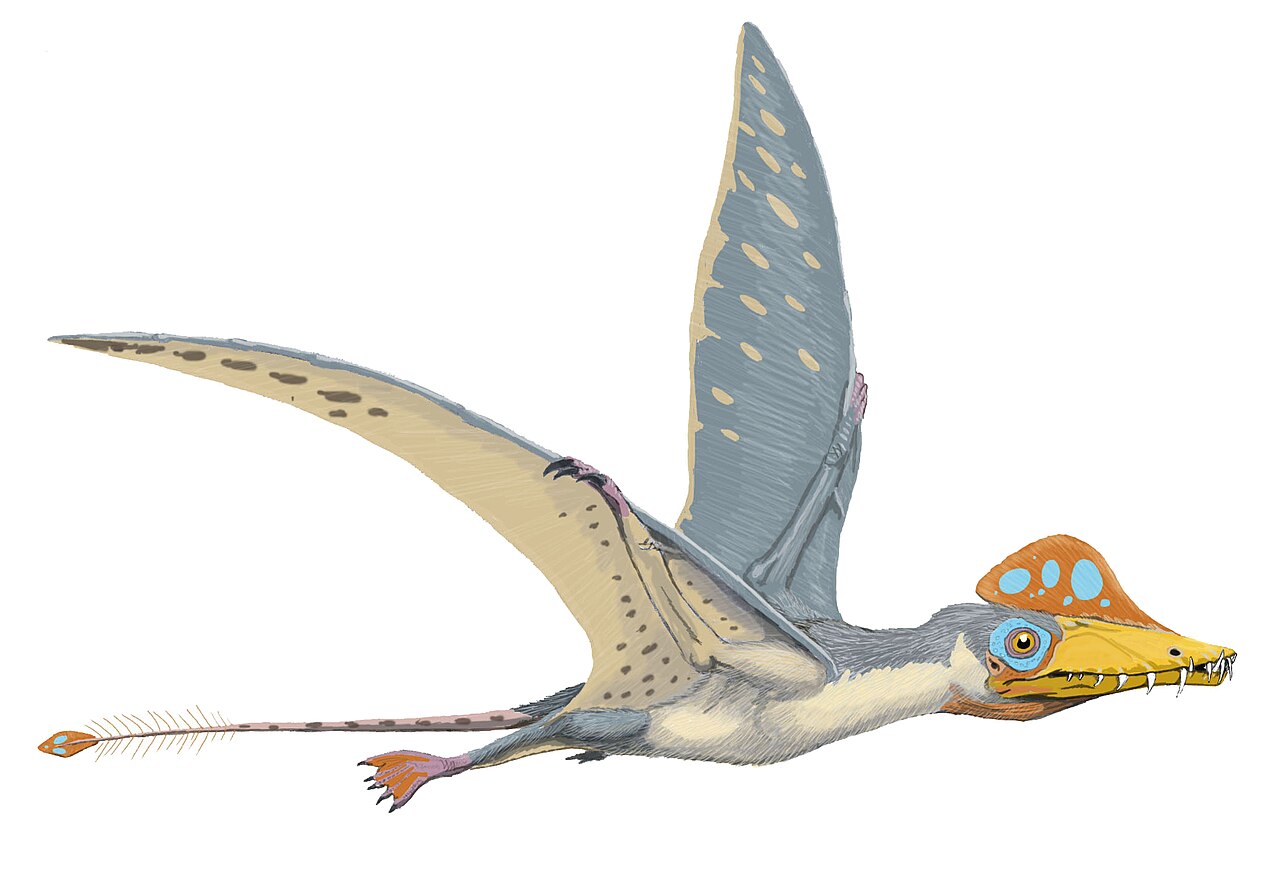

Anatomy and feeding
The skull of Pterodaustro is long and narrow with an elongated lower jaw lined with hundreds of closely spaced, slender teeth that form a comb-like structure. These teeth were not used for biting large prey but for sieving tiny organisms such as zooplankton and small crustaceans. The body plan includes a proportionally long neck and wings suitable for sustained flight; adult wingspan estimates are commonly around two metres (wingspan). This combination of features suggests a lifestyle similar in some ways to modern filter-feeding birds, although its feeding mechanics were unique among pterosaurs.
Fossils, distribution and age
Fossils of Pterodaustro have been recovered from Lower Cretaceous strata in South America, especially Argentina, where many well-preserved specimens have been collected. These deposits preserve multiple individuals across a range of sizes, providing a growth series that helps paleontologists study development and life history. The species lived during the Early Cretaceous period (Lower Cretaceous), when shallow lakes and coastal environments would have supplied abundant small prey for filter feeders.
Behavior and paleobiology
Evidence from numerous skeletons suggests that Pterodaustro might have lived in colonies near lakes or inland lagoons, where it could feed efficiently on dense patches of plankton. Juvenile and adult specimens indicate rapid growth and a life history typical of many flying vertebrates. Some fossil material has preserved stomach contents or associated trace elements consistent with a diet of small aquatic organisms, reinforcing interpretations based on tooth morphology.
Notable features and scientific importance
- Unique comb-like dentition adapted for filter feeding.
- Good fossil record showing ontogenetic stages and population samples.
- Helps demonstrate ecological diversity among pterosaurs beyond piscivory and insectivory.
Pterodaustro stands out among pterosaurs for its extreme dental specialization and as a clear example of convergent evolution with modern filter-feeding animals. Its fossils continue to inform research into pterosaur ecology, development and the range of feeding strategies exploited by Mesozoic flying reptiles. For general context, it is classified as a pterosaur from South American formations rather than being restricted to any single country; older sources sometimes list different localities, including references to Brazil, but the strongest records come from Argentina. For further reading on geological context and similar finds consult resources covering the Lower Cretaceous and regional paleontology collections.
Questions and answers
Q: What is Pterodaustro?
A: Pterodaustro is a type of pterosaur.
Q: Where is Pterodaustro found?
A: Pterodaustro is found in the Lower Cretaceous of South America.
Q: What did Pterodaustro most likely feed on?
A: Pterodaustro most likely fed on tiny invertebrates such as zooplankton and krill.
Q: What was the size of Pterodaustro?
A: Pterodaustro was medium-sized, with an adult wing-span of about two meters.
Q: Has Pterodaustro been found anywhere other than Brazil?
A: No, Pterodaustro has only been found in Brazil.
Q: When did Pterodaustro live?
A: Pterodaustro lived during the Lower Cretaceous period.
Q: What are some other interesting facts about Pterodaustro?
A: Additional interesting facts about Pterodaustro are not given in this text.
Related articles
Author
AlegsaOnline.com Pterodaustro — the Filter-Feeding Cretaceous Pterosaur Leandro Alegsa
URL: https://en.alegsaonline.com/art/79880
Sources
- ui.adsabs.harvard.edu : 2004Natur.432..571C
- doi.org : 10.1038/432571a
- pubmed.ncbi.nlm.nih.gov : 15577899
- ui.adsabs.harvard.edu : 2011Sci...332..705S
- doi.org : 10.1126/science.1200043
- pubmed.ncbi.nlm.nih.gov : 21493820