
Province of South Carolina (British American colony, 17th–18th century)
British colony formed from Carolina: founded under Lords Proprietors, split from North Carolina, became a royal colony, economy based on rice and indigo plantations, and became a U.S. state in 1776.
Overview
The Province of South Carolina was one of the British colonies in North America that grew out of the original proprietary Colony of Carolina. Named for King Charles II of England, the territory developed a distinctive economy and society in the 17th and 18th centuries and in 1776 joined other colonies in forming the independent state of South Carolina. The colony played an important role in colonial trade, plantation agriculture, and Anglo–Native American relations in the Southeast.
Image gallery
3 Images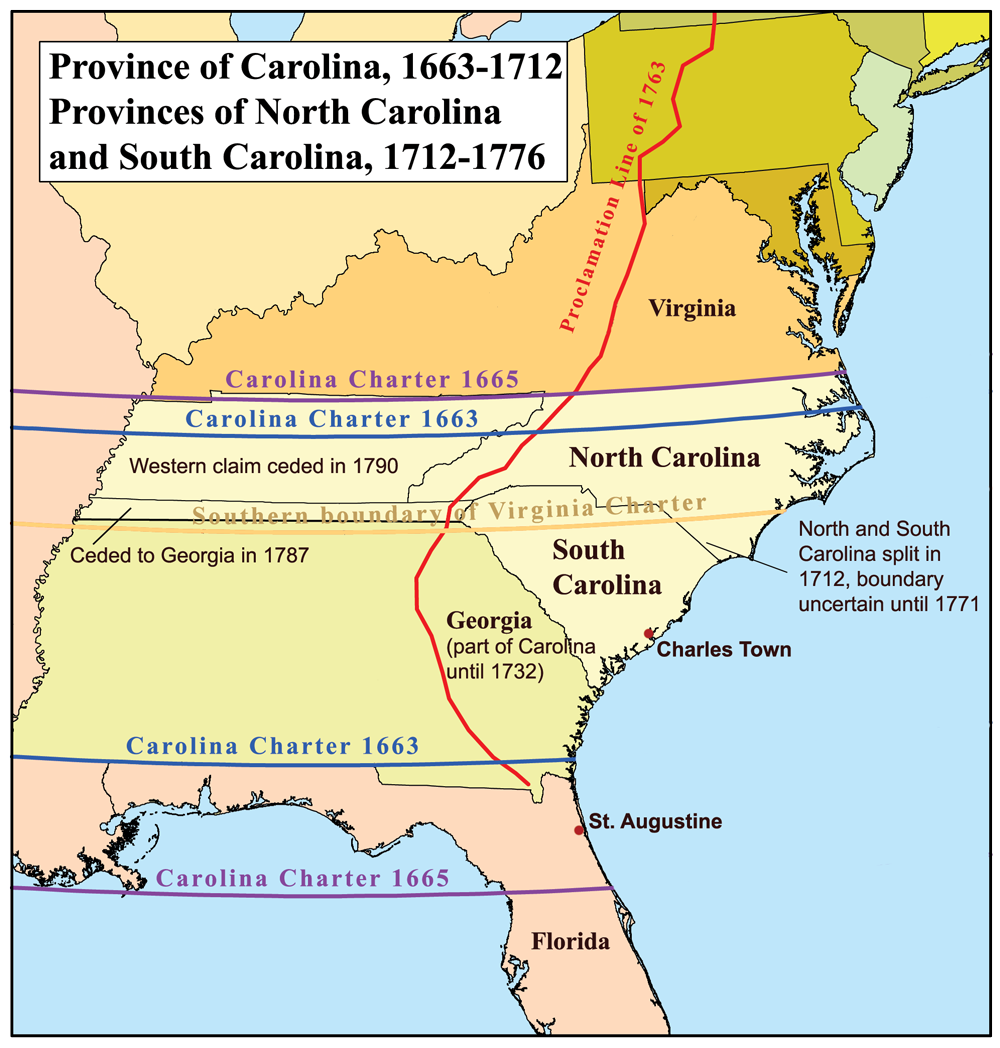

Origins and political development
The Carolina grant was issued by the English crown to a group known as the Lords Proprietors. Early plans for governance included the so-called Fundamental Constitutions, a controversial framework drafted in part by thinkers associated with the proprietors. Over time political and geographic differences between the northern and southern settlements led to an administrative division: by the early 18th century the Province of Carolina functionally split into distinct northern and southern provinces, and in 1712 the separation was formalized. Popular unrest and proprietary mismanagement eventually prompted the Crown to convert both provinces into royal colonies in 1729. For background on the larger domain see Province of Carolina, and for the monarch who gave the name, see King Charles II.
Geography, settlement, and population
Centered on the port city of Charles Town (later Charleston), the province encompassed coastal lowlands, tidal rivers, and inland frontiers. Settlers included English planters, indentured servants, European Huguenots and Scots, enslaved Africans, and a variety of Native American nations. The region’s rivers and sea access made it well suited for export agriculture: large plantations developed along waterways, while smaller settlements occupied the upland interior. The demographic mix and the colony’s reliance on enslaved labor shaped its society and politics for generations.
Economy and social structure
Plantation agriculture dominated the colony’s economy. Major commodities included rice and indigo, which were labor‑intensive and sold on international markets; later, other crops and commodities also contributed to trade. Because plantation cultivation required a large workforce, enslaved Africans and their descendants formed a central component of the province’s labor force and cultural life. Charleston emerged as a commercial and cultural hub, known for shipping, trade, and as a center of colonial administration.
Conflict, governance, and path to independence
The Province of South Carolina experienced a sequence of conflicts—local wars with Native American groups, imperial contests with Spain and France, and internal disturbances—that influenced its political trajectory. A notable crisis was the Yamasee War in the early 18th century, which significantly affected frontier settlement and relations with Indigenous nations. During the final decades before the American Revolution, royal governors such as Lord Charles Montagu (who served from 1766 to 1773) administered the colony under Crown authority. Increasing resistance to imperial policies and disputes over representation and trade led the colony’s leaders to join the movement for independence; the province’s institutions and people were reorganized into the State of South Carolina in 1776 (U.S. state, South Carolina).
Legacy and notable facts
The provincial era left enduring marks on the region’s landscape, architecture, law, and demographics. Many plantations, urban buildings, and sites connected to colonial governance survive as historic places. The Province of South Carolina illustrates broader themes in colonial North America: the transformation from proprietary to royal rule, the centrality of Atlantic commerce, the development of plantation economies dependent on enslaved labor, and the complex interactions between European settlers and Indigenous peoples. For further reading on the original Carolina grant and subsequent divisions, see Province of Carolina and related summaries of colonial governance and imperial policy.
- Founding: chartered to Lords Proprietors in the 17th century.
- Split: practical division into North and South by 1712; royal colony status by 1729.
- Economy: rice, indigo, and maritime trade centered on Charles Town.
- Transition: provincial institutions formed the basis of the later U.S. state established in 1776.
Questions and answers
Q: What was the Province of South Carolina originally a part of?
A: The Province of South Carolina was originally part of the Province of Carolina in British America.
Q: When did the Province of South Carolina become a state in the United States?
A: The Province of South Carolina became the U.S. state of South Carolina in 1776.
Q: Why were the Carolinas named as such?
A: The Carolinas were named for King Charles II of England.
Q: What was the original name of the South Carolina Colony?
A: The colony was first named "Carolana".
Q: Who did Charles II give the land of the Carolinas to?
A: Charles II had given the land to a group of eight nobles called the Lords Proprietors.
Q: When did the Carolina Province split into North Carolina and South Carolina?
A: In 1712, the Carolina Province split into the Province of North Carolina and Province of South Carolina.
Q: Who was the Royal Governor of the Province of South Carolina from 1766 to 1773?
A: Lord Charles Montagu (1741-1784) was the Royal Governor of the Province of South Carolina from 1766 to 1773.
Related articles
Author
AlegsaOnline.com Province of South Carolina (British American colony, 17th–18th century) Leandro Alegsa
URL: https://en.alegsaonline.com/art/79702
Sources
- books.google.com : The Statutes at Large of South Carolina