
Azure kingfisher (Alcedo azurea)
A small, brightly colored river kingfisher of Australia, Tasmania, New Guinea and nearby islands. Noted for its blue back, red feet, perch‑and‑dive hunting and burrow nests in creek banks.
Overview
The azure kingfisher (Alcedo azurea) is a compact river kingfisher found across parts of Australia, Tasmania, New Guinea and some nearby islands. Measuring roughly 17–19 centimetres, it is admired for the vivid blue or azure tones on its upperparts and the contrasting rufous underparts. It belongs to the family Alcedinidae, the river kingfishers, and is most often observed near sheltered bodies of water where it hunts from low perches.
Image gallery
2 Images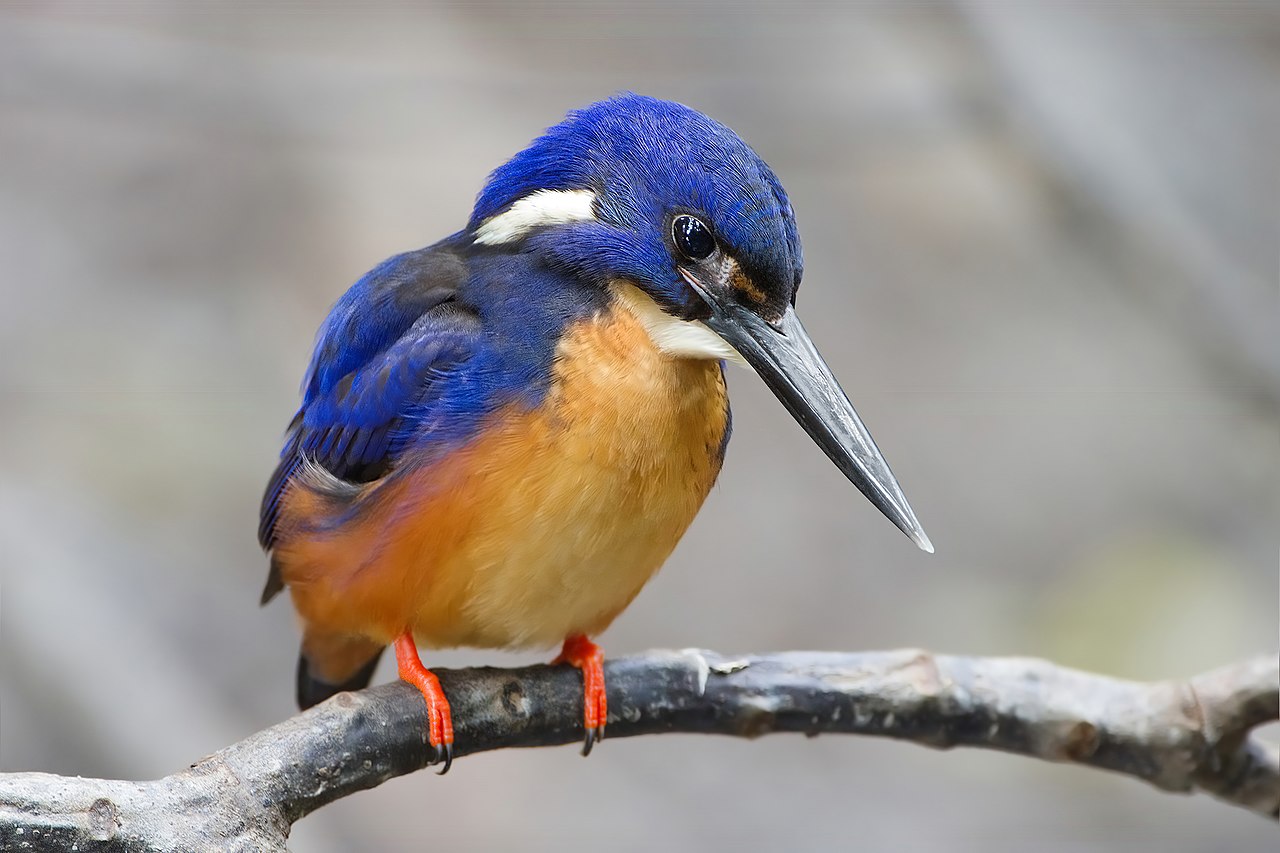

Identification and characteristics
This species is characterized by bright blue upperparts, a patterned face with pale markings between the bill and eye, and red legs and feet. The bill is long and sharp, adapted for catching aquatic prey. The bird's small size, bold coloration and rapid, darting flight make it distinctive among local waterbirds. Observers often note a thin, high-pitched call, typically rendered as "pseet-pseet."
- Size: about 17–19 cm (6.7–7.5 in).
- Plumage: azure/blue back, rufous underparts, pale throat and facial markings.
- Feet: reddish, with a reduced number of forward toes compared with many passerines.
- Voice: a high, thin whistle used in flight and territory defence.
Habitat, range and distribution
The azure kingfisher favors freshwater and sheltered coastal habitats such as slow-flowing creeks, rivers, lakes, swamps, tidal estuaries and mangroves. Its core range includes mainland Australia and Australia's island state of Tasmania, as well as New Guinea and certain islands to the north and west, extending into parts of North Maluku and nearby islands. It is most often found where clear water and overhanging perches allow it to hunt effectively.
Feeding and behavior
Like many kingfishers, the azure kingfisher employs a sit‑and‑wait strategy. It perches quietly above water, watches for movement, then dives with precision to seize prey. Its diet consists primarily of small fish, aquatic insects and crustaceans, including freshwater crayfish and other invertebrates. When emerging from a dive, it often beats its catch on a perch to subdue it before swallowing.
Breeding and life cycle
Breeding pairs excavate a horizontal burrow into a soft creek or river bank, sometimes reaching up to a metre in length, terminating in a nesting chamber. The clutch typically contains several round, white eggs; commonly reported clutch sizes are around five to seven eggs. Both parents take part in incubation and feeding of the young. Nesting sites are vulnerable to flooding, erosion and human disturbance.
Ecological role and conservation
The azure kingfisher plays a role as both predator and indicator: by feeding on small fish and aquatic invertebrates it helps regulate local food webs, and its presence often signals healthy, well‑vegetated waterways. While not among the most threatened birds in its range, populations can decline locally where riparian habitat is degraded, water quality falls or banks are destabilized. Conservation efforts that protect clean, vegetated waterways and stable nesting banks benefit this species.
Notable facts and distinctions
- Several subspecies or regional populations have been recognized in some treatments, reflecting variation in size and plumage across the species' island and continental range.
- It is more secretive and less conspicuous than some larger kingfishers, often requiring careful observation to detect.
- Typical prey items include small fish and crustaceans such as freshwater crayfish, along with aquatic insects and larvae.
For further reading on river kingfishers and regional identification, consult resources on kingfisher families, regional bird guides for Australia and Tasmania, or field studies from New Guinea and nearby islands.
Questions and answers
Q: What is the azure kingfisher?
A: The azure kingfisher is a small kingfisher in the river kingfisher family, Alcedinidae.
Q: Where does the azure kingfisher live?
A: The azure kingfisher lives in parts of Australia and Tasmania, as well as New Guinea and some nearby islands. It also lives out to North Maluku and Romang.
Q: Why is the azure kingfisher named as such?
A: The azure kingfisher is named for the azure color on its back.
Q: What color are the azure kingfisher's feet, and how many toes does it have?
A: The azure kingfisher's feet are red with only two front toes.
Q: What helps the azure kingfisher scare predators?
A: White spots between the eyes and beak may help the azure kingfisher scare predators.
Q: What is the habitat of the azure kingfisher?
A: The azure kingfisher lives at the side of bodies of water such as creeks, lakes, swamps, tidal estuaries, and mangroves.
Q: What does the azure kingfisher feed on and where does it build its nest?
A: The azure kingfisher feeds on freshwater crayfish and small fish. It builds its nest in a chamber up to 1 meter long in a creek bank. It lays 5-7 white, round eggs. Its call is a high-pitched 'pseet-pseet'.
Related articles
Author
AlegsaOnline.com Azure kingfisher (Alcedo azurea) Leandro Alegsa
URL: https://en.alegsaonline.com/art/7969
Sources
- iucnredlist.org : "Alcedo azurea"
- dx.doi.org : 10.1071/MU9760161