
Azua Province
Azua Province, on the southern Caribbean coast of the Dominican Republic, includes an irrigated agricultural valley, dry coastal plains and uplands; it was one of the country's original provinces after independence.
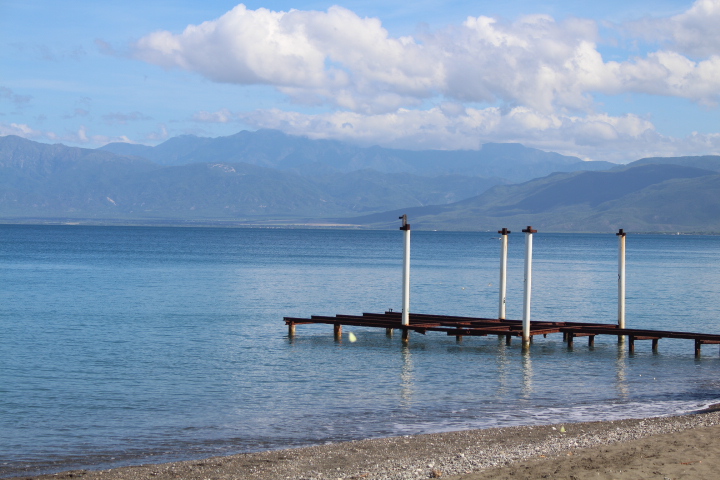
Azua Province lies on the southern coast of the Dominican Republic, bordering the Caribbean Sea and forming a mix of coastal plain, an irrigated valley and rising terrain toward the island’s central highlands. Administratively it is a province whose capital is Azua de Compostela, a city with colonial-era traces and regional administrative functions. The province’s shoreline and lowlands are often described with reference to the nearby coastal corridor along the southern coast.
Image gallery
7 Images


Geography and climate
Azua contains a pronounced agricultural plain—the Azua Valley—fed by seasonal rivers and local irrigation works, surrounded to the north by foothills that lead up to higher mountains. The coastal and valley zones are relatively dry, with vegetation adapted to arid and semi-arid conditions, while higher elevations receive more rainfall and support denser vegetation. Soils, water access and seasonal rainfall patterns together shape cropping cycles and land use.
History
Following the period of Spanish colonial rule and the complicated 19th-century changes on the island of Hispaniola, Azua was one of the earliest provinces after Dominican independence. In the mid-1800s the area was important in military and political events as the new republic consolidated, and historically the province’s boundaries at times extended over a much larger southwestern territory near what is today Haiti.
Economy and land use
Agriculture dominates the provincial economy. Irrigated fields in the valley produce vegetables, fruits and staple crops for local and national markets. Livestock, coastal fishing and small manufacturing supplement incomes. Periodic dry seasons and water management are key considerations for farmers and planners.
Administration, transport and culture
Azua is organized into municipalities and municipal districts that provide local services and governance. Road links connect the province with the national capital and other regions, aiding transport of agricultural produce. Local culture reflects both coastal and inland traditions: cuisine emphasizes seafood, plantain and valley produce, and community festivals mark religious and agricultural calendars.
Key characteristics
- Coastal province of the Caribbean on the southern shore
- Capital: Azua de Compostela
- Large irrigated agricultural valley and drier coastal plain
- Historical importance following independence and in 19th-century conflicts
- Neighboring Hispaniola history with reference to Haiti
For up-to-date maps, demographic data and municipal lists consult official national sources and regional studies; travel guides and historical works provide additional context on local sites and events.
Questions and answers
Q: Where is Azua located?
A: Azua is a Dominican province located in the southern part of the country, along the Caribbean coast.
Q: What is the capital of Azua?
A: The capital of Azua is Azua de Compostela.
Q: When did Dominican independence from Haiti occur?
A: Dominican independence from Haiti occurred after 1844.
Q: How many original provinces were there after Dominican independence from Haiti?
A: After Dominican independence from Haiti, there were five original provinces in the country.
Q: What regions were included in the southwestern part of the country that was part of this province originally?
A: The southwestern part of the country that was part of this province originally included some regions that now are part of Haiti.
Q: Was Azua one of these five original provinces?
A: Yes, Azua was one of these five original provinces.
Tags
Related articles
Author
AlegsaOnline.com Azua Province Leandro Alegsa
URL: https://en.alegsaonline.com/art/7962
Sources
- one.gob.do : "División Territorial 2012"
- censo2010.one.gob.do : "IX Censo Nacional de Población y Vivienda 2010"
- one.gob.do : "División Territorial 2015"
- one.gob.do : "REPÚBLICA DOMINICANA: Población por año calendario, según sexo y grupos quinquenales de edad, 2015-2020"
- geonames.org : "Azua"