
Aztec Ruins National Monument: Ancestral Puebloan Great House in New Mexico
A concise overview of Aztec Ruins National Monument in northwestern New Mexico: its architecture, history, archaeological study, cultural importance, and visitor context.

The Aztec Ruins National Monument protects a large ancestral Puebloan masonry complex in the San Juan Basin of northwestern New Mexico. The site lies near the modern town of Aztec, beside the Animas River, and is roughly 12 miles northeast of Farmington. Although nineteenth-century settlers dubbed the masonry remains "Aztec ruins," archaeological research makes clear they were built and used by ancestral Pueblo peoples between roughly the 11th and 13th centuries.
Image gallery
6 Images


Architecture and principal features
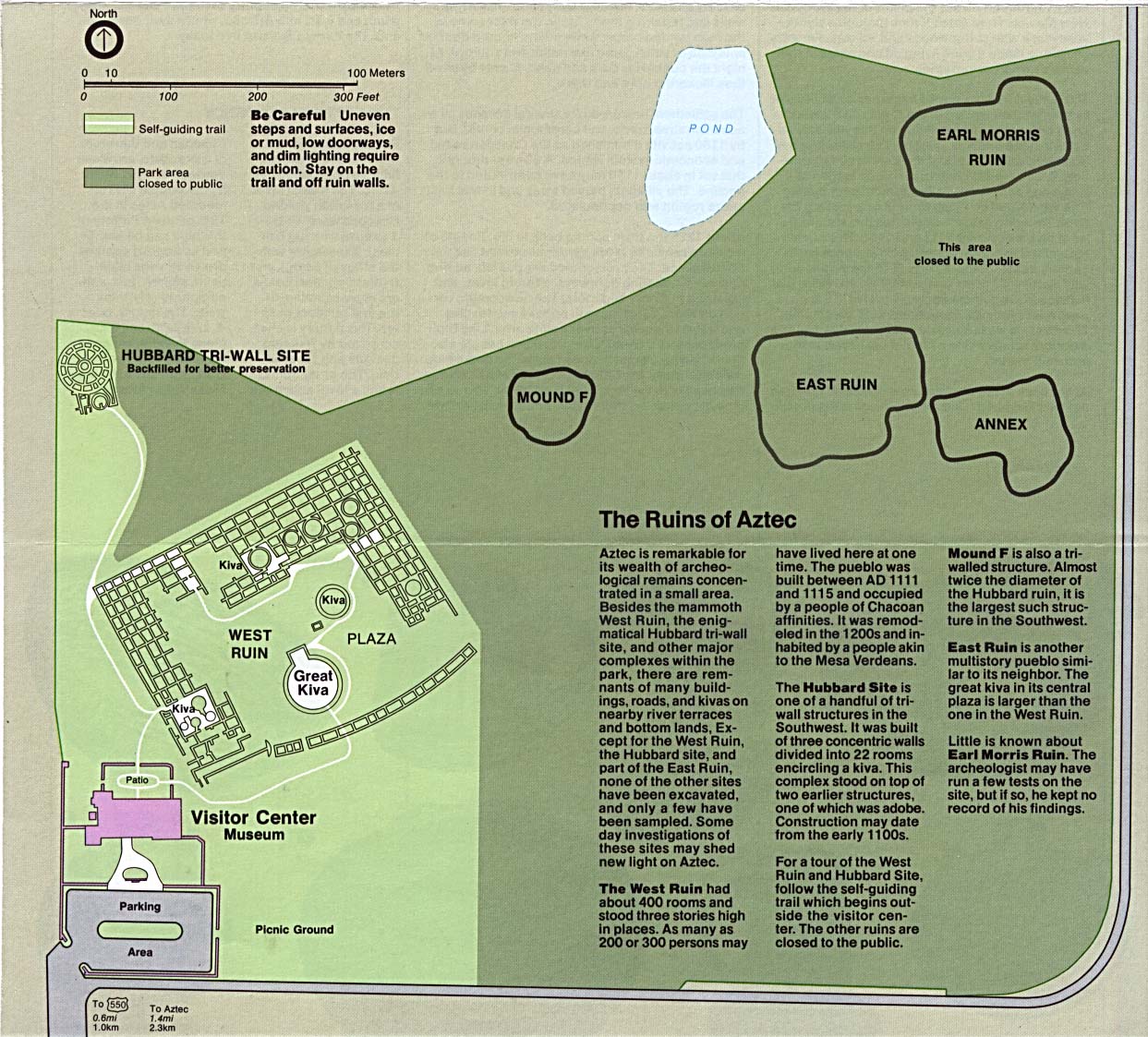
The monument includes multiroom stone buildings often called "great houses," along with surface plazas, chambers interpreted as kivas (subterranean ceremonial rooms), and ancillary storage or household rooms. Construction shows careful masonry work, with stacked stone walls, wooden roof beams, and organized roomblocks. One prominent feature is a large communal kiva that served as a ceremonial or public space. Together, these elements illustrate the social and ceremonial organization of a prehistoric Pueblo community and show architectural links to the broader Chacoan tradition in the region.
History and archaeological study
Occupational evidence dates the core construction and use of the complex to the period commonly associated with ancestral Pueblo societies of the American Southwest. Early non-Indigenous visitors misattributed the ruins to Mesoamerican civilizations, giving the site its modern name. Professional archaeological investigations began in the late 19th and early 20th centuries and continued with systematic excavations and conservation efforts by researchers such as Earl H. Morris and others. Those studies recovered pottery, tools, and architectural data that helped place Aztec Ruins in a regional cultural and trade network.
Significance and preservation
Today the site is protected for its cultural, educational, and scientific value. Conservation work has focused on stabilizing masonry, interpreting the layout for visitors, and collaborating with descendant Pueblo communities where possible. The monument helps illustrate long-distance interaction, regional planning, and ceremonial practices in the precontact Southwest.
Visiting and context
Visitors can learn about the ruins at the on-site visitor center and by following interpretive trails that explain the architecture and daily life of its builders. The monument is part of a landscape that includes related sites, such as nearby Salmon Ruins and other Chacoan outliers, which together document the complexity of ancestral Pueblo settlement in the northern Rio Grande and San Juan regions.
- Location: Near Aztec and the Animas River; about 12 miles northeast of Farmington — see location details.
- Origins: Built by ancestral Pueblo peoples in the 11th–13th centuries; the name reflects a historic misattribution — read more on naming and early settlers at historic accounts.
- Comparative context: Architecturally related to Chacoan sites and distinct from Mesoamerican cultures such as the Aztec — background on those civilizations is available at Aztec civilization.
- Further reading: Official and interpretive resources can be consulted via park and heritage pages: site overview and resources.
Aztec Ruins National Monument remains an active place of research and interpretation. Its well-preserved masonry and ceremonial spaces continue to inform understanding of ancestral Pueblo lifeways, regional interaction, and the long human history of the American Southwest.
Questions and answers
Q: What is the Aztec Ruins National Monument?
A: The Aztec Ruins National Monument is a preservation site for ancestral Puebloan structures located in the northwestern part of New Mexico.
Q: Where is the Aztec Ruins National Monument located?
A: The Aztec Ruins National Monument is located about 12 miles northeast of Farmington, New Mexico, close to both the town of Aztec and the Animas River.
Q: What is the Salmon Ruins and Heritage Park?
A: The Salmon Ruins and Heritage Park is another preservation site in New Mexico that also has Puebloan structures. It is located about 9.5 miles south of the Aztec Ruins National Monument.
Q: When do the Aztec ruins date back to?
A: The Aztec ruins date back from the 11th to the 13th centuries.
Q: Why were they named the "Aztec ruins"?
A: They were named the "Aztec ruins" by American settlers in the 19th century because they thought the Aztec civilization built them.
Q: What civilization actually built the Aztec Ruins?
A: The ancestral Puebloan civilization built the Aztec Ruins.
Q: What can visitors expect to see at the Aztec Ruins National Monument?
A: Visitors can expect to see preserved ancestral Puebloan structures dating back to the 11th to 13th centuries at the Aztec Ruins National Monument.
Related articles
Author
AlegsaOnline.com Aztec Ruins National Monument: Ancestral Puebloan Great House in New Mexico Leandro Alegsa
URL: https://en.alegsaonline.com/art/7959