
Azorina vidalii (Azores bellflower)
Azorina vidalii is a coastal bellflower endemic to the Azores and the sole species in the genus Azorina (family Campanulaceae). It is notable for its bell-shaped flowers and use in ornamental coastal planting.
Overview
Azorina vidalii is a flowering plant in the bellflower family, Campanulaceae, and is the only species placed in the genus Azorina. It is endemic to the Azores archipelago and is commonly referred to in English as the Azores bellflower. Its limited native range and distinctive coastal habits make it a characteristic element of the Azorean flora. For general information on the family, see Campanulaceae, and for context about the plant's native region see the Azores.
Image gallery
4 Images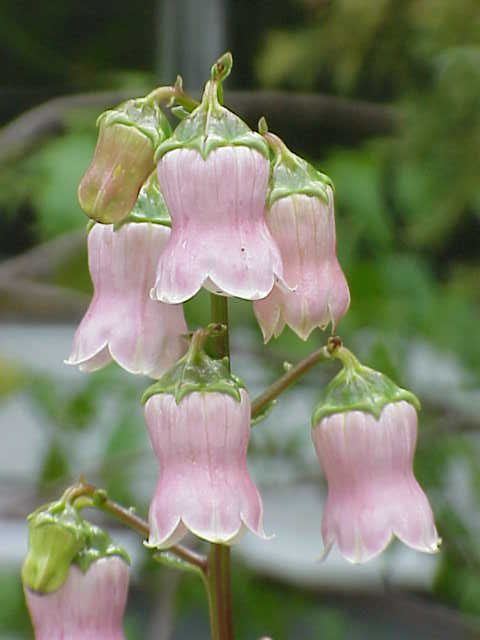


Description and habitat
Azorina vidalii forms perennial clumps and bears bell- or tubular-shaped flowers that are typically pale in tone. The foliage is adapted to exposed maritime sites and often appears relatively fleshy or leathery compared with inland relatives, an adaptation that helps the plant withstand wind and salt spray. In the wild it is most often found on sea cliffs, rocky headlands and other coastal exposures where drainage is good, substrates are thin, and competition from denser vegetation is limited.
Key characteristics
- Growth habit: perennial, clump-forming, often low-statured in exposed coastal positions.
- Flowers: bell-shaped to tubular, pale (white to soft pink tones reported), appearing on slender stalks.
- Leaves: narrow to lanceolate, typically robust against wind and spray; may be somewhat succulent in appearance.
- Habitat preferences: coastal cliffs, rocky ledges and other maritime sites with high light and good drainage.
Taxonomy and naming
The species was originally described in the 19th century as Campanula vidalii by H. C. Watson, who honoured the collector Capt. Vidal in the specific epithet. Later taxonomic work transferred the species to its own genus, Azorina, recognizing distinctive features that set it apart from typical Campanula species. As the sole representative of its genus, Azorina vidalii occupies a unique position within the Campanulaceae and is often cited in discussions of Macaronesian endemics and island speciation.
Uses, cultivation and propagation
Because of its striking flowers and tolerance of salty, windy conditions, Azorina vidalii is sometimes cultivated outside its native range in coastal gardens, rockeries and sheltered seaside borders. Gardeners favour it where conditions mimic its natural habitat: full sun to part sun, lean, well-drained substrate and exposure to maritime air. Propagation is commonly by seed, and in cultivation plants may also be increased by division where clumps become large enough. Care in cultivation focuses on avoiding waterlogged soils and providing air movement rather than heavy feeding.
Conservation and significance
Endemic species with a narrow distribution are often of conservation interest. Azorina vidalii's restriction to the Azores places it among plants that require monitoring because island endemics can be sensitive to habitat change, invasive species and coastal development. Conservation measures for such species typically emphasize habitat protection, control of invasive competitors, and cultivation in botanical collections to preserve genetic material. The species also holds cultural and botanical interest as a distinctive element of Azorean natural heritage.
Distinguishing facts
- Azorina vidalii is the only species in the genus Azorina within the Campanulaceae family.
- Its adaptation to exposed maritime cliffs—tolerance of salt spray, wind and thin soils—distinguishes it ecologically from many relatives that prefer sheltered or inland habitats.
- It is used ornamentally in coastal landscaping beyond its native islands, but any introduction should be managed responsibly to avoid ecological impacts.
For further general background on related species and broader botanical context consult reference resources on the family Campanulaceae and regional botanical accounts of the Azores.
Questions and answers
Q: What is Azorina vidalii?
A: Azorina vidalii is a species of flowering plant that belongs to the bellflower family and is native to the Azores.
Q: How is Azorina vidalii used?
A: Azorina vidalii is used as an ornamental plant in many countries outside of the Azores.
Q: Who first named Azorina vidalii?
A: Hewett Cottrell Watson was the first to give the name Campanula vidalii to the plant.
Q: Why was the plant named Azorina vidalii?
A: Heinrich Feer changed the name to Azorina vidalii, creating a new genus Azorina, in honor of its origination from the Azores and its collector "Capt. Vidal, R.N."
Q: Is Azorina vidalii common in its native habitat?
A: Yes, Azorina vidalii is endemic to the Azores and is common there.
Q: Is Azorina vidalii a type of Campanula?
A: Azorina vidalii is in the same family as Campanula, but it is the only species within the genus Azorina.
Q: What publication did Hewett Cottrell Watson name Azorina vidalii in?
A: Hewett Cottrell Watson named the plant Campanula vidalii in Hooker's Icones Plantarum, table DCLXXXIV (684).
Related articles
Author
AlegsaOnline.com Azorina vidalii (Azores bellflower) Leandro Alegsa
URL: https://en.alegsaonline.com/art/7952
Sources
- iucnredlist.org : "Azorina viladii"
- apps.kew.org : "Azorina vidalii"
- ars-grin.gov : "Azorina vidalii"
- biodiversitylibrary.org : "Hooker's Icones Plantarum"
- biodiversitylibrary.org : "Bot. Jahrb. Syst"
- tropicos.org : "Azorina vidalii (H.C.Wats.) Feer"
- azores.gov.pt : "Listagem da fauna e flora terrestres dos Açores. Lista des plantas vasculares (Pteridophyta e Spermatophyta)"