
Protein folding: how polypeptides acquire their functional three‑dimensional form
Overview of how linear amino acid chains fold into functional protein structures, the forces and pathways involved, cellular helpers, misfolding and disease, and modern experimental and computational advances.
Overview
Protein folding is the process by which a newly synthesized linear chain of amino acids adopts a specific three‑dimensional arrangement required for biological activity. A single protein achieves its functional conformation by forming a stable native structure from an initially flexible polypeptide. In many cases this conversion is spontaneous and governed by the chemical properties of the sequence, an idea summarized by Anfinsen's dogma, although cells often influence the process.
Image gallery
10 Images


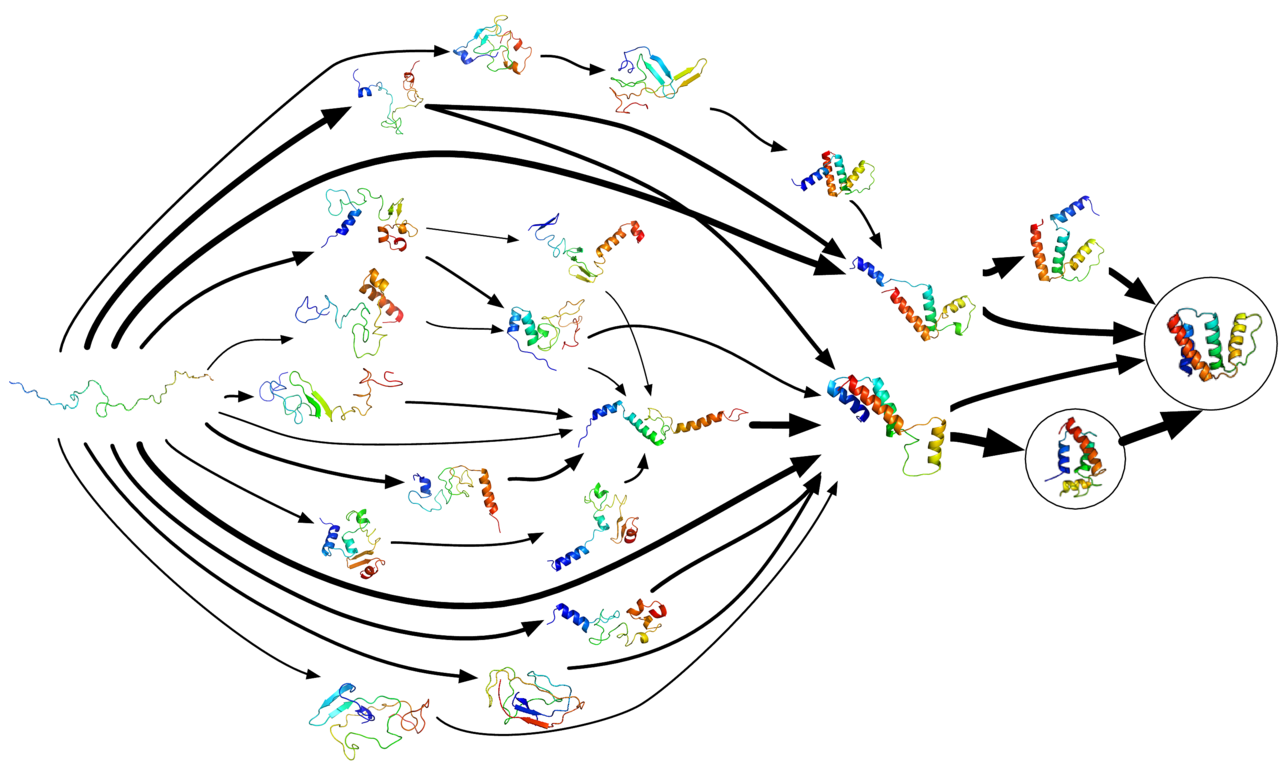

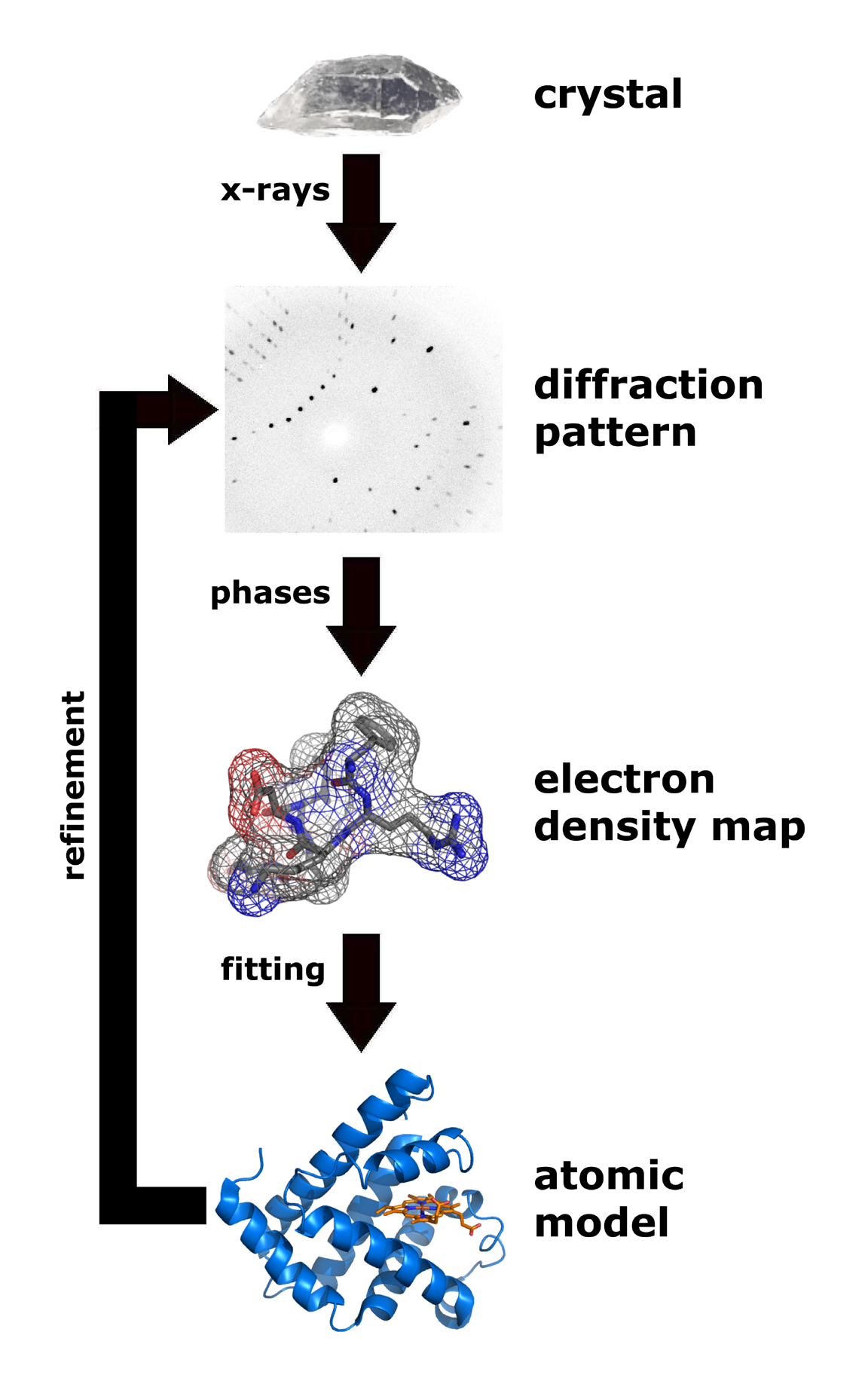

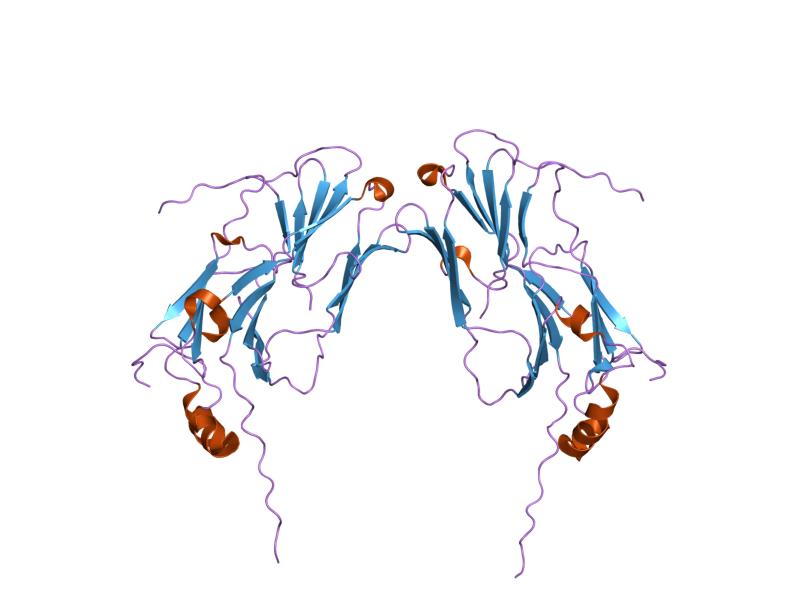

Stages, forces and common features
After translation, the nascent chain exists as a largely disordered or random coil until local and long‑range interactions guide folding. Individual polypeptides composed of linked amino acids form secondary elements (helices, sheets) and then pack into a compact three‑dimensional structure. The folded native state minimizes free energy under physiological conditions.
- Key stabilizing forces: hydrophobic collapse, hydrogen bonds, ionic interactions, van der Waals contacts and disulfide bonds.
- Folding is hierarchical for many proteins (local structure first, global packing later) but some proteins fold cooperatively in a single step.
- Some regions remain flexible or unstructured in the functional protein; such intrinsically disordered segments are biologically important.
Pathways, kinetics and the energy landscape
Protein folding is best visualized as a funnel‑shaped energy landscape: many unfolded states converge through a set of intermediate conformations to the native low‑energy basin. Folding times range from microseconds for small domains to seconds or longer for large multi‑domain proteins. Transition states and folding intermediates can be transient and are the subject of kinetic experiments and theoretical models.
Cellular context and molecular helpers
In living cells folding often begins while the chain is still being synthesized on the ribosome (co‑translational folding). Dedicated proteins called molecular chaperones prevent aggregation, assist refolding, and sometimes catalyze assembly of multi‑protein complexes. Post‑translational modifications and the crowded cellular environment also affect folding outcomes.
Misfolding, aggregation and biological consequences
Failure to reach the native state can produce nonfunctional or toxic species. Protein misfolding and aggregation are implicated in a range of disorders, including several neurodegenerative and systemic misfolding diseases. Some immune responses and allergies are sensitive to protein conformation because the immune system recognizes specific structural features. Prion diseases are a dramatic example where an alternative fold propagates and causes pathology.
Methods, examples and recent advances
Experimental techniques used to study folding include stopped‑flow kinetics, circular dichroism, nuclear magnetic resonance, X‑ray crystallography and cryo‑EM, which together reveal structures and folding intermediates. Computational methods have progressed rapidly: in 2020 DeepMind's AlphaFold demonstrated high‑accuracy structure prediction at CASP14, marking a major advance in predicting static native structures from sequence, though experimental validation and dynamics studies remain essential.
Notable distinctions: folding in vitro can differ from the cellular process; sequence largely encodes structure but cellular factors modulate outcomes; and some functional proteins intentionally retain disorder to enable regulation or multi‑partner interactions.
Questions and answers
Q: What is protein folding?
A: Protein folding is the process of a polypeptide chain transforming from an unfolded linear chain of amino acids into its characteristic three-dimensional shape.
Q: What holds the structure together?
A: The structure of a folded protein is held together by hydrogen bonds.
Q: What are the stages of protein folding?
A: The stages of protein folding include an unfolded polypeptide or random coil when translated from mRNA to a linear chain of amino acids, and then interacting with each other to produce a well-defined three-dimensional structure, known as the native state.
Q: What happens if proteins do not fold correctly?
A: If proteins do not fold into their native shape, they are inactive and usually toxic. This can lead to several diseases and allergies caused by misfolded proteins that the immune system does not recognize.
Q: Who solved the protein folding problem in 2020?
A: On 30 November 2020, the protein folding was solved by artificial intelligence company DeepMind.
Q: What is Anfinsen's dogma? A: Anfinsen's dogma states that the resulting three-dimensional structure of a folded protein is determined by its amino acid sequence.
Related articles
Author
AlegsaOnline.com Protein folding: how polypeptides acquire their functional three‑dimensional form Leandro Alegsa
URL: https://en.alegsaonline.com/art/79516
Sources
- ncbi.nlm.nih.gov : "The formation and stabilization of protein structure"
- pubmed.ncbi.nlm.nih.gov : 4565129
- ncbi.nlm.nih.gov : "3. Protein structure and function"
- nature.com : "Folding proteins in fatal ways"
- doi.org : 10.1038/nature02264
- pubmed.ncbi.nlm.nih.gov : 14685251
- nature.com : nature.com/articles/nsmb.1591?error=cookies_not_supported&code=4cfd53b6-6f43-479d-9a8d-b4…