
Proteaceae: family of Southern Hemisphere flowering plants
Proteaceae is a diverse family of mainly Southern Hemisphere shrubs and trees (about 80 genera, under 2,000 species), including ornamental and crop plants such as Protea, Banksia and Macadamia.
Overview
The Proteaceae are a family of flowering plants notable for their often showy inflorescences and ecological dominance in some Mediterranean-type landscapes. The family contains roughly 80 genera and fewer than 2,000 species, and is placed in the order Proteales alongside the Platanaceae and Nelumbonaceae. Members range from low shrubs to medium-sized trees and occupy a variety of habitats, especially nutrient-poor soils.
Image gallery
10 Images




Characteristics
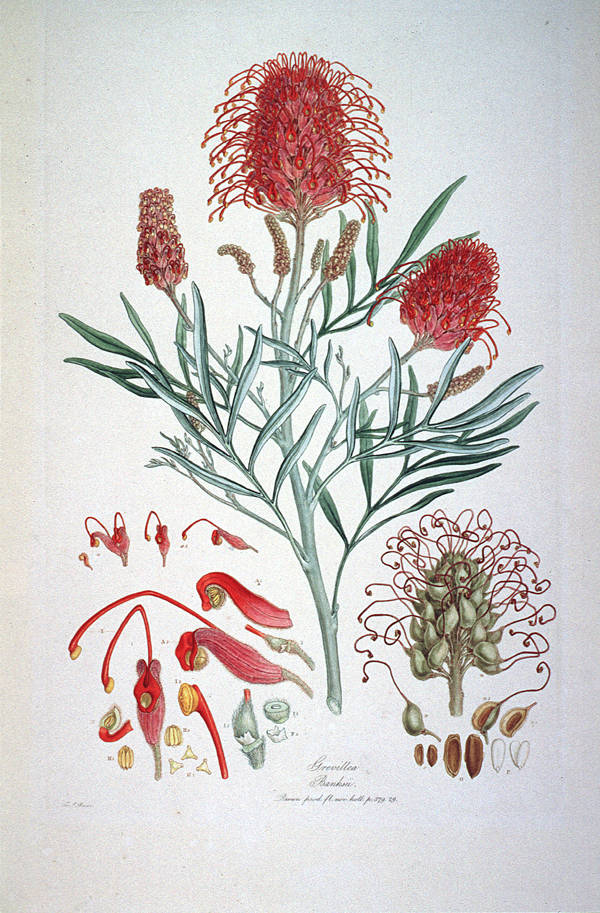
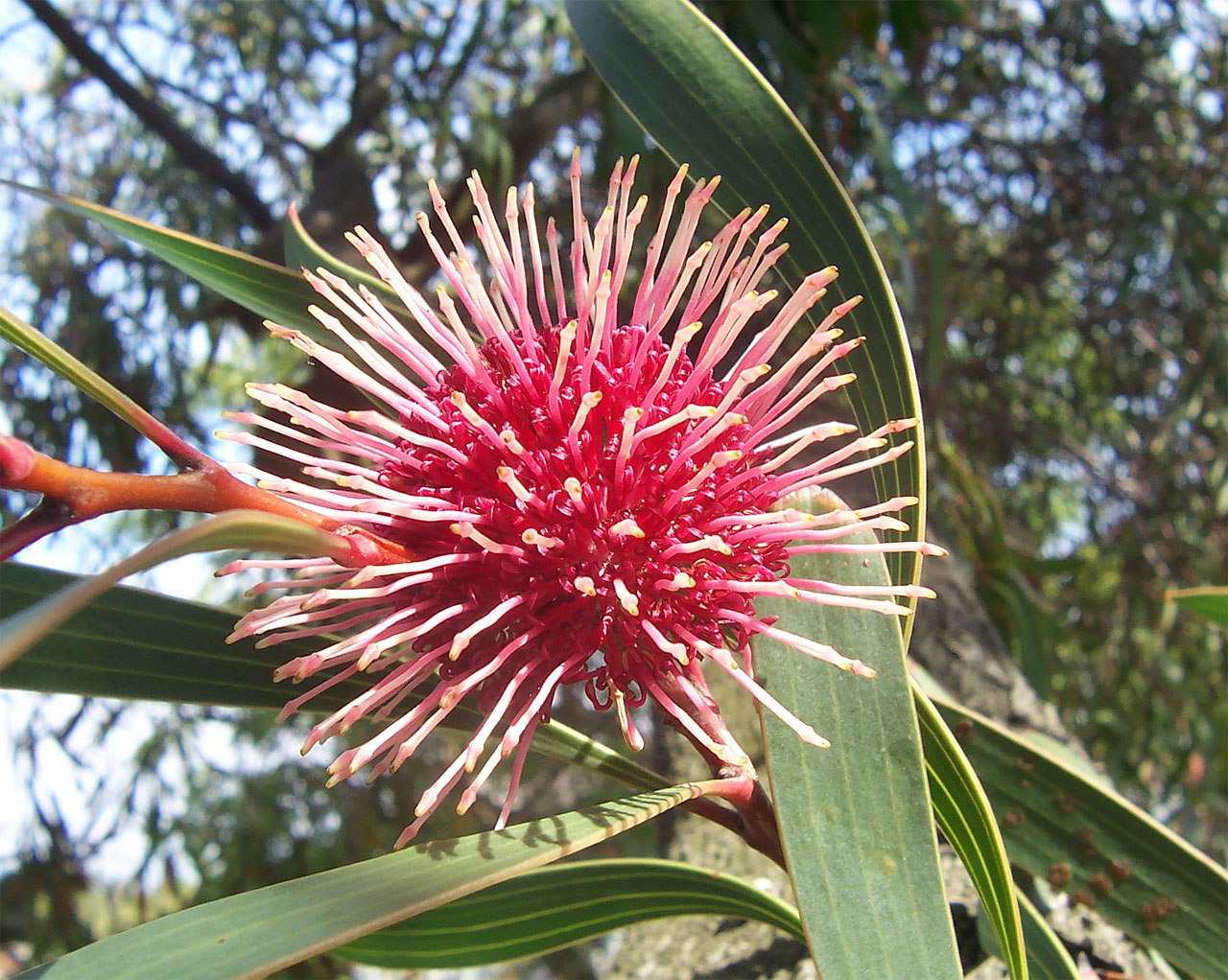
Proteaceae species are diverse in form but share several distinctive features. Leaves are often leathery and variable in shape, flowers are usually clustered into heads or spikes and frequently adapted to bird or insect pollination. Many taxa produce woody fruits that open to release seed. A distinctive physiological trait in many lineages is the development of dense cluster roots (proteoid roots) that increase nutrient uptake from poor soils, particularly phosphorus-poor substrates.
Distribution and origins
The family has a predominantly Southern Hemisphere distribution, with major centers of diversity in Australia and the Cape Region of South Africa, plus occurrences in South America, New Guinea and parts of island southeast Asia. The geographic pattern and relationships among genera reflect an ancient history tied to the breakup of Gondwana; diversification events produced the floristic hotspots seen today.
Uses, horticulture and ecology
Several Proteaceae are economically and culturally important. Genera such as Protea, Banksia and Grevillea are cultivated widely for ornamental use and cut flowers, valued for their long-lasting, architectural blooms. The genus Macadamia yields edible nuts that are commercially grown. Ecologically, proteas often dominate shrublands and play crucial roles in pollinator networks; many species show fire-related adaptations such as seed release after burning, a strategy known as serotiny.
Conservation and notable facts
Many Proteaceae species are adapted to narrow ecological niches and are sensitive to habitat loss, invasive plants, changed fire regimes and climate change. Conservation efforts focus on protecting remaining shrubland and forest, controlling invasive species and managing fire frequency. Taxonomically the family is typically divided into several subgroups that capture its morphological diversity; familiar genera and cultivated species have helped raise public interest and conservation support.
Questions and answers
Q: What is Proteaceae?
A: Proteaceae is a family of flowering plants.
Q: Where is Proteaceae mainly found?
A: Proteaceae is mainly restricted to the Southern Hemisphere.
Q: How large is the Proteaceae family?
A: Proteaceae is a fairly large family, with around 80 genera.
Q: How many species are there in Proteaceae?
A: There are fewer than 2000 species in Proteaceae.
Q: What order is Proteaceae a part of?
A: Proteaceae, along with the Platanaceae and Nelumbonaceae, make up the order Proteales.
Q: Are there any other important details about Proteaceae?
A: No other details are provided in the given text.
Q: Is Proteaceae found in both hemispheres?
A: No, Proteaceae is mainly restricted to the Southern Hemisphere.
Related articles
Author
AlegsaOnline.com Proteaceae: family of Southern Hemisphere flowering plants Leandro Alegsa
URL: https://en.alegsaonline.com/art/79501